



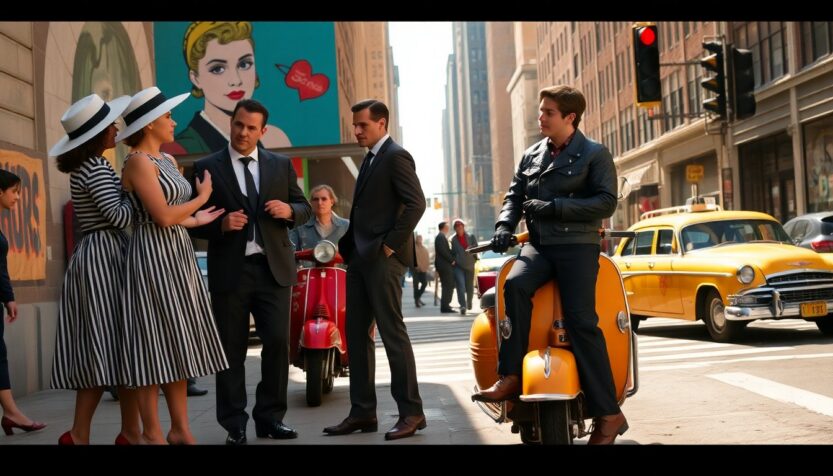
The film ‘Marty Supreme’, directed by Josh Safdie, offers a compelling glimpse into a stylized version of 1950s New York City. This cinematic piece is not only notable for its engaging storyline but also for the plethora of cameos and meticulous costume design that enriches its narrative. Safdie, keen on authenticity, has populated his film with a diverse array of non-actors, including internet personalities and prominent figures from various fields, adding a sense of realism and depth to the film.
In his vision, Safdie curates a vibrant backdrop filled with characters that reflect the eclectic energy of the era. The choice to include both well-known celebrities and local figures contributes to the film’s authenticity, making the bustling streets of the Lower East Side feel alive. This article takes a closer look at how these cameos intertwine with the film’s themes and the significant role of costumes in creating its distinct atmosphere.
The role of cameos in ‘Marty Supreme’
Throughout the film, cameos play a pivotal role in shaping the narrative. Safdie’s approach to casting non-traditional actors brings a unique flavor to the film. Each cameo is carefully selected to resonate with the film’s essence, creating a rich tapestry of personalities that reflect the diversity of New York City at the time. From athletes to fashion icons, these appearances add layers of meaning and invite the audience to engage with the story on multiple levels.
Notable appearances
In ‘Marty Supreme’, viewers can spot a range of figures, including the likes of Isaac Mizrahi and David Mamet, whose presence enhances the film’s cultural commentary. Their involvement not only serves as a nod to their respective fields but also creates a bridge between the fictional and the real world, making the film’s narrative even more relatable. Each cameo is a deliberate choice, reflecting Safdie’s intention to create a film that feels grounded in its setting.
Costume design and its significance
The costume design in ‘Marty Supreme’ is a testament to the creative vision of designer Miyako Bellizzi. Her work is instrumental in defining the character of Marty Mauser, portrayed by Timothée Chalamet, who is a shoe salesman convinced of his prowess as a table-tennis player. Bellizzi’s approach emphasizes the idea that clothing can significantly influence a character’s identity and aspirations. She believes that costumes are not merely garments but a reflection of the character’s ambitions and desires.
Creating Marty’s look
One of the most striking pieces is Marty’s gray suit, which he brandishes in a plastic dry-cleaning bag, symbolizing his aspirations. This suit encapsulates the essence of who Marty wants to be rather than who he currently is. Bellizzi explains, “It’s the man he wants to be,” highlighting how crucial the visual representation is to the narrative.
Moreover, the costume designer drew inspiration from the gritty reality of the Lower East Side, where Marty resides. She carefully considered the influences around him, pondering who he admires and who he wants to avoid becoming. This attention to detail ensures that each piece not only fits the time period but also resonates with the character’s journey.
The impact of authenticity
Safdie and Bellizzi both share a commitment to authenticity in their work. They strive to create clothing that looks lived-in and real. Bellizzi notes, “If we make them ourselves, then we can mess them up and make them look like they have a history.” This approach allows the characters to feel genuine, as though they belong in the world of the film.
Additionally, the film’s aesthetic contrasts the Lower East Side’s vintage clothing with the more modern haute couture of the Upper East Side, represented by characters like Kay Stone, played by Gwyneth Paltrow. This juxtaposition adds depth to the film, illustrating the stark divide between different social classes during that era.
Audience reception and cultural impact
As the film reaches audiences, many have remarked on the contemporary feel of the costumes, demonstrating how fashion cycles back into popularity. This blend of historical and modern elements serves to inspire viewers, prompting discussions about style and identity. Safdie hopes that audiences will take away creative ideas for their own costumes, reflecting the film’s playful nature and connection to real-life experiences.
In conclusion, ‘Marty Supreme’ stands out not only for its engaging narrative but for the thoughtfully curated cameos and costumes that breathe life into its characters. The film is a vibrant homage to 1950s New York, inviting viewers to explore the significance of each detail, from the costumes to the eclectic cast, ultimately enriching the cinematic experience.