

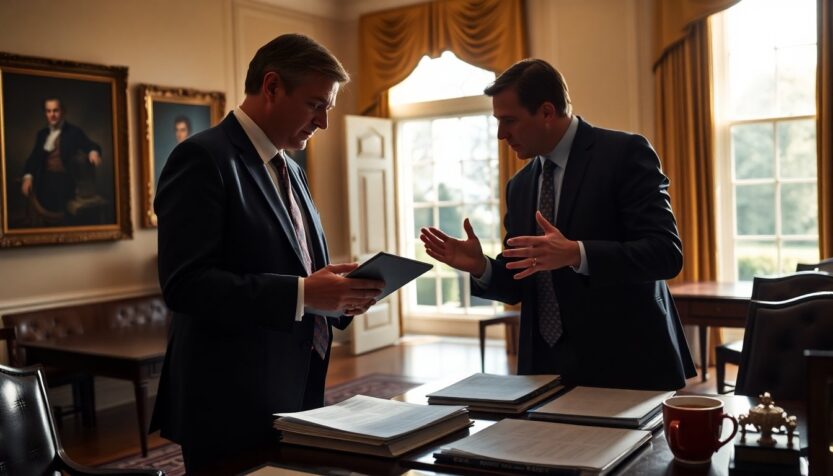
In a critical moment for Donald Trump, Susie Wiles met with me at the White House, just as voters headed to the polls in New Jersey, Virginia, and New York City. This election day was significant, serving as a referendum on his presidency. Wiles, stationed in the West Wing, shared insights on what was at stake and how the outcomes could reflect public sentiment towards Trump.
Wiles prepared for the day’s events while escorting Trump from his residence to the Oval Office. She humorously remarked that she felt like a clairvoyant with her predictions, confident about the GOP’s chances in New Jersey, yet aware of the challenges ahead. Ultimately, the results revealed a Republican disaster, with Democrats gaining ground in key races, including the passing of a significant gerrymandering countermeasure in California.
Shifting focus on domestic issues
As the conversation progressed, Wiles emphasized the need for Trump to focus more on domestic economic concerns, moving away from foreign affairs. She noted that while voters appreciate a stable world, their primary worries revolve around rising costs. Wiles suggested that Trump should prioritize discussions about the domestic economy over international matters, stating, “More talks about the domestic economy and less about Saudi Arabia are probably called for. They like peace in the world. But that’s not why he was elected.” This insight reflects a broader understanding of the electorate’s priorities during turbulent economic times.
The Epstein files and political repercussions
In the backdrop of our discussion was the recent demolition of the East Wing, making way for a grand ballroom. Wiles was unperturbed by the backlash against this decision, indicating it was part of a larger vision that may not yet be fully revealed. The notion of undisclosed plans echoed throughout our dialogue, especially when the conversation turned toward the Epstein files, a contentious topic that has haunted Trump.
Many of Trump’s supporters believe the government is intertwined with a web of corruption, particularly related to allegations surrounding Jeffrey Epstein. Wiles acknowledged a significant underestimation of the scandal’s impact. She admitted, “I kind of knew it, but it’s never anything I paid a bit of attention to.” The weight of Epstein’s actions and the implications for those connected to him raised serious questions about accountability and the integrity of high-profile individuals.
Responses and controversies
When discussing accusations against New York Attorney General Letitia James, Wiles hinted at the possibility of retaliation, suggesting it might be a single act of retribution. The Epstein saga was further complicated when Todd Blanche, a prominent lawyer, interviewed Ghislaine Maxwell, Epstein’s associate, raising eyebrows regarding the legal maneuvering being employed.
Wiles shared her thoughts on the ramifications of Trump’s involvement with Epstein, indicating he was entangled in the files but not in a compromising way. “Trump is in the file. And we know he’s in the file. And he’s not in the file doing anything awful,” she stated, asserting that his connections were more about social interactions than illicit activities.
Trump’s political landscape and future
As our discussion continued, Wiles touched upon how the Epstein files could pose a significant threat to Trump’s political future. She pointed out that the individuals most concerned about these revelations are newer members of Trump’s coalition, those identifying as Republican voters but not fully aligned with the longstanding MAGA base. This emerging bloc, including young individuals and union members, has shown interest in issues like Epstein and foreign policy, demonstrating a shifting landscape in political affiliations.
Moreover, Wiles emphasized that Trump has evolved in his approach to international conflicts. She noted that his current motivations seem to center around peace initiatives, contrasting past perceptions of him as a warmonger. The narrative of Trump as a peacemaker is something Wiles believes could reshape how voters view him, especially as he attempts to broker deals in volatile regions like Gaza.
Wiles highlighted how Trump’s administration navigates complex issues, from the handling of the Epstein files to foreign policy maneuvers. As the political landscape shifts, it remains to be seen how these factors will influence Trump’s standing with voters in upcoming elections. Wiles’ insights provide a glimpse into the strategic thinking behind Trump’s actions and the broader implications for the Republican Party.