


There is a quiet grace to mature skin when it is cared for thoughtfully, and some of the most effective methods are drawn from traditions that predate modern cosmetics. Across cultures, ritual bathing has functioned as both a practical skincare approach and a sensory routine that supports emotional well-being. The ancient bathing rituals described here focus on ingredients and techniques that improve texture, hydration and radiance while inviting a moment of calm. By blending a daily appreciation for the body with occasional restorative treatments inspired by history, you can create a sustainable path to brighter, healthier-looking skin.
These practices have endured because they combine simple chemistry with ritual: natural actives, warm water, aromatic botanicals and post-bath nourishment. From Egypt’s famed milk soaks to India’s fragrant herb baths and Rome’s thermal exchanges, each tradition emphasizes both external and internal balance. Treating these methods as complementary to modern skincare allows you to enjoy their benefits without abandoning contemporary evidence-based products. In short, the past offers accessible templates for pampering that support a holistic approach to beauty and wellness.
Egyptian milk baths and nourishing honey
Perhaps the best-known ancient beauty treatment is the milk bath attributed to Egyptian royalty. Historical accounts highlight the use of fermented mare’s milk mixed with honey for sustained softness and a delicate glow. Today, a practical equivalent is a soak with cow’s milk combined with organic Manuka honey. Milk contains proteins and vitamins such as vitamin D, vitamin A and B-complex elements that gently condition the skin, while honey brings antioxidant and antibacterial benefits. To enjoy this method responsibly, limit intensive milk soaks to occasional indulgences and follow with a gentle rinse to preserve the skin’s natural barrier.
How to recreate a milk soak at home
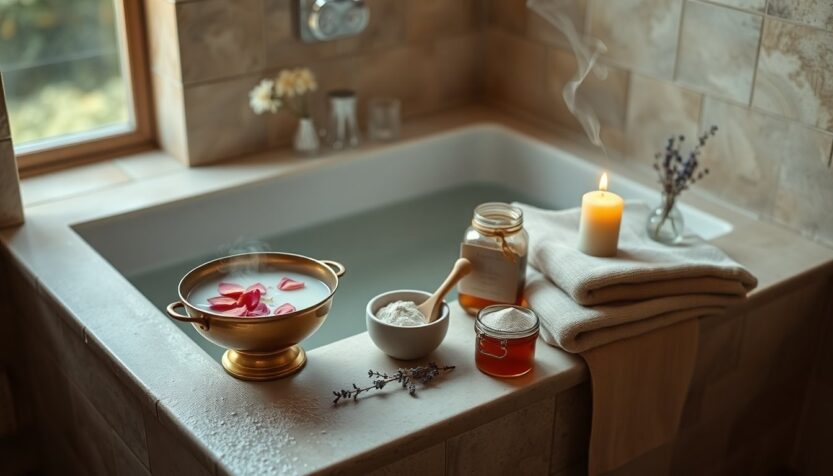
To replicate the essence of an Egyptian soak, warm your tub and add a generous cup of milk along with two to three tablespoons of Manuka honey. Allow the honey to dissolve, soak for up to 20 minutes, and rinse with lukewarm water. Use this treatment monthly or when skin needs a hydration boost. If you prefer a lighter approach, add milk to a foot soak or to a gentle cleanser for a creamier texture. The key elements are warmth, emollient contact and a calm environment that turns care into a restorative ritual.
Ayurvedic herbs for balance and glow
In the Indian tradition, bathing was often the culmination of an herbal cleansing process that addressed the whole person. Ayurvedic baths commonly featured powders and infusions made from sandalwood, turmeric and saffron, chosen for their purifying and soothing properties. This approach combines topical action with aromatic stimulation, and the practice of an herbal detox before immersion helped soften and exfoliate the skin. Incorporating these ingredients into a soak or body paste can promote evenness and comfort while connecting the ritual to a broader sensory experience.
Scent and ceremony: making the ritual yours
To honor the sensory focus of these baths, steep powdered herbs in hot water and strain into your tub, or place them in a muslin bag for an infused soak. Complement the bath with a calming fragrance such as MOR Emporium fragrances to create a meditative atmosphere. Because fragrances and botanicals can be potent, patch-test new blends and adjust concentrations to your sensitivity. Emphasize slow breathing and mindful attention during the soak to amplify both the skin benefits and the stress-reducing effects of the ritual.
Roman thermal methods and restorative oils
Roman bath culture elevated bathing into a social and therapeutic routine that combined temperature contrast with nourishing finishes. The practice of alternating hot and cold water immersion—an alternating warm and cold immersion method—was aimed at improving circulation and calming inflammation. After bathing, Romans frequently massaged the skin with olive oil to seal in moisture and support elasticity. Recreating aspects of this method at home can be as simple as finishing a warm shower with a brief cool rinse, then applying a lightweight oil or balm to damp skin to trap hydration and leave a soft, protected surface.
These ancestral techniques are not replacements for modern dermatology, but they are valuable tools for occasional pampering that support a balanced skincare routine. By borrowing the principles—gentle enzymatic care, botanical nourishment, thermal contrast and occlusive finishing—you can assemble personalized rituals that respect your skin’s needs. Which of these historical practices appeals to you most? Have you tried a milk soak, an herb-infused bath or alternating temperature therapy? Share your experiences and adaptations to inspire others who want to combine beauty with meaningful self-care.