

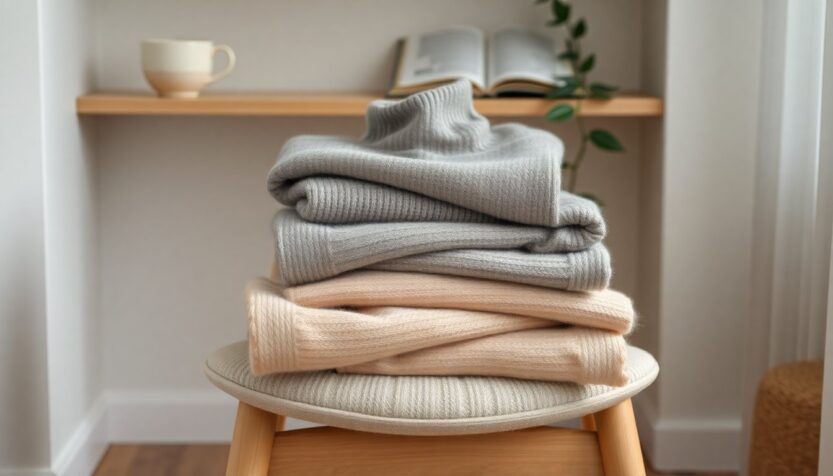
The state of the cashmere market: softness, status and value
Let’s tell the truth: the market for cashmere sweaters trades equal parts luxury signaling and practical wearability.
The fabric delivers a rare mix of softness, insulation and elegant drape. Buyers find pieces that serve as everyday pullovers and others that function as elevated statement garments.
The brand Jenni Kayne often serves as a reference point for fit, finish and price positioning. This article will explain what consumers should expect at different price brackets. It will also examine how certifications affect both quality and ethics.
What follows highlights accessible options from contemporary labels. The aim is to help readers make informed purchases without sacrificing durability or style.
The aim is to help readers make informed purchases without sacrificing durability or style. Let’s tell the truth: certification and brand provenance increasingly shape value in the cashmere market.
Why brand and certification matter
Good Cashmere Standard® (often abbreviated GCS) provides independent verification of animal welfare, traceability and environmental stewardship across the supply chain. When a sweater bears the emblem, it signals third-party oversight of sourcing and processing. That oversight can influence the garment’s long-term performance and resale prospects.
Brands use certification both as a risk-management tool and as a differentiator in a crowded market. Certification can reduce reputational risk by documenting supply-chain practices. It can also justify higher price tiers when retailers can demonstrate verifiable standards.
The emperor has no clothes, and I’m telling you: not every label that sounds responsible is independently audited. Certification is not a guarantee of perfection, but it does set measurable criteria. For buyers, that matters when weighing softness, durability and cost.
Adoption of recognized standards such as Good Cashmere Standard® tends to increase supply-chain transparency and to influence premium pricing. Expect certification to remain a key factor in brand positioning and consumer choice.
What the Good Cashmere Standard covers
Expect certification to remain a key factor in brand positioning and consumer choice. The emperor has no clothes, and I’m telling you: not all labels mean the same thing.
The Good Cashmere Standard establishes measurable criteria across four main areas. First, it requires animal welfare practices, including humane handling and minimising stress during shearing. Second, it sets standards for land and grazing management to reduce overgrazing and protect fragile ecosystems.
Third, the standard demands social responsibility measures for workers and herder communities, such as fair labour conditions and transparent supply arrangements. Fourth, it enforces traceability and chain of custody from farm to final product, enabling brands to substantiate claims about fibre origin.
Those requirements affect what ends up in your sweater. Fibres sourced under these rules tend to be longer and cleaner, which improves stitch definition and reduces pilling. Traceability also makes it harder for mass-market suppliers to greenwash inferior fibre blends as premium cashmere.
Certification is not a guarantee of perfection. It is a documented baseline that separates verifiable practice from marketing rhetoric. So when a brand cites GCS-certified supply, it signals verifiable steps toward animal welfare, environmental stewardship, worker protections, and fibre integrity.
When a brand cites GCS-certified supply, it signals verifiable steps toward animal welfare, environmental stewardship, worker protections, and fibre integrity. Let’s tell the truth: certification is a practical tool, not a guarantee of perfection. Audits and traceability reduce risk, but they do not eliminate every ethical or environmental gap. Certification standards vary in scope. Some audits cover raw fibre on the herd level but do not extend to every stage of processing or retail. Shoppers should therefore treat the Good Cashmere Standard® as a significant indicator, and not the sole basis for ethical judgment.
Top picks by category and budget
This selection highlights brands and products that pair quality with traceable sourcing and transparent supply chains. Each entry will note whether the garment carries GCS certification, the typical price range, and any notable production or fit details. The goal is practical: help buyers reconcile style, durability, and verifiable ethics when choosing cashmere.
How designers position cashmere in a market torn between luxury and accessibility
Let’s tell the truth: brands do not sell identical cashmere. Some cultivate aspirational staples that justify steep price tags. Others aim for accessible, well-made basics that reach a broader buyer.
Jenni Kayne, the entrepreneur behind a lifestyle label reportedly valued at $140 million, has come to represent the first approach. Her fisherman-style pullover is widely cited by reviewers as a benchmark for luxury midweight cashmere. Critics point to its long-fiber yarns and a balanced knit gauge as reasons for its drape and low pilling.
The practical issue for shoppers is clear. How do you weigh tactile quality, longevity and transparent sourcing when styles and price points diverge so sharply? The answer affects both purchase decisions and brand reputations.
So far, designers are using texture and construction to signal value. Thicker, long-staple yarns and tighter gauges are presented as indicators of durability and a premium hand. At the same time, some retailers focus on fit, finish and ethical traceability to justify everyday price points without claiming couture status.
The emperor has no clothes, and I’m telling you: surface luxury can mask weak supply-chain practices. Buyers who want both quality and verifiable ethics must scrutinize fibre origin and manufacturing claims alongside garment construction.
For consumers reconciling style, durability and ethics, the lesson is straightforward. Examine material details and certifications already mentioned. Compare yarn descriptions and knit specifications, and match them to the price and brand claims before deciding.
Compare yarn descriptions and knit specifications, and match them to the price and brand claims before deciding. Let’s tell the truth: when cost matters, a careful shopper can find cashmere that looks and feels premium without the premium markup.
On the more affordable end, Quince sells Mongolian cashmere crewnecks that offer notable weight and softness for a fraction of high-end prices. These pieces can pill sooner than luxury counterparts. With correct laundering and rotation, however, they represent clear value for budget-conscious buyers.
Reformation targets style-driven consumers seeking modern silhouettes. The brand mixes recycled fibers with cashmere blends and includes some GCS-certified items. The result is contemporary fit and improved material credentials without the highest price tags.
Specialty and splurge options
The result is contemporary fit and improved material credentials without the highest price tags. Let’s tell the truth: some mid-range labels now deliver the artisanal touches buyers once paid a premium for.
European houses such as Loulou Studio favor thick, structured knits that borrow from Parisian tailoring. Expect curved hems, refined seam work and a relaxed drape that reads expensive. By contrast, novelty pieces — for example, Naadam’s retro ski-inspired sweaters — push texture and warmth to the fore. These items often feature heavy-gauge knits, asymmetric necklines or extreme loft. They are marketed as super luxe because the design gestures are conspicuous and the manufacturing demands are higher.
Care, construction, and final buying tips
Construction details determine longevity. Inspect stitch definition, cuff and hem finishing, and yarn consistency before purchase. Longer-fiber yarns knit into stitches that hold shape and show dimensionality after repeated wear. Raised or brushed surfaces create the desired soft hand, but those finishes are more prone to pilling because fibers are intentionally lifted.
Follow label instructions for cleaning. Favor gentle machine cycles, hand washing, or professional cleaning when recommended. Store heavy knits folded to avoid shoulder distortion. Treat brushed or fuzzy styles as occasional pieces; frequent abrasion shortens their visual life.
The emperor has no clothes, and I’m telling you: paying attention to construction can reveal whether a high price reflects genuine craftsmanship or merely a brand premium. Choose pieces with clean finishing and consistent yarn quality for the best long-term value.
Choose pieces with clean finishing and consistent yarn quality for the best long-term value. Let’s tell the truth: set a price ceiling for what you consider a worthwhile staple and resist impulse splurges on everyday items. Many experts advise staying below a defined threshold for pieces you will wear often. Prioritize certified sourcing where available, and select silhouettes that suit daily life: cropped boxy crews for effortless modern wear, classic fisherman pullovers for lasting warmth, and lightweight turtlenecks for layering.
I know it’s not popular to say it, but the name on the label does not automatically guarantee superior return on investment. Whether you favour Jenni Kayne or choose more affordable options, focus on the trade-offs among price, construction, and certification. Make that triangle work for your wardrobe and you will get sustained softness, practical warmth, and a quietly elevated look that endures season after season.