
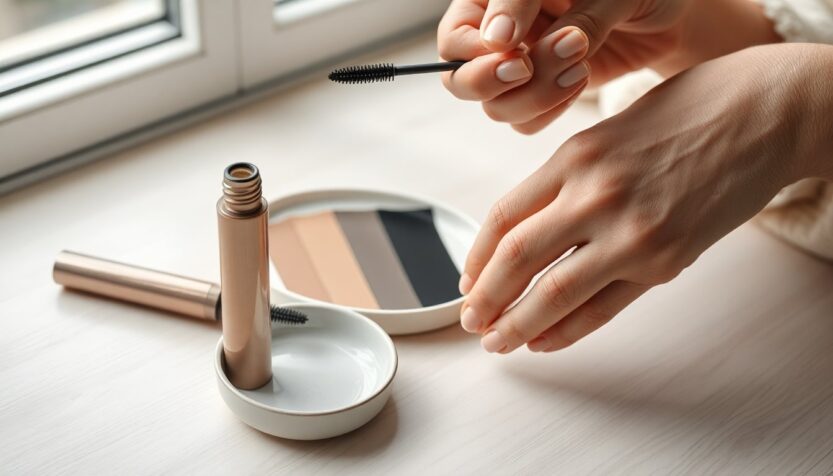
Many people notice their mascara doesn’t read the same as their lashes change with age. Hair can thin, lighten or grey; growth slows and the hairs themselves become finer. Those shifts alter how mascaras grip, lift and separate. With a few thoughtful adjustments—to tools, formulas and technique—you can get lashes that look lifted, natural and comfortable.
Why lashes behave differently
Hormonal changes shorten the active phase of hair growth and produce finer strands. That means less natural density and a different weight distribution along the lash line. Heavy, stiff mascaras or aggressive curling can weigh fragile hairs down or cause breakage. The goal becomes enhancing shape and definition while protecting delicate fibers.
Curling and application: gentle, deliberate moves
– Warm the curler briefly (test it on the back of your hand first) and use a soft, padded silicone curler. Press in short, gentle pulses instead of one long clamp. You want a subtle lift, not an exaggerated arch.
– If you use a heated curler, follow the manufacturer’s instructions and keep the temperature low.
– Apply mascara in thin layers, focusing on separation and lift rather than bulk. Place the wand at the base, wiggle slightly, and sweep upward in one smooth motion. Let each thin coat dry a moment before adding the next.
– Keep a clean spoolie on hand to comb through and remove clumps—this restores movement and prevents heavy tips that pull lashes downward.
Tool and brush choices
– Choose brushes with tapered or comb-like heads to distribute product along the shaft, not just at the tips. These shapes define and separate without clumping.
– Soft, flexible wands are kinder to fragile hairs than rigid, dense brushes. They build natural-looking definition and reduce the temptation to layer on more product.
Shade and formula: subtlety often wins
– Pure black can feel harsh against lighter complexions or silver hair. Dark brown, charcoal, or brown-black blends offer definition without a stark outline.
– For a touch of personality, tiny accents in deep plum or dark emerald applied to the outer third can brighten brown or hazel eyes without looking trendy for trend’s sake.
– Look for formulas that balance hold and flexibility—products that keep a curl while still allowing natural movement. Water-resistant mascaras hold curl well but often require more vigorous removal, so weigh that trade-off.
Protecting lashes during removal and care
– Prefer mascaras that remove cleanly with gentle cleansing to avoid tugging. Repeated rubbing during removal is a common cause of breakage.
– Consider mascaras marketed for sensitivity or mature lashes; they often include conditioning ingredients that help maintain lash resilience.
– If you’re thinking about supplements like collagen, consult a healthcare professional first.
Practical routine to try
1. Warm your curler briefly and clamp in short pulses from root to mid-shaft. 2. Apply one thin coat of a flexible mascara with a comb-like wand; let it set. 3. Comb through with a clean spoolie and add a second thin coat only if needed. 4. Use softer shades or blends to avoid a harsh frame. 5. Remove gently with an oil-free or mild balm-based cleanser that dissolves pigment without rubbing.
A small, consistent approach pays off
Tiny, repeatable changes—gentler curling, thinner layers, smarter brush and shade choices—make the biggest difference over time. Rather than chasing dramatic overnight results, aim for steady improvement: lashes that feel comfortable, look naturally lifted and hold up through the day.