



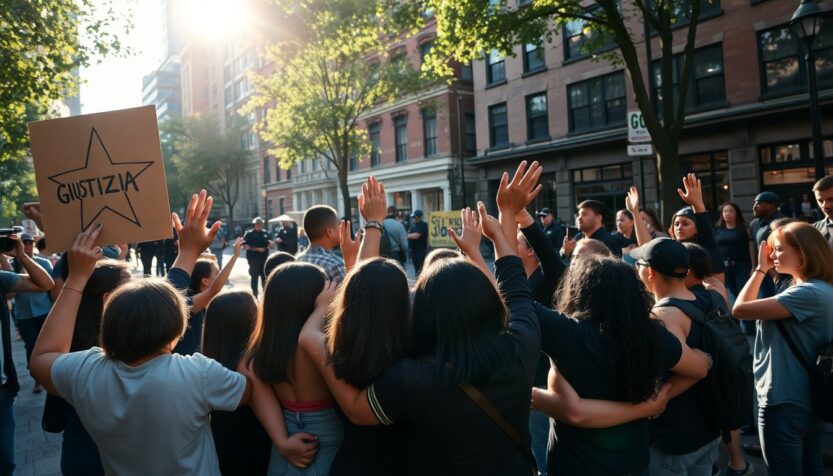
The recent death of Alex Pretti, a 37-year-old nurse, during an anti-ICE protest in Minneapolis has sparked widespread outrage across the United States. Pretti was shot by an agent from the U.S. Immigration and Customs Enforcement (ICE) while he was documenting the agency’s activities. Eyewitness footage indicates that he was not brandishing his legally owned firearm when the confrontation escalated. This incident has triggered a significant backlash, with prominent Democratic leaders, including former President Barack Obama, condemning ICE’s violent tactics.
In a poignant statement on social media, the Obamas labeled Pretti’s death a heartbreaking tragedy and highlighted its importance as a wake-up call for Americans. They urged citizens to acknowledge that fundamental values are under threat in the current political landscape. This incident marks the second fatal confrontation involving ICE enforcement in less than a month, following the death of Renee Nicole Good, which also provoked considerable public outrage. In response to these events, Minneapolis officials have called for an end to ICE operations in the city.
Community response and rising tensions
The public outcry following these tragedies has been intense, with protests occurring not only in Minneapolis but across various cities. One particularly alarming incident involved the detention of a five-year-old boy, Liam Ramos, and his father after they returned from preschool. This event raised serious concerns about ICE’s tactics, prompting local educators to speak out. Zena Stenvik, the superintendent of Liam’s school district, publicly questioned the rationale behind targeting a young child, stating, “You cannot tell me that this child is going to be classified as a violent criminal.”
Support for those affected
As tensions rise, many individuals are looking for ways to support those impacted by ICE’s actions. Various organizations have stepped up to assist families and communities affected by these enforcement raids. Financial contributions can be made to groups such as the American Civil Liberties Union (ACLU), National Immigration Justice Center (NIJC), and Immigrant Defenders Law Center, among others. These organizations are committed to defending the rights of immigrants and advocating for humane treatment.
Additionally, those wishing to express their opposition to ICE’s presence can reach out to their elected representatives. The ACLU has initiated an email campaign that provides a pre-written message urging officials to halt mass deportations. Engaging with local politicians is a proactive step toward demanding change and fostering a community that prioritizes human rights.
Understanding your rights as a protestor
With the increase in protests, it is essential for participants to understand their legal rights during demonstrations. Recent events have seen law enforcement employing aggressive tactics such as tear gas and rubber bullets to disperse crowds. The ACLU has outlined key rights for protestors, detailing permissible actions and those that may lead to legal consequences.
Guidelines for peaceful protests
Protestors are encouraged to distribute literature and voice their opinions on public sidewalks, provided they do not obstruct access to buildings or other critical areas. Peaceful chanting or singing is also allowed. However, actions that disrupt pedestrian traffic or provoke counter-protests may result in legal issues. Understanding these guidelines is crucial for ensuring that demonstrations remain peaceful and effective.
Staying informed and connected
Monitoring local ICE activities is vital for community safety. Several online platforms, such as iceinmyarea.org and icemaps.dev, enable individuals to report and track ICE operations in real-time. These tools empower communities by providing essential information about raids and enforcement actions occurring in their neighborhoods.
Mental health resources are also available for those affected by ICE raids. Organizations like the National Alliance on Mental Illness offer support networks for individuals coping with the emotional impact of these events. Accessing these resources is crucial for maintaining well-being during uncertain times.
As the community continues to grapple with the consequences of ICE’s actions, it is clear that collective action and awareness are necessary to advocate for change. The tragic events surrounding Alex Pretti’s death serve as a reminder of the urgent need for reform and the importance of standing up for the values of compassion and justice.