

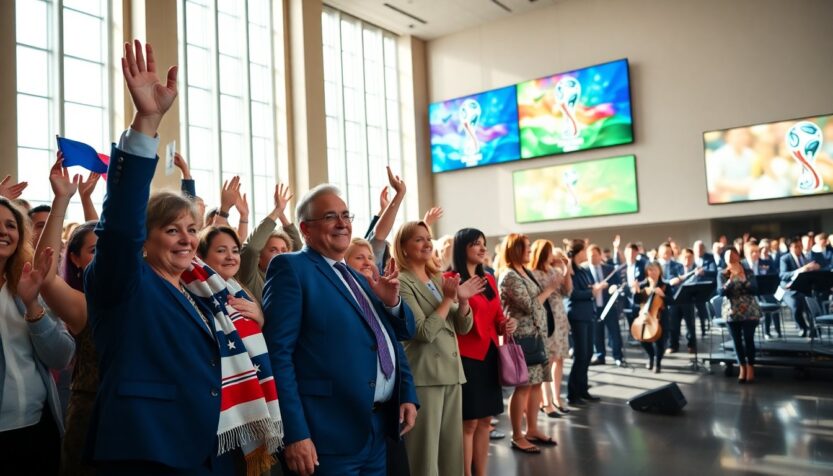
On a chilly Friday afternoon, the 2026 World Cup draw occurred at the Kennedy Center in Washington, D.C. Many anticipated a straightforward sporting event. However, the atmosphere quickly transformed into a theatrical celebration of U.S. President Donald Trump. While the draw was meant to determine match groups for the upcoming tournament in the United States, Mexico, and Canada, the focus shifted primarily to Trump.
The event began with a performance by renowned tenor Andrea Bocelli, who captivated the audience with his rendition of “Nessun dorma,” dressed in a striking blue velvet tuxedo and aviator sunglasses. Trump, positioned in an opera box adorned with the presidential seal, watched attentively. The finale featured the iconic group The Village People, whose anthem “YMCA” has become synonymous with Trump’s rallies, further enhancing the celebratory atmosphere of the evening.
The controversial FIFA Peace Prize
The highlight of the event was the unveiling of the newly minted FIFA Peace Prize, which was predictably awarded to Trump. A laudatory video showcased Trump’s diplomatic initiatives, particularly the Abraham Accords, which established relations between Israel and several Arab nations. However, the validity of certain claims, such as a supposed agreement between Serbia and Kosovo, raised eyebrows regarding the accuracy and intent behind the award.
Infantino’s close ties with Trump
Gianni Infantino, the president of FIFA, praised Trump during the ceremony, presenting him with a large gold trophy, a certificate of authenticity, and a medal described as “beautiful.” Trump, with characteristic bravado, draped the medal around his neck and declared, “This is one of the great honors of my life.” His remarks included claims about saving millions of lives, which some observers might find contentious given his administration’s mixed record on foreign policy.
Criticism from various quarters
The event, intended to unite nations through soccer, drew criticism from those questioning the motives behind honoring a leader with a tumultuous history in international relations and human rights. Critics pointed out that the award came less than a day after the Trump administration conducted airstrikes in the Caribbean, highlighting the dissonance between the award’s message and U.S. actions.
Political implications and reactions
The presentation of a peace prize in such a politically charged atmosphere alarmed human rights advocates and political figures. Former UN official Craig Mokhiber condemned the award as “shameful,” arguing it undermined FIFA’s stance on political neutrality, especially given the organization’s history of sanctioning players for political expressions.
Other notable personalities, including Canadian Prime Minister Mark Carney and Mexican President Claudia Sheinbaum, participated in the event despite existing tensions surrounding trade and immigration policies. Trump’s light-hearted comments about ticket sales and his experiences watching legendary players like Pele seemed to downplay the serious implications of international diplomacy and the struggles faced by many nations.
As the ceremony concluded, Trump’s enthusiasm was evident, particularly as he joined in the festivities with The Village People. Yet, many observers found the spectacle troubling, given the contradictions of awarding a peace prize amid ongoing conflict and division.
A mixed legacy for FIFA
The decision to award the FIFA Peace Prize to Trump casts doubt on the organization’s commitment to neutrality and raises questions about the integrity of the award itself. Critics have likened it to a “participation trophy,” suggesting that the honor reflects political maneuvering rather than genuine acknowledgment of peace efforts.
In a world increasingly divided by political strife, the choice to honor Trump sends a mixed message about FIFA’s values and priorities. As the soccer community prepares for the 2026 World Cup, these events serve as a reminder of the complex intersections between sports, politics, and international relations.