

The palate never lies. As a former chef turned food writer, I learned to read quality by taste and by touch. That same attention serves when choosing clothes and objects for daily life. This week’s selections focus on well-made items and small civic gestures that endure beyond trends.
Who: a French brand, local sellers and community volunteers. What: a capsule wardrobe drop, comfortable sneakers, an estate-sale pottery find and a grassroots fundraising movement. Where: products available online and stories rooted in local communities, including Minnesota. Why: each pick emphasizes longevity, craft and quiet social action.
These pieces and stories are practical rather than performative. They privilege fit over flash, repairability over disposal, and community-building over spectacle. Expect short product notes and concise local reporting that link design, heritage and solidarity.
Wear-forever clothing: Sézane and the appeal of timeless pieces
French label Sézane has issued a small capsule intended for daily wear. The collection centres on neutral fabrics, classic cuts and fewer seasonal embellishments. The result is garments that integrate easily into an existing wardrobe.
Designers at Sézane emphasize material choices that age well. Wool blends, heavyweight cotton and softly structured knits are prominent. These choices reduce the need for frequent replacement and simplify care. As a chef I learned that sourcing matters; the same applies to what you put on the body.
Practical details matter: reinforced seams, replaceable buttons and labels that advise repair extend each piece’s usable life. In an industry driven by turnover, such elements shift focus from impulse to investment.
In an industry driven by turnover, such elements shift focus from impulse to investment. The Sézane pre-spring selection leans into that logic with classic forms and sustainable fabrics. The collection favors soft cottons, relaxed tailoring and dresses built to endure. Pieces are designed to pair with sneakers or loafers without losing shape.
Why investment pieces matter
The palate never lies: quality reveals itself in texture and finish. Choosing a few reliable garments reduces impulse purchases and yields a more coherent wardrobe. Well-made items keep their shape and need fewer replacements. That lowers lifetime cost and environmental impact. The capsule wardrobe principle explains the shift: fewer pieces, worn more often, better outcomes for style and sustainability.
Sneakers that keep up: clean whites, a pop of color, and practical neutrals
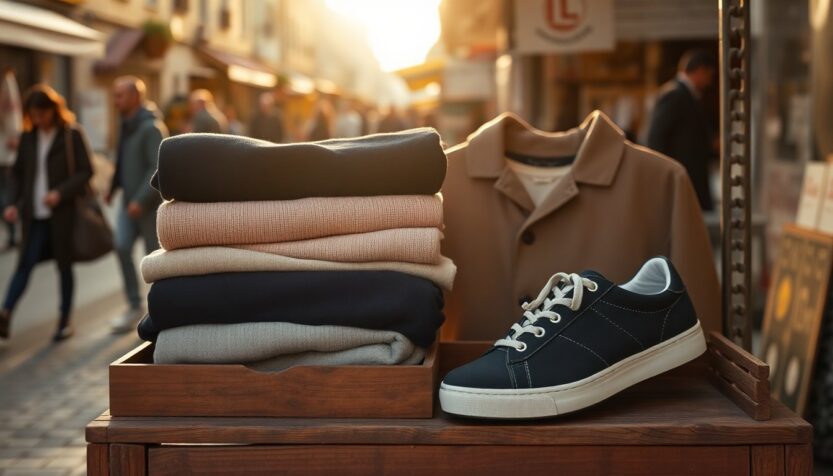
Sézane’s footwear selection emphasizes versatility. Clean white trainers provide a neutral base. A single pop of color updates tailored or soft silhouettes. Practical neutrals—taupe, navy, warm beige—extend wear across seasons. Soles are substantial but streamlined to preserve elegance with casual dress.
As a chef I learned that balance matters in every composition. Fabrics, cuts and footwear must work together like components on a plate. Behind every outfit there’s a story of material choices and supply chains. Here, transparent sourcing and durable construction are the through line.
Designers and buyers now measure success by longevity as much as by novelty. Expect further collections to lean into repairability and material traceability. Retail strategies appear to be shifting from churn to stewardship.
Everyday shoes that work
Retail strategies appear to be shifting from churn to stewardship. The palette of capsule wardrobes reflects that change. Everyday sneakers remain reliable wardrobe workhorses for that approach.
The palate never lies, and texture matters even in footwear. A clean white pair offers unmatched versatility for travel and daily wear. Choose a lightweight silhouette with moderate sole height to avoid a chunky look.
Ventilation features matter for warm-weather use. Mesh panels and perforations improve breathability without sacrificing structure. Read product reviews carefully; many modern trainers recommend sizing up by a half size for best fit and comfort.
Color and function
Color choices add personality while maintaining practicality. A colorful trainer—soft pinks, muted tans, or restrained reds—introduces visual interest without complicating outfits. Low-profile styles read as neutral and pair easily with dresses or tailored trousers.
For heavier use and travel, darker tones such as navy or black reduce visible wear. These options balance style and day-to-day utility while simplifying care and coordination.
Unexpected treasures: an estate-sale find and the story behind it
An estate-sale find in the collection underscores the curatorial shift toward longevity. The item served as a tangible example of how individual pieces can carry provenance and meaning beyond seasonal trends. Journalists and buyers noted the discovery during recent sourcing rounds.
Behind every piece there is a story of origin, use and stewardship. As a chef I learned that provenance shapes perception; the same applies to garments and accessories. Detailing who wore an item, and how it was cared for, adds context to value and desirability.
Curators emphasized the role of careful selection and repair in extending an item’s life. Embracing pieces with documented histories supports a market move from rapid turnover to considered ownership. This approach aligns with broader retail efforts to prioritise quality and traceability.
This discovery began when a reader recognised a handpainted mark on a plate bought at an estate sale. The object, once thought anonymous, proved to be a rare work by Deborah Sears of ISIS Ceramics. The mark read Oxford England, and the handpainting and technique matched Sears’s known output. Collectors value her pieces for their deliberate reference to 17th-century Delftware techniques. She also produced a collaboration with Juliska called Country Estate, which further confirmed the attribution.
The identification transformed a small bargain into a collectible with far greater market and cultural value. Library research, online auction records and reader tips all played a part in tracing the maker. Such sleuthing clarifies technical details like washing patterns, glaze composition and kiln marks. It also establishes provenance, a factor that often determines price and historical interest.
The story connects to retail trends favouring quality and traceability. When producers and buyers prioritise origin and craft, ordinary household objects can reveal deeper links to tradition and place. As a chef I learned that the tactile qualities of an item—its weight, glaze and brushwork—speak to its maker. The palate never lies; the eye and the hand tell comparable truths for ceramics.
Small acts that ripple: the red hat resistance and community knitting
Small acts that ripple: the red hat resistance and community knitting
The palate never lies; the eye and the hand tell comparable truths for ceramics. That sensibility carries into textile work, where touch and pattern encode meaning. A local knitting shop in Minnesota, Needle and Skein, designed the pattern for the so-called “Melt the ICE” hat. The design draws on a historical Norwegian wartime knit and was released for a modest fee.
The pattern has raised nearly $650,000 for local nonprofits that assist immigrants. Stockists and volunteers knit the red caps both as a visible symbol and as a fundraiser. Knitting circles and online groups have coordinated donations, sales and days of action. One organizer called for a worldwide day of resistance on February 26 to wear the caps in solidarity.
The project demonstrates how craft can function as political expression and civic care. Simple stitches have become a means to mobilise funds, build networks and signal empathy. Behind every object there is a story of production, distribution and intention.
How to join or support
Purchase the pattern directly from Needle and Skein or authorised stockists. A portion of proceeds supports local immigrant services.
Join a local knitting circle or online group to contribute hats. Many groups organise knit‑along sessions and supply drives.
Donate finished hats to community drop‑offs coordinated by partner nonprofits. Check pattern pages or shop announcements for collection points.
Support fundraising sales and auctions where proceeds benefit immigrant aid organisations. Volunteers often manage logistics and outreach.
Share verified information about knitting events and donation needs on social platforms to expand reach. Accuracy matters when organising civic action.
As a chef I learned that care for ingredients shapes the final taste. In textiles, care for makers and recipients shapes civic meaning. Small acts—stitch by stitch—can fund services and make solidarity visible.
How readers can help stitch solidarity
The palate never lies; small, carefully chosen gestures signal values as clearly as flavor profiles. Stitch by stitch, knitters can turn craft into cash for local services.
Buy the pattern and direct proceeds to the fundraiser. Finished makers can sell hats at community events. Non-crafters can amplify the effort through social channels or local newsletters.
Small businesses and independent makers can follow the same template: dedicate a product, publish clear terms for proceeds, and partner with a local organisation for distribution. This approach mobilises resources without large institutional backing.
Practical lifestyle notes
Consider a California-made haircare line for lighter texture and added volume. Choose simple bulbs and terracotta pots to refresh an outdoor space with minimal expense.
Like investing in a quality wardrobe staple or supporting a neighbourhood project, these modest choices accumulate into a more considered daily life. Behind every dish there’s a story, and behind every small act there can be measurable community impact.