
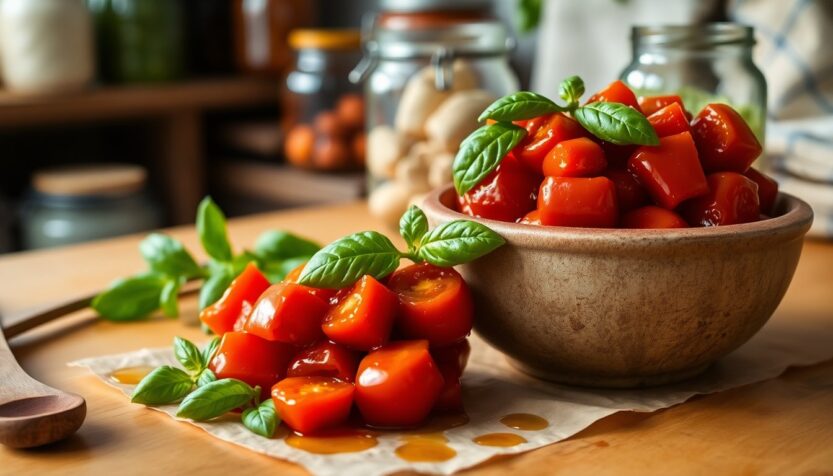
The palate never lies: fermented tomato confit with filiera corta basil
The palate never lies. Close your eyes and imagine the warm, sun-ripened perfume of tomatoes reduced gently into a glossy confit. The first taste is bright acid. Then a deep umami bloom curls into a lingering sweetness. This dish asks you to listen: to soil, to season, to the hands that harvested the fruit. As a former Michelin-starred chef turned food writer, I present a recipe that intersects fermentation, terroir and filiera corta in a jar.
Behind every tomato there is a story
The tomato begins in the field. Small-scale growers manage varietal selection and harvest timing to concentrate sugars and aromatics. The result is a fruit suited to slow cooking and controlled fermentation. I describe provenance because supply-chain choices alter texture and flavor as surely as technique.
Fermentation here is deliberate and modest. Salt, time and gentle heat coax natural yeasts into creating depth without masking freshness. The confit stage intensifies sweetness and softens acidity, while a short, purposeful ferment develops savory complexity. As a chef I learned that layering simple processes yields dishes with both clarity and density of taste.
Filiera corta basil completes the story. Locally sourced basil preserves volatile oils that vanish during long transport. Its bright, peppery lift balances the confit’s weight. Behind every dish there is a story of place and practice; this recipe foregrounds both.
The next section will outline precise technique, ingredient proportions and preservation notes so home cooks can reproduce the confit and an accessible ferment at scale.
The palate never lies. Behind every jar is a landscape: a hillside that baked fruit to sweetness, a hand that chose each berry by feel. Fermenting concentrates those impressions. It preserves aroma and texture while adding a savory, gently effervescent layer that deepens with time.
Technique made accessible: how to make fermented tomato confit
Start with ripe, firm tomatoes selected for balance between flesh and juice. Cut larger fruits into even wedges; halve cherry types. Drain excess liquid but keep some pulp to carry flavor through the process.
ingredients and ratios
Use roughly equal parts peeled tomatoes and olive oil by volume for the confit base. Add sea salt at 1.5 to 2 percent of the tomato weight for a reliable ferment. Include a small amount of sugar or honey only if the fruit lacks natural sweetness. Finish with a few leaves of basil from a short supply chain for freshness.
basic method
Layer tomatoes in a wide, shallow vessel. Sprinkle salt evenly between layers to draw out moisture. Cover with oil so fruit is submerged; this slows aerobic spoilage while encouraging controlled fermentation underneath.
Leave the jar at cool room temperature for two to five days to allow gentle lactic activity. Check daily for bubbles and aroma. The goal is a bright, tangy note beneath the caramelized tomato sweetness, not sharp acidity.
preservation and finishing
After the initial ferment, reduce the confit over low heat if you prefer a concentrated glaze. Alternatively, store jars in the refrigerator for immediate use, or process in a hot-water bath for longer shelf life. Hot-processing alters texture but secures preservation.
As a chef I learned that timing is decisive: shorter ferments retain fresh tomato character; longer ones develop savory depth. Taste frequently and document each batch to calibrate the process for your tomatoes and kitchen.
Behind every jar there’s a story of origin and season. This technique honors that story while giving home cooks a practical path to preserve terroir and extend summer on the table.
Roasted tomato confit with lacto-fermentation
The palate never lies: ripe tomatoes carry sunlight, soil and season in every bite. This technique honors that story while giving home cooks a practical path to preserve terroir and extend summer on the table.
Start with ripe, firm tomatoes—plum or heirloom. Wash and halve them, removing cores if needed. Salt lightly to draw out juices and enhance natural sweetness.
Roast gently. Arrange cut-side down in a thin layer of olive oil. Roast at 120–140°C (250–285°F) until the flesh softens but keeps structure, about 45–70 minutes depending on size. Low heat concentrates sugars without charring and preserves delicate aromatics.
Balance and finish. While still warm, toss with a pinch of fine sea salt and a dash of sugar to balance acidity. Allow the tomatoes to cool to lukewarm before the next step.
Lacto-fermentation for depth. Pack the tomatoes into a clean jar with their oil. Add a light brine or a touch of whey to encourage lactic cultures. Seal loosely and ferment at cool room temperature until a gentle effervescence appears. Short fermentation adds complexity and lifts the confit without overwhelming the fruit.
Practical notes: use a clean jar and maintain a thin oil head to limit oxygen contact. Monitor aroma and slight fizz as markers of healthy fermentation. Refrigerate once the desired acidity and effervescence are reached.
As a chef I learned that texture matters as much as taste. The result should be glossy, layered with umami, and versatile: spread on toast, folded into pasta, or served beside roasted meats. Behind every jar there is a story of place, and this method preserves it.
Behind every jar there is a story of place, and this method preserves it. The palate never lies: the confit will carry sun, soil and season into winter.
Ferment briefly. While still warm, tuck the roasted tomatoes into sterilized jars. Add a splash of their cooking oil and a light brine (1–2% salt by weight). Leave about an inch of headspace.
Maintain a cool room temperature, ideally 18–22°C (64–72°F). Allow gentle lacto-fermentation for 2–5 days, until small bubbles appear and the aroma is fresh and pleasantly tangy. Transfer to the refrigerator to slow activity and stabilise the flavour.
Tip: Place a small weight to keep fruit submerged and reduce surface exposure. Clear, yeasty scents and tiny bubbles are positive signs. Discard any jar that develops sharp, putrid off-odours or visible mould.
Connection to territory and tradition
As a chef I learned that preserving is a way of telling terroir. Each jar concentrates regional sunlight and the producer’s care. This technique respects short supply chains and seasonal rhythm. Consider varietal choice: meaty, ripe tomatoes yield richer umami and longer shelf life. Behind every dish there is a story of provenance, and this confit lets that story travel.
The palate never lies: a jar of preserved confit condenses a landscape into a single spoon. Behind every dish there is a story of provenance, and this confit lets that story travel.
I source ingredients through filiera corta to keep producers and table close. Local tomatoes and basil carry distinct notes of place. An Apulian clay soil gives a mineral whisper. A Ligurian slope offers citrus brightness. Southern summers add a smoky warmth.
Fermentation functions as preservation and as cultural memory. It extends shelf life and conserves seasonal flavour. It also encodes generations of practices, from southern Italy’s preserved vegetables to Mediterranean confits.
As a former chef, I learned that technique and territory must speak the same language. Slow Food and regional guides inform my choices. Tradition becomes a living map when producers are known and traceable.
Practically, a jar of confit is a portable terroir. It brings summer depth to a winter plate and adds narrative to everyday meals. Use it to finish a simple pasta, to enliven roasted vegetables, or to anchor a composed salad.
preserve a season in a jar
The palate never lies: a single jar can translate summer fields into a slice of bread. Use it to finish a simple pasta, to enliven roasted vegetables, or to anchor a composed salad.
Behind every dish there’s a story of growers, soil and season. As a chef I learned that technique honors those links. Choose filiera corta ingredients and respect the terroir that made them.
Practical steps sharpen the outcome. Roast tomatoes slowly until sugars concentrate. Pack them warm with olive oil to seal flavor. Let gentle fermentation or a short rest develop the hidden umami and stabilize the jar.
Share one jar with a neighbor and invite their tomato stories. Food is technique, conversation and care; this preservation is a way to transfer place, memory and season.
The next harvest will bring new notes. Store jars upright, cool and dark. Check seals before gifting, and label each jar with origin and method for future reference.