

Three small stories are quietly nudging how we talk about movies these days—about craft, about where films get made, and about how actors remake themselves.
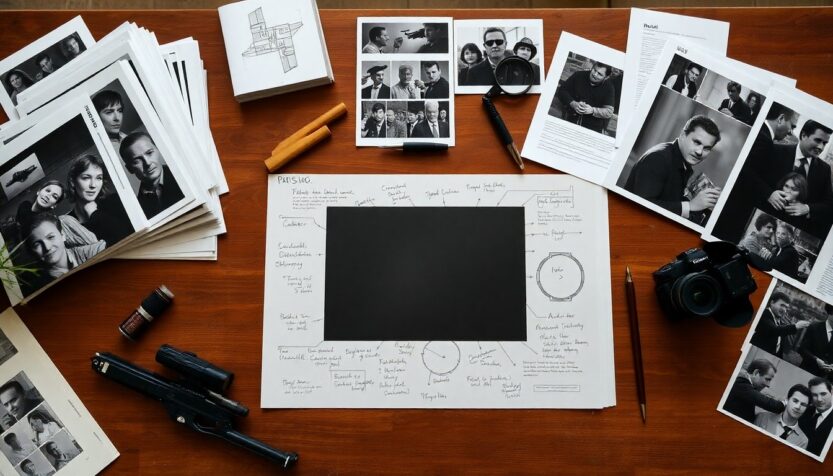
A visual tribute recasts Robert Duvall Vanity Fair’s February gallery does more than celebrate a familiar face. Curators assembled studio stills, production snaps and annotated frame scans that trace Duvall’s arc from early TV to Oscar-winning turns. The emphasis isn’t on glitz or gossip but on choices: lighting that sculpts a jawline, a gesture that rewrites a scene, moments of silence that speak louder than dialogue. Captions tie images to dates, collaborators and little provenance notes, so the series reads like a compact career study rather than a nostalgic slide show.
That editorial tilt matters. By foregrounding technique over celebrity, the gallery invites critics, teachers and younger viewers to reconsider Duvall’s work as material for study. Archivists and rights holders tend to watch these things closely: a focused retrospective can spark renewed streaming interest, retrospective screenings, licensing inquiries and fresh scholarship.
Pont Pictures heads to Serbia Across Europe, production realities are reshaping story-telling. Vienna’s Pont Pictures quietly retooled a slate of mid-budget genre films and has mapped out shoots in Serbia for. Night Sessions—a psychological thriller with Johnny Knoxville, directed by Gregor Schmidinger from Christopher Beachum’s Black List script—is the headline project. Other entries include Fractal, a time-loop piece with Jason Flemyng, plus Tunnel Vision and Amygdalla, the latter recently retooled to fit new financing parameters.
The move wasn’t aesthetic so much as arithmetic. Internal notes and scouting reports show a clear calculation: Serbia’s roughly 25% tax rebate, ready studio space and seasoned local crews produced a cleaner budget than Austria’s altered subsidy landscape. As a result, scripts were tightened, elaborate set pieces pared back and shooting schedules compressed to match rebate windows and local resources. In short, money and logistics redirected creative decisions—and the industry keeps adapting.
James Van Der Beek: a quieter chapter Meanwhile, James Van Der Beek seems to be in a more intentional phase—slower, reflective and selective about public exposure and projects. Rather than chasing high-volume visibility, his recent choices suggest an actor thinking about longevity: balancing health, family and roles that fit a different rhythm. The shift is less about reinvention for publicity’s sake and more about reorienting a public persona to match personal priorities.
Why these threads matter together Looked at in tandem, these stories show three forces shaping contemporary cinema: how images and curation can reframe an artist’s legacy; how subsidies, infrastructure and pragmatic finance decisions determine where and how films get made; and how performers manage careers in ways that affect both their craft and their public narrative. Each is a reminder that what we see on screen—whether a celebrated performance, a new thriller, or an actor’s next move—is often the product of unseen choices: curatorial judgment, balance-sheet arithmetic, or private reinvention.