
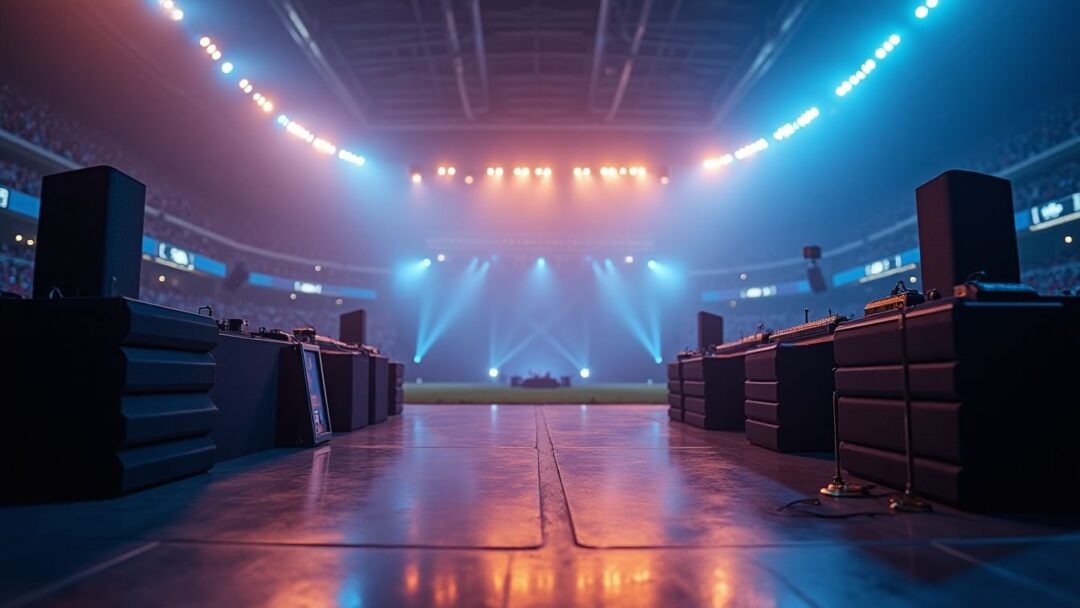
The 2026 FIFA World Cup final in New York City was not just a battle for the championship but also a stage for a historic halftime show. For the first time in the tournament’s history, a lineup of global pop stars took center stage, blending music and sports in an unprecedented spectacle. The event, produced in partnership with Global Citizen aimed to raise funds for the FIFA Global Citizen Education Fund showcasing the intersection of entertainment and social impact.
The halftime show featured a diverse array of performers, including Madonna who kicked off the event with a performance of her hit “Music” alongside Brazilian soccer legends Ronaldinho and Ronaldo. The show continued with a medley of performances, including BTS performing “Dynamite”, an orchestral rendition of “Seven Nation Army” by The Muppets and the Los Angeles Philharmonic, and a cameo by Jason Sudeikis and Brendan Hunt as characters from Ted Lasso. Justin Bieber delivered an acoustic performance of “Everything Hallelujah”, a Christian song of gratitude, while Shakira and Burna Boy closed the show with their World Cup anthem “Dai Dai”.
The Controversy Surrounding the Halftime Show
The halftime show, which lasted 27 minutes and 19 seconds, sparked controversy among soccer purists. The extended break, which exceeded the traditional 15-minute limit, drew criticism from fans and players alike. Robert Smith frontman of The Cure and a diehard soccer fan, launched a scathing critique on Instagram, targeting FIFA president Gianni Infantino and Donald Trump who watched the final together. The criticism highlighted concerns about the commercialization of the sport and the influence of corporate and political interests.
Despite the backlash, the halftime show was a testament to the growing cultural prominence of sports. A recent CNBC survey found that around 50% of Americans, regardless of political affiliation, viewed at least one World Cup match. Ticket resale prices soared to about $10,000 the day before the final, underscoring the event’s global appeal. The tournament had already minted stars like Erling Haaland and Jude Bellingham whose social media presence and fan following transcended the sport.
The Cultural Impact of the Halftime Show
The halftime show was more than just entertainment; it was a cultural moment that brought together music and sports in a unique way. The performances were layered in quick succession, creating a visual presentation that filled TV monitors but only occupied a small portion of the stadium’s space and attention. While some fans found the individual performances underwhelming, others appreciated the spectacle and the effort to blend different genres and cultures.
The show also highlighted the alliance between Donald Trump and Gianni Infantino who were seen together during the final. The advisory board of the FIFA Global Citizen Education Fund includes notable figures such as Ivanka TrumpThe Weeknd and Serena Williams reflecting the event’s high-profile support. Despite the criticism, the halftime show was in keeping with the tournament’s spirit of pageantry and global unity.
As the performers retreated from the field and the sprinkler system prepared the pitch for the final moments of the World Cup, it was clear that the event had made history. Justin Bieber exited the field as enigmatically as he had entered, but the World Cup had provided him with a stage as natural as Coachella. The tournament’s cultural impact was undeniable, and the halftime show was a memorable part of that legacy.


