



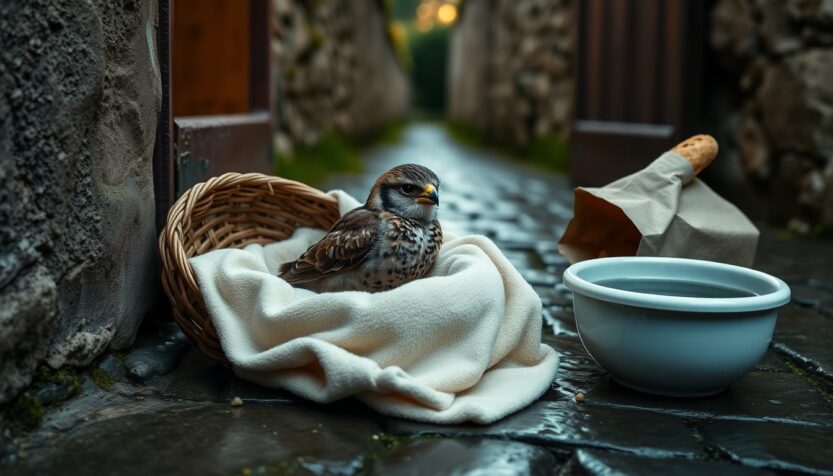
I lived in an old stone cottage on a quiet French farm when one ordinary errand became an extraordinary memory. On my drive back from the local boulangerie I noticed a tiny bird sitting in the lane near my gate. I pulled the car to the side, wrapped the fragile creature in a towel, and placed it gently in the hedgerow. That evening, when I returned home, the bird had sought me out again, soaked and shivering on my doorstep. The experience quickly shifted from a passing curiosity to a personal responsibility, and what followed tested patience, compassion, and the limits of what a single person can do for a wild animal.
First contact and improvised care
The next morning revealed more than I expected: the little animal was not a pigeon but a juvenile kestrel, a bird of prey that still depended on parental care. I had no specialized equipment, so I did what I could with household items. With tweezers I offered a small pouch of cat food, and the bird ate eagerly, mouth opening with the hunger of a very young creature. Out of concern that bringing it indoors might interfere with its ability to fend for itself, I wrapped it in a towel and returned it to the hedgerow, hoping to give it strength to fly. Those first improvised interventions were simple, but they mattered.
The decision to provide shelter
For two more days I followed the same routine: twice-daily feedings and careful observation. Rain and chill made each return to the door more worrying; the bird remained wet and vulnerable. I worried we were “losing the battle” as the weather persisted and it seemed unable to recover on its own. After weighing options and instincts, I placed the kestrel in a sheltered corner of my shed, wrapped in a soft towel to dry its feathers and offered water beside its food. I left a quiet space and, in a private moment, offered a little prayer. That choice to provide warmth and protection was the turning point.
Shelter as a turning point
The following day I opened the shed with a mix of hope and fear. Instead of the limp, forlorn bird I had tucked in the night before, I found a lively, fluffy bundle that hopped and chirped for more food. Energy had returned, feathers looked healthier after drying, and the little kestrel began to show the behaviors of a recovering fledgling — a young bird learning its wings and instincts. My neighbor had mentioned kestrels overhead earlier that week, and the possibility that the parents might be nearby gave me hope that reunion could still happen if the chick regained strength.
Release, reunion, and reflection
After reinforcing the bird with another feeding, we carried it to a barn on the property and waited patiently for signs of parental return. We sat for hours, watching the skies and listening to calls, calling gently ourselves in hopes of guiding its family back. Eventually, after persistent calling and a tense silence, the little kestrel gathered itself and took flight. Seeing that tentative lift-off and the subsequent swoop of adult birds above was a deeply moving moment; I felt a surge of pride and relief. Watching them disappear into the open sky, I reflected on courage, reliance, and the simple bravery of asking for help.
What it taught me about hope
Years later I still think about that tiny bird and the unknown legacy of its survival — perhaps a nestful of descendants owes their existence to those few meals and hours of shelter. I do not claim that small acts can rewrite every fate: life includes the inevitability of birth and death. Yet this episode reinforced that hope and timely care can tilt outcomes in favor of life. Sometimes a seemingly minor intervention becomes the dividing line between loss and continuity. The story is a reminder to remain attentive and compassionate when an opportunity to help presents itself.
Practical takeaways and invitation
If you encounter a wild bird in distress, reassess the scene calmly: immediate actions can matter. Simple measures — offering warmth, minimal food using tweezers, and temporary shelter — may sustain a young bird until professional rehabilitation assistance arrives. Remember that a fledgling may look vulnerable yet still be in the care of its parents, so observation is often the safest first step. Above all, do not underestimate the ripple effects of a single act of care. Have you ever rescued an animal? Share your experience and outcomes — these stories teach us practical lessons and keep the spirit of community-driven wildlife rescue alive.