

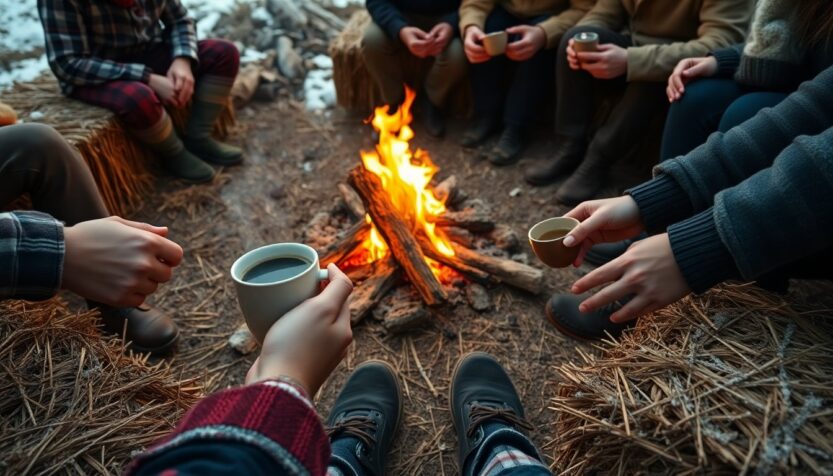
I came back from a short trip to my parents’ place in Michigan with bonfire smoke in my hair and the satisfying crunch of frost under my boots. The weekend felt small and full: climbing hay bales, lingering over coffee, catching up with an old college roommate. Those tiny rituals—so ordinary they almost go unnoticed—have a way of naming who we are within a family.
One thread that kept tugging at me while I was there was birth order. Family gatherings tend to rerun old roles: the eldest who takes charge, the middle one smoothing tensions, the youngest nudging everyone into mischief. Watching those dynamics play out across generations made me think about how habits and repeated exchanges quietly shape our stories.
Rituals are the scaffolding of family life. Pouring the morning coffee, stacking wood, offering a hug before someone leaves—these are tiny, repeated acts that encode expectations and teach us how to behave. Psychologists and sociologists argue that birth order often correlates with certain tendencies—leadership, peacemaking, risk-taking—but it’s the everyday routines that do the heavy lifting in forming identity. Shared meals, neighborhood walks, the chores everyone knows how to do: they act like informal institutions, stabilizing relationships and building trust over time.
If you want to see those themes onstage, the University of Scranton Players are mounting The Spitfire Grill, an intimate musical about second chances and found family. It’s a quiet story about people rebuilding trust through small gestures—the same neat, everyday work that holds homes and towns together.
Details:
– Who: University of Scranton Players
– What: The Spitfire Grill (musical)
– When: Feb. 27, Feb. 28, March 1, March 6, March 7, March 8
– Where: University of Scranton campus
– Times: Fridays and Saturdays at 8 p.m.; Sundays at 2 p.m.
– Tickets: $10 general admission; $7 for students and faculty/staff. Available online and at the door.
Seeing a play like this is more than entertainment. It’s an exercise in empathy: watching characters stitch their lives back together nudges you to reconsider how compassion and belonging get made—often by the tiniest, most mundane things. Local theatre invites people into a shared moment, and those moments ripple outward: volunteers and patrons meet, conversations begin, networks form. That’s how cultural life helps keep communities resilient.
Practical ways to deepen that impact are simple: make casting and programming more inclusive, keep tickets accessible, and partner with local services so the theatre connects with broader community needs. Track what matters—attendance, volunteer hours, partnerships—and you’ll see how goodwill becomes lasting support.
Books do a similar job. The slate of releases coming in 2026 leans into memory, identity and the slow work of repair. Memoirs that preserve endangered languages, novels that trace sibling bonds, and essays on intergenerational survival—these are the kinds of books that act as mirrors and windows. They help families name patterns and imagine alternatives.
When a book enters a household—read aloud at night, wrapped as a gift, or discussed over coffee—it becomes part of the ritual economy. Those repeated encounters with story nudge conversations about who we are and how we remember. Reading together can subtly shift how traditions get passed down, how grief is held, and how new customs take root.
On the drive back from Michigan I found myself sifting through the continuity of small habits and the new stories I want to invite into my family. Whether it’s a community musical, a freshly published memoir, or a revived childhood ritual, these cultural touchstones teach belonging, forgiveness, and how to begin again.
One thread that kept tugging at me while I was there was birth order. Family gatherings tend to rerun old roles: the eldest who takes charge, the middle one smoothing tensions, the youngest nudging everyone into mischief. Watching those dynamics play out across generations made me think about how habits and repeated exchanges quietly shape our stories.0