

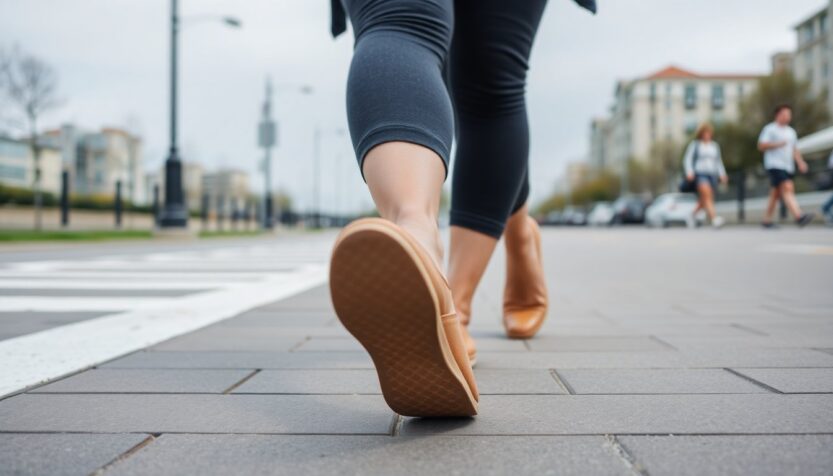
Why intentional walking matters
As we get older, walking can start to feel different. Steps may shorten, pauses creep into your stride, and your eyes tend to drop to the ground. Those tiny changes make walks less enjoyable and quietly raise the chance of a stumble or fall. The good news: small, consistent adjustments can restore confidence and make walking feel effortless again.
Who benefits: women in midlife and beyond who want to stay active and steady.
Where to practice: any flat, clear space — at home, on a quiet sidewalk, or in a park.
What to focus on: mindful posture, a slightly longer step, and short daily balance drills.
The payoff: fewer trips, easier movement, and more independence.
Simple posture and stride changes to safer walking
If you’ve noticed your gait shifting, try these easy habits. They’re quick to learn and make a big difference in stability and comfort.
- – Stand tall, but relaxed. Ground your weight evenly through both feet.
- Look forward. Keeping your chin level and scanning ahead naturally lengthens the step and helps you spot obstacles sooner.
- Align your body: stack shoulders over hips and hips over ankles. Relax your shoulders and lightly engage your core to support your pelvis.
- Aim for a smooth heel-to-toe roll: land on the heel, transition through the midfoot, and push off with your toes. This rhythm prevents sudden lunges.
- Increase stride length gently — an extra centimeter or two at first — and repeat until it feels natural.
- Let your arms swing. A relaxed, opposite-arm swing helps balance and smooths your rhythm.
The role of arm movement
Arm swing isn’t just for show — it’s a built-in stabilizer. When your shoulders are loose and each arm moves opposite the leg, you create a counterbalance that steadies motion and carries momentum. Think of your arms as quiet partners that keep each step steady.
Short exercises to boost balance and strength
You don’t need long workouts. Short, frequent practice is more effective for everyday walking.
Try these daily mini-drills (2–5 minutes each):
– Heel raises: stand behind a chair, lift up onto your toes, lower slowly. Repeat 10–15 times to strengthen calves and improve push-off.
– Single-leg stands: hold a chair for support if needed, lift one foot slightly and balance for 10–20 seconds. Do 3–5 rounds per leg.
– Tandem walk: walk in a straight line placing heel to toe for 10–20 steps to challenge balance and coordination.
– Ankle circles: seated or standing, rotate each ankle 10 times in both directions to increase mobility.
These short sessions sharpen ankle control and steadiness without much time or equipment.
Tracking progress and staying consistent
Small changes add up. Keep it simple:
– Log three short sessions a week or aim for a few minutes daily.
– Note one measurable change each week — longer steps, fewer stumbles, or walking without thinking about balance.
– Use reminders: a calendar checkmark, phone alarm, or a sticky note by the door.
Celebrate tiny wins. Progress can be slow but steady — and worth it.
Progression and safety
Gradually increase challenge: add more repetitions, hold a single-leg balance a bit longer, or try walking on a slightly uneven surface once you’re steady. Always prioritize safety:
– Practice near a sturdy chair or wall.
– Wear supportive shoes and pick well-lit, obstacle-free spaces.
– If you have medical concerns or a history of falls, consult a clinician before trying new balance work.
Who benefits: women in midlife and beyond who want to stay active and steady.
Where to practice: any flat, clear space — at home, on a quiet sidewalk, or in a park.
What to focus on: mindful posture, a slightly longer step, and short daily balance drills.
The payoff: fewer trips, easier movement, and more independence.0