

Paul Anthony Kelly, a Canadian model with nearly two decades in the fashion world, has been tapped to play John F. Kennedy Jr. in Ryan Murphy’s forthcoming Love Story. The announcement thrust Kelly into an unusually bright spotlight: the part demands not only a striking physical likeness but also the emotional nuance to inhabit a figure countless viewers already feel they know.
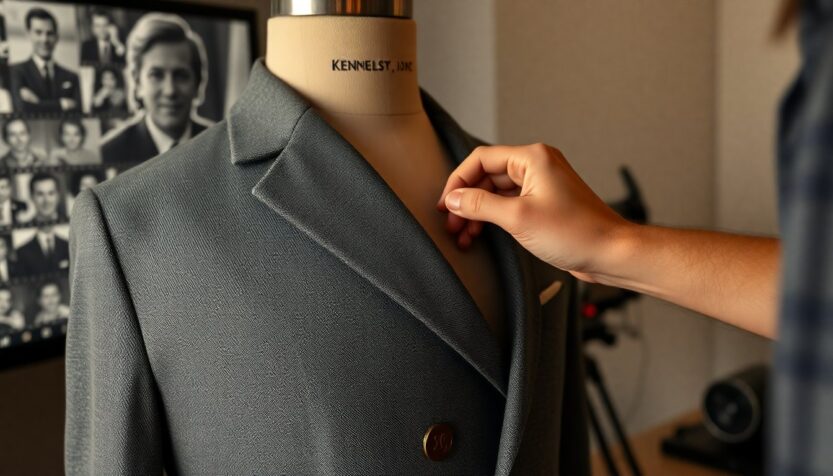
His preparation was exhaustive. Kelly spent months working with dialect and acting coaches, combed archival footage and recordings, and absorbed magazine layouts and interviews to learn the rhythms of JFK Jr.’s public voice. Wardrobe and grooming were treated as extensions of character work: early-1990s silhouettes, carefully tailored jackets, and period-accurate hair and posture all helped sell the illusion. He also underwent a rapid physical transformation—adding muscle and adjusting conditioning—to better match the era’s athletic, off-duty look without turning the performance into mere impersonation.
Kelly’s casting is a study in deliberate trade-offs. Murphy’s team wanted someone unfamiliar enough that audiences would accept him as an icon rather than see him as a celebrity playing another celebrity. Kelly’s runway composure, his on-camera warmth during chemistry reads with Sarah Pidgeon (who plays Carolyn Bessette), and his resemblance tipped the scales in his favor.
Behind the scenes, the approach was painstakingly small-scale: repeatable, reliable gestures, a calibrated walk, and consistent speech cadences that build a coherent on-screen persona across scenes. Those choices point to a modern truth about prestige television—credibility often emerges from cumulative detail rather than single grand moments.
Murphy’s influence is part aesthetic, part marketing. The production’s rollout leaned into that cumulative credibility—short clips, carefully timed images and promotional windows designed to spark social sharing and press pickup. As clips and stills circulated, viewers zoomed in on likenesses and mannerisms, accelerating Kelly’s visibility from known industry face to subject of broader public conversation.
That rapid attention brings familiar tensions. Kelly has acknowledged the objectifying side of sudden fame; where modeling prizes surface-level perfection, acting demands interior life. He speaks about the role as a chance to stretch beyond the runway’s confines while recognizing how appearance will always shape first impressions.
Portraying a well-documented public figure also carries ethical and aesthetic tightropes. Directors and editors have to balance nostalgia and admiration with a responsibility to avoid caricature—especially when the person’s life and legacy still resonate culturally. Early responses suggest the production’s focus on small, repeatable behaviors has helped the portrayal feel anchored rather than merely imitative.
For Kelly, Love Story is more than a high-profile credit; it’s a potential career inflection point. If the performance convinces critics and audiences alike, it could open a wider range of roles. If not, it risks marking him as a momentary sensation. Either way, the episode highlights how contemporary star-making works: careful preparation, detailed craft, and a marketing machine that can convert a single casting choice into worldwide curiosity almost overnight.