



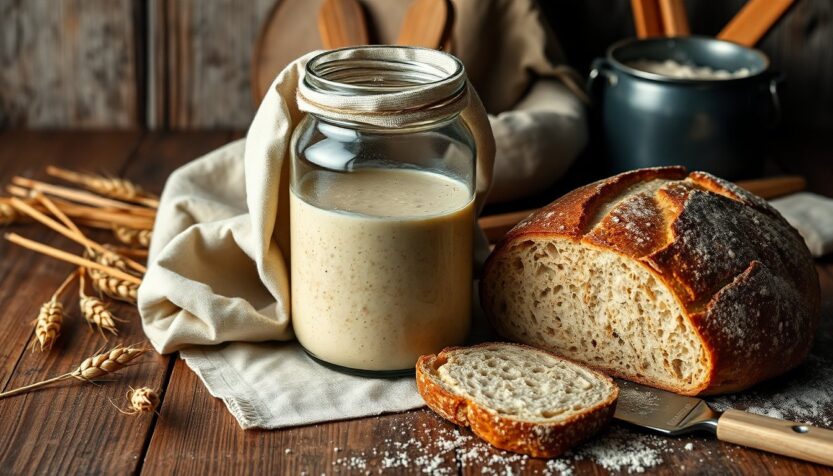
sourdough revival: the art of natural fermentation
The palate never lies… The crack of a warm crust, the faint tang that rises like a memory, the soft crumb that cradles grain and time. This is sourdough at its most honest: a few ingredients transformed by patient biology into a loaf that expresses place and care.
behind every loaf: a living story
Behind every dish there’s a story… A starter preserves a lineage. The wild yeasts and bacteria that inhabit a sourdough starter act like culinary fingerprints. They reflect the flour, the water, the air and the hands that tend them. From village mills to urban bakeries, a simple mix of flour and water becomes a micro-ecosystem that carries terroir in its bubbles.
As a chef I learned that starters respond to technique and environment. Feeding schedule, hydration level and flour choice shape flavor and strength. Bakers pass starters and methods across generations, creating distinct regional profiles.
how natural fermentation works (in accessible terms)
Natural fermentation depends on a balance of wild yeasts and lactic acid bacteria. Yeasts produce gas that leavens dough. Bacteria create organic acids and aromatic compounds that build flavor and shelf life.
Feed a starter with flour and water and native microbes multiply. Fermentation proceeds in stages: initial gas production, acidification and complex aroma development. Temperature, dough hydration and salt modulate each stage.
Technically, hydration influences enzyme activity and gluten development. Cooler temperatures slow fermentation and favour acidity; warmer temperatures speed fermentation and favour yeast-driven lift. Simple adjustments yield predictable changes in crumb, crust and taste.
This article continues by outlining practical methods for building and maintaining a starter, troubleshooting common faults, and adapting techniques to different flours and climates.
The palate never lies. Behind every dish there’s a story of time, biology and choice. As a chef I learned that fermentation is controlled patience: flour and water begin a conversation that the environment and microbes continue. Wild yeasts and lactic acid bacteria shape texture, aroma and shelf life. Yeasts lift the dough with carbon dioxide. Bacteria build acidity that preserves the crumb and lends sourdough its characteristic tang. Together they produce a balance of umami, acidity and aromatic complexity.
Continuing practical methods for building and maintaining a starter requires attention to simple, repeatable routines. Feed the starter at consistent intervals to sustain yeast vigor. Keep temperature steady; warmth accelerates activity while coolness moderates it. Adjust hydration to nudge the microbial mix: a stiffer starter favours one profile, a wetter one another. Sensory cues—bubbles, scent, and rise time—remain the most reliable indicators of readiness.
- Feed in the morning and evening when fermentation cycles are active.
- Rotate temperatures: a short warm phase can boost activity before a cooler retardation for flavour development.
- Match hydration to flour type; whole grains often demand more water.
- Use sight and smell: a pleasant, tangy aroma and steady bubbling signal health.
Technique refines flavour. Gentle folding preserves gas and strengthens gluten. Long, cool fermentations deepen acidity and aroma without sacrificing crumb structure. When troubleshooting, isolate variables: change one factor at a time—temperature, water, or feed ratio—and record results. This measured approach turns trial into knowledge.
From technique to table: shaping flavor
Every shaping decision echoes in the final loaf. Tight tension yields an open crumb and glossy crust. Slower proofs concentrate flavour; faster proofs favour mildness and lighter texture. Consider flour provenance and milling freshness; they inform hydration, mixing and proofing choices. Behind every slice there’s a story of terroir, technique and time—serve it with that context in mind.
Behind every slice there’s a story of terroir, technique and time—serve it with that context in mind. The palate never lies, and sourdough reveals both intention and origin in its crumb and crust.
Sourdough flavor reads like layered testimony. Long, cool fermentations yield pronounced acids and layered aroma. Short, warm proofs preserve fragile floral and sweet notes. An autolyse step — hydrating flour before kneading — lets gluten develop gently and improves mouthfeel. Gentle folding during bulk fermentation builds structure without exhausting the dough. These simple gestures convert basic ingredients into a loaf with distinct character.
Filiera corta and sustainable choices
As a former chef and food writer I favour transparent, local supply chains. Choosing locally milled flour links the loaf to a specific place and producer. Grain selection alters not only nutrition but also the microbial profile of your starter. Heirloom varieties and whole grains contribute oils, bran and micronutrients that enrich fermentation. Prioritizing small mills, seasonal grain and reduced waste embeds sustainability into the baking process.
Connection to tradition and place
Every loaf carries local memory. Terroir appears in texture, aroma and the rhythm of proofing. As a chef I learned that traditional methods adapt to available grain and climate. Explaining technique helps bakers respect lineage while making intentional choices. Behind every dish there’s a story of people, place and practice — and a well-made sourdough tells that story plainly.
Behind every dish there’s a story of people, place and practice. A loaf can map soil, climate and craft. Bakers preserve memory through habits and small choices. Using local grain, feeding a long-lived starter or buying from a careful baker are acts of cultural stewardship.
An invitation to bake and taste
The palate never lies: observe, compare and record what you find. Begin by tasting two loaves side by side. Note crumb texture, crust snap and the acid and sweet notes in the crumb. As a chef I learned that technique serves the ingredient; let the grain and its provenance dictate the method.
Start a starter if you wish, or seek a baker who tends theirs with care. A living starter holds microbial memory that shapes aroma and flavor. Try a loaf made with local whole-grain flour and contrast it with one from industrial white flour. The differences reveal milling, maturation and the attention given during fermentation.
Describe what you sense in concrete terms: mineral, nutty, lactic, or toasted. Relate those notes to field, harvest and mill. Behind each loaf there is a chain of decisions — from seed selection to oven timing — that connects table to terroir.
from field to crumb: the sensory logic of a loaf
The palate never lies. Behind each loaf there is a chain of decisions — from seed selection to oven timing — that connects table to terroir.
who and what
Bakers, millers and growers shape the loaf through choices in grain, milling and hydration. These choices determine texture, aroma and shelf life. The result is not merely bread but a living record of place and practice.
how it works: the science of taste
As a chef I learned that fermentation is both craft and chemistry. Wild yeasts and bacteria consume sugars and produce acids, alcohol and gases. This process creates the complex flavors often described as umami, bright acidity and nutty notes. Controlled timing and temperature steer the microflora toward desired outcomes.
Use of a mature starter emphasizes sourdough character. Slow, cool fermentation enhances depth. Short, warm fermentations yield fresher, milder profiles. Bakers adjust hydration and folding to influence crumb structure and crust development.
why the method matters
Natural fermentation improves digestibility and preserves nutrients. It also extends shelf life without additives. From a sustainability perspective, slow techniques pair with local supply chains to reduce waste and support artisanal economies.
where flavor meets place
Terroir emerges through grain variety, soil minerals and regional milling practices. Flavors that seem intangible on the palate often map to concrete factors in the field. Sourcing from nearby growers preserves that link and fosters resilient supply chains.
practical guidance for home bakers
Keep a single, well-maintained starter. Observe aroma and activity rather than strict timings. Test small variations in hydration to find a preferred crumb. Document each bake: the notes make patterns visible and improve repeatability.
Behind every dish there’s a story and every loaf offers a place to begin. For cooks and bakers aiming to connect table and territory, tasting is the most reliable guide.