



The Met Gala occupies a unique place where high fashion, celebrity culture, and museum fundraising intersect. While it is often portrayed as simply a dazzling red carpet evening, the event serves a practical purpose: it raises essential money for the Costume Institute, the museum department responsible for funding its own operations and future exhibitions. In 2026 the gala generated a record $31 million, underscoring how the night supports blockbuster shows and the institute’s annual budget. Understanding this context helps explain why theme and presentation are carefully considered rather than arbitrary.
One common source of confusion among viewers is the difference between an exhibition’s scholarly focus and the gala’s actual clothing prompt. The exhibition may be highly academic or oriented toward curatorial research, while the evening’s attire is usually a distilled, wearable idea intended to spark creativity on the red carpet. For 2026 the museum’s spring exhibition is titled “Costume Art”, curated by Andrew Bolton, and the gala dress code is “Fashion Is Art”. That shorthand invites many interpretations but does not always mirror the exhibition’s full intellectual ambitions.
When, where, and how to watch
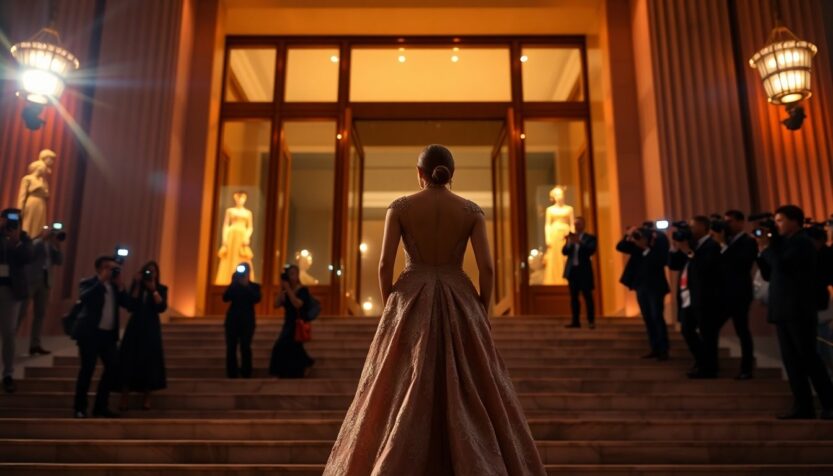
The gala traditionally falls on the first Monday in May and the 2026 event is scheduled for Monday, May 4. The red carpet will be livestreamed by Vogue across its digital platforms, including YouTube and TikTok, with coverage beginning at 6:00 p.m. EDT / 3:00 p.m. PST. Hosts for the red carpet include Ashley Graham, La La Anthony, and Cara Delevingne, with Emma Chamberlain returning as a correspondent. Physically, the evening unfolds at the Metropolitan Museum of Art, where guests are photographed on the museum’s grand staircase before entering to preview the exhibition and attend the party.
Tickets, sponsors, and the guest roster
Attendance at the Met Gala is strictly by invitation. Individual tickets are priced at $75,000, and companies or fashion houses frequently purchase tables, which cost around $350,000. Major sponsors play a visible role in both the gala and the exhibition: Amazon is the lead sponsor in 2026, and Jeff Bezos and Lauren Sánchez Bezos will serve as honorary chairs. The gala’s cohosts include Beyoncé, Nicole Kidman, Venus Williams, and Anna Wintour, while Anthony Vaccarello and Zoë Kravitz are cochairs of the Gala Host Committee. Committee members span entertainers, athletes, and artists such as Sabrina Carpenter, Doja Cat, Gwendoline Christie, Alex Consani, Misty Copeland, Elizabeth Debicki, Lena Dunham, Paloma Elsesser, LISA, Chloe Malle, Sam Smith, Teyana Taylor, Lauren Wasser, Anna Weyant, A’ja Wilson, Yseult, Adut Akech, Angela Bassett, Sinéad Burke, Rebecca Hall, Aimee Mullins, Tschabalala Self, Amy Sherald, and Chase Sui Wonders.
What the exhibition examines and how the dress code translates it
Andrew Bolton designed “Costume Art” to emphasize the relationship between clothing and representation by centering the dressed body in the museum’s galleries. The show will present roughly 400 objects from the collection and organize them around body types such as “Classical Body,” “Pregnant Body,” and “Mortal Body.” This curatorial framing interrogates how garments shape and express bodily identity across eras. For visitors to the museum, those categories offer layers of meaning; for gala guests, the museum’s research is often simplified into an evening-appropriate cue.
From concept to costume
History shows that the gala’s dress code usually serves as a digestible version of the exhibition’s themes. For example, the 2019 exhibition on camp—titled “Camp: Notes on Fashion”—was accompanied on the red carpet by a dress code labeled Studied Triviality, a phrase that channeled camp’s irony rather than reproducing the exhibition’s full academic context. Similarly, the 2026 exhibition “Superfine: Tailoring black style“ explored complex histories of Black dandyism; the gala’s dress code, Tailored for You, steered attendees toward individualized takes on tailoring. Such translations allow designers and guests to respond creatively while keeping the evening accessible to a broad audience.
How guests are likely to interpret “Fashion Is Art”
The 2026 dress code, Fashion Is Art, intentionally leaves room for interpretation and has already prompted reports of attendees directly referencing historic paintings or treating garments as sculptural statements. Because the phrase is both evocative and broad, it encourages choices that range from literal homages—garments that echo artworks—to conceptual responses that foreground craftsmanship, silhouette, or the body itself. The best red carpet looks often arrive where research-informed themes meet theatrical imagination.
Why the distinction matters
Understanding the split between exhibition theme and dress code clarifies both the museum’s mission and the gala’s role in public programming. The Costume Institute relies on the gala to fund exhibitions and operations, and the red carpet functions as a popular, visual entry point into that work. By translating scholarly themes into an approachable attire prompt—an evening dress code rather than a thesis—the event invites a global audience to engage with museum scholarship through spectacle, thereby connecting fundraising, education, and fashion in a single night.