

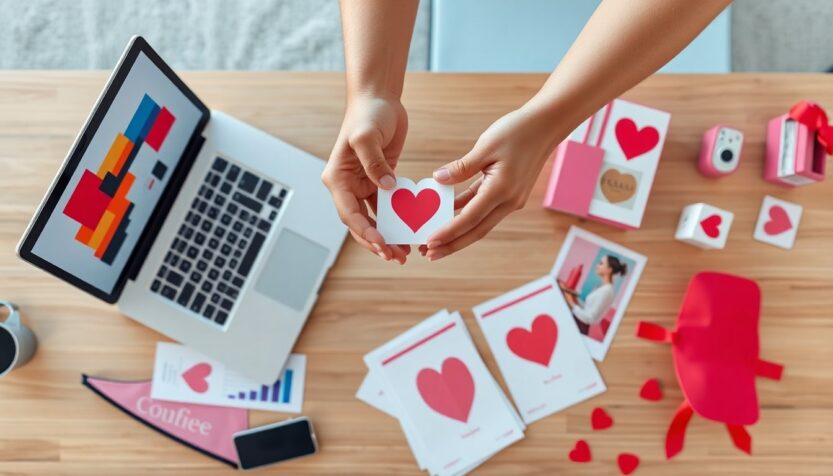
Two trends are quietly reshaping first impressions—one in hiring, the other in fashion marketing—and they share the same insight: presentation changes how people respond.
What’s happening
– Who: job seekers, recruiters, fashion houses and shoppers.
– What: a rise in “visual cover letters” and an uptick in seasonal, narrative-driven Valentine’s campaigns.
– When: media coverage and industry chatter intensified around 16/02/2026.
– Where: recruitment platforms, inboxes and fashion marketing channels worldwide.
– Why: clear structure and purposeful design help viewers find the signal in a noisy feed—whether that’s a candidate’s impact or a brand’s emotional promise.
Why design matters in hiring
Recruiters are wading through large volumes of applications. Visual cover letters—compact layouts that blend a short lead sentence, a bullet summary of achievements and a tidy panel of metrics or tools—make it easier to scan for relevance. Several hiring teams report faster engagement and crisper early-stage evaluations when core qualifications are surfaced visually.
That advantage, however, is double-edged. Visual formats reward candidates who can translate experience into tidy graphics, which may favor designers or those with template-savvy. Recruiters now face new screening questions: does a striking layout reflect job fit or simply presentation flair? Expect teams to add evaluation criteria that separate meaningful evidence from style alone.
Practical tips for candidates
– Lead with one clear sentence that states the role you want and why you fit. Make it unambiguous.
– Use typographic hierarchy to guide the eye: name, headline, then three achievement bullets.
– Show metrics. Numbers—revenue impact, conversion lifts, time saved—give instant credibility.
– Keep fonts legible, color restrained and spacing generous. Clutter defeats the point.
– Link to a full résumé or portfolio for depth; the visual letter should invite, not replace, follow-up.
How Valentine’s Day became a storytelling lab
In parallel, fashion brands are treating Valentine’s Day as more than a sales spike; they’re staging compact narratives that turn seasonal sentiment into brand signals. Some houses favour quiet personalization—embroidered initials, bespoke packaging, artisanal collaborations—inviting a sense of intimacy and ownership. Others choose spectacle: sculptural chocolates, theatrical shop vignettes and limited-edition jewels that fuel immediate desire and earned media.
Both approaches rely on the same mechanics that make visual cover letters effective: a clear emotional hook, a concise benefit and tangible proof. Brands that place product quality and provenance alongside the aesthetic are getting better retention than those that rely on superficial gimmicks.
What brands should mind
– Personalisation can lengthen consideration and increase perceived value. But it must be real—token engraving won’t sustain loyalty.
– Limited runs create urgency, but repeated, identical drops can numb buyers. Scarcity works best when paired with genuine craft or a story people want to own.
– Local or cultural specificity—referencing rituals, artisans or regional crafts—builds authenticity and reduces the brand-consumer distance.
Where both trends converge
At heart, this is about signposting. Whether you’re presenting a candidate or presenting a product, you want the viewer to find the important bits within seconds. That means disciplined hierarchy, concise copy and evidence up front. Superficial polish without verifiable substance backfires in both hiring and retail.
Operational consequences
Recruiters are experimenting with new templates, pilot programs on application platforms and updated screening rubrics that account for design-forward materials. Brands are testing campaign formats and measuring conversion and post-purchase engagement to see which narratives stick.
What’s happening
– Who: job seekers, recruiters, fashion houses and shoppers.
– What: a rise in “visual cover letters” and an uptick in seasonal, narrative-driven Valentine’s campaigns.
– When: media coverage and industry chatter intensified around 16/02/2026.
– Where: recruitment platforms, inboxes and fashion marketing channels worldwide.
– Why: clear structure and purposeful design help viewers find the signal in a noisy feed—whether that’s a candidate’s impact or a brand’s emotional promise.0
What’s happening
– Who: job seekers, recruiters, fashion houses and shoppers.
– What: a rise in “visual cover letters” and an uptick in seasonal, narrative-driven Valentine’s campaigns.
– When: media coverage and industry chatter intensified around 16/02/2026.
– Where: recruitment platforms, inboxes and fashion marketing channels worldwide.
– Why: clear structure and purposeful design help viewers find the signal in a noisy feed—whether that’s a candidate’s impact or a brand’s emotional promise.1
What’s happening
– Who: job seekers, recruiters, fashion houses and shoppers.
– What: a rise in “visual cover letters” and an uptick in seasonal, narrative-driven Valentine’s campaigns.
– When: media coverage and industry chatter intensified around 16/02/2026.
– Where: recruitment platforms, inboxes and fashion marketing channels worldwide.
– Why: clear structure and purposeful design help viewers find the signal in a noisy feed—whether that’s a candidate’s impact or a brand’s emotional promise.2