
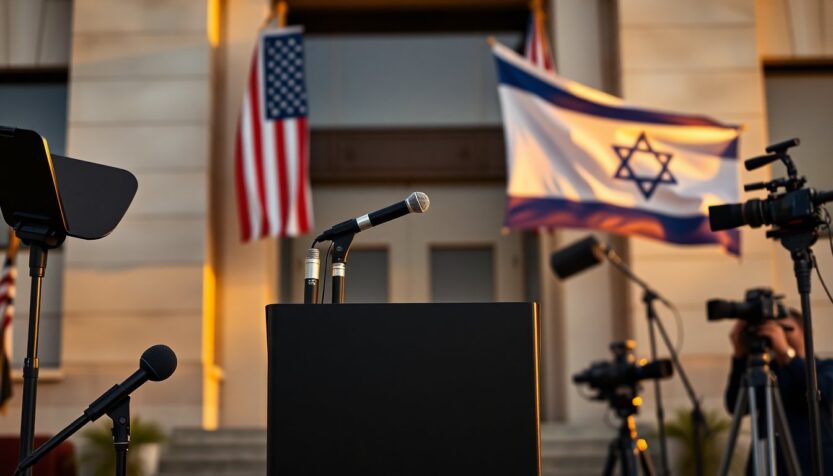
Mike Huckabee, the U.S. ambassador to Israel, has moved to clarify comments that drew attention after a televised exchange with Tucker Carlson. The interview, which aired widely online, generated debate over his phrasing and tone and prompted questions about how off-the-cuff remarks from senior envoys get read in a polarized media landscape.
Clarifying his intent In a profile published on 27/02/, Huckabee said he stood by the broader thrust of his remarks while disputing some characterizations that circulated after the broadcast. He portrayed the interview as an effort to explain U.S. policy priorities and to warn against actions he believes could escalate violence — not as an endorsement of specific military steps. Huckabee described the appearance as “kind of strange” and stressed that televised formats compress nuance into sound bites, increasing the risk of misinterpretation.
What happened and why it matters The exchange with Carlson quickly became part of a larger conversation about how diplomatic language is received in real time. Critics argue Huckabee’s clarification fell short, saying the original remarks intensified already heated public sentiment about Israel and the Gaza conflict. Supporters counter that candid, plainspoken exchanges can reach different audiences and correct misunderstandings faster than formal communiqués.
Analysts warn that mixed messages from senior envoys complicate diplomacy. Allied officials have reportedly expressed private concern that ambiguous language could be misread by partners, domestic audiences or adversaries. Huckabee’s team pointed to prior statements and contextual comments made during the interview as evidence of consistent intent, but independent observers say those references only partially resolve questions of timing and tone.
Context: intent versus reception Huckabee emphasized the gap that often opens between a speaker’s intent and the public’s reception. He argued that plain talk can clarify policy for broader audiences but acknowledged that television and social media can warp meaning. To reduce misinterpretation, he said, his office plans more detailed follow-up statements and tighter coordination with embassy communications — measures observers will be watching to see if they calm the debate or further fuel it.
Shifts in public opinion amid the Gaza war The profile also placed the exchange against a backdrop of shifting global views of Israel during the Gaza war. Huckabee reflected on how graphic imagery, mounting scrutiny and rapid online storytelling have prompted many to reassess their positions. He urged policymakers to consider how perception shapes strategy: transparent investigations, clear communication about military conduct, and responsiveness to humanitarian concerns can help blunt damaging narratives while preserving legitimate security needs.
Diplomacy, media and the public sphere Huckabee framed the episode as a symptom of a larger governance challenge. Public opinion doesn’t usually force immediate policy reversals, he said, but it changes the incentives facing leaders in allied capitals and at home. Officials must balance responsiveness with long-term commitments; yield too quickly and you risk strategic drift, ignore sustained concern and you risk losing domestic legitimacy.
For journalists, he suggested, the moment underscores editorial responsibilities: faster coverage should not mean simpler coverage. Contextual reporting that helps audiences grasp trade-offs will reduce the chance that outrage — rather than analysis — drives the conversation.
Practical steps and next moves The ambassador urged colleagues to pair candid outreach with disciplined communications. His recommendations include pre-briefing key partners, issuing prompt clarifications when necessary, maintaining a public running record of statements, and investing in rapid-response teams and internal protocols so a single exchange cannot reshape policy debates.
Looking ahead Huckabee’s clarification is likely to remain a case study in how quickly a short interview can affect diplomatic calculations. As the Gaza conflict continues to shape global opinion, officials and institutions will face ongoing pressure to align message, intent and timing. Whether clearer procedures and faster follow-up can reduce confusion — or whether polarized media dynamics will keep amplifying every misstep — remains to be seen.