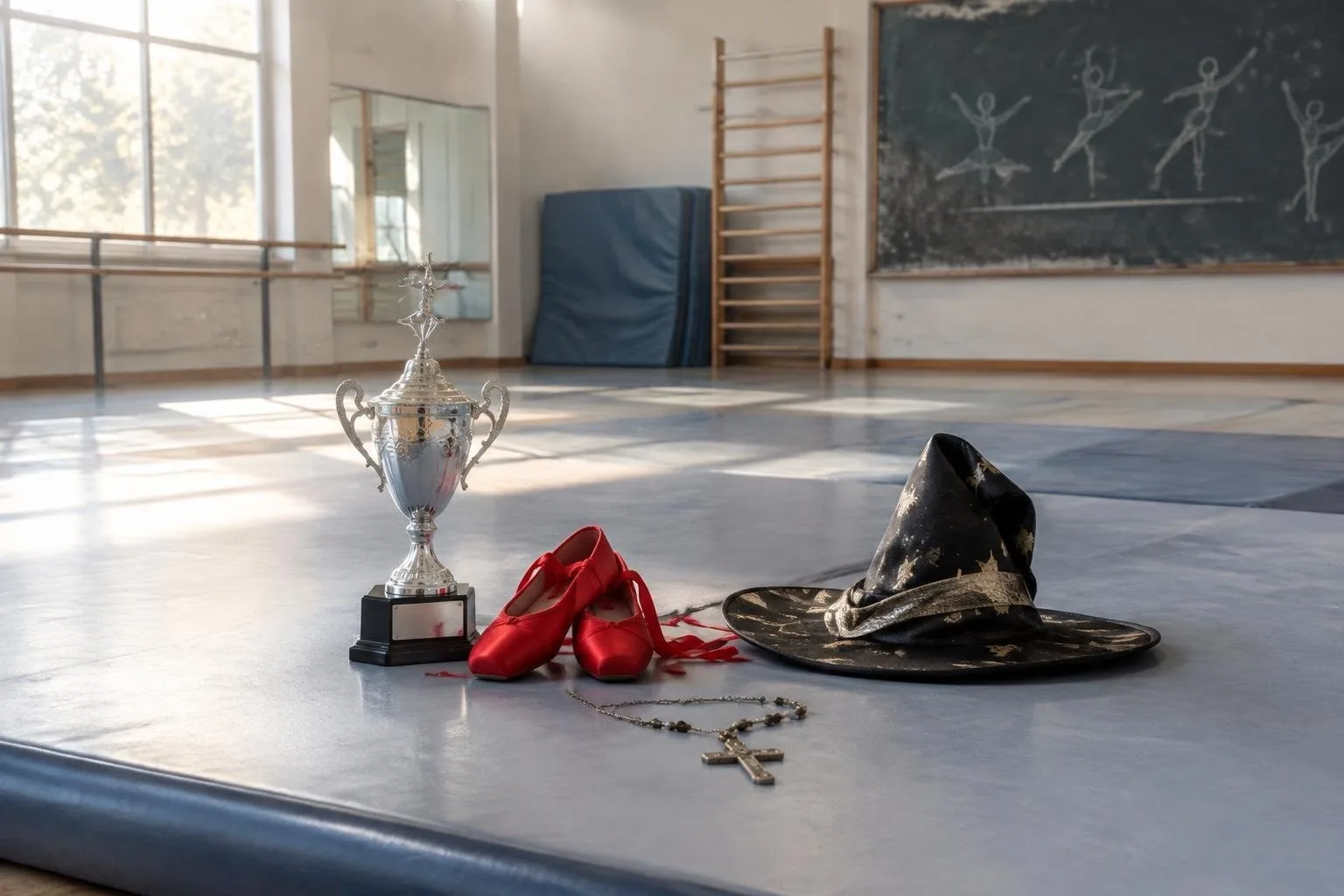
The Body arrives on Netflix as a fresh blend of horror and dark comedy, rooted in the absurdities of an early-2000s Catholic girls’ school. The series follows a rag-tag dance team known as the Lions, whose quest for approval spirals into a night of occult-tinged chaos after a Halloween initiation goes wildly awry. Throughout the season, the girls contend with visions, buried secrets, and a creeping sense of guilt that feels both timeless and unmistakably Gen Z.
While the setting evokes the nostalgic glow of Juicy Couture pajama parties and Yahoo! Messenger chats, the show also acts as a modern meditation on faith and belonging. Showrunners Quinn Shephard and Gina Gammell describe the series as a love letter to the female-centered horror of the early 2000s, yet they also aim to capture the unique spiritual uncertainty that defines today’s younger generation.
Plot and tonal alchemy
The narrative opens at St. Bernard’s Academy, a Catholic high school where the dance team serves as both social hierarchy and sanctuary. Protagonist Lisbeth Anderson (Geena Meszaros) is the new kid, haunted by her father’s mysterious death and a mother slipping into mental illness. Desperate to belong, she volunteers for a dangerous initiation led by co-captains Anya Butler (Kristina Bogic) and Elise Zakaria (Sara Boustany). The ritual culminates in a corpse being hidden in the school basement, a moment that unleashes a cascade of supernatural visions and mounting paranoia.
As the girls’ reality fractures, the show mixes slapstick moments—like a drunken house party gone wrong—with genuine terror reminiscent of Crucible-style hysteria. Romance flickers through the chaos, overseen by intimacy coordinator Chala Hunter, ensuring that the series’ sensual undercurrents feel authentic rather than gratuitous.
Cast and character dynamics
Geena Meszaros as Lisbeth Anderson
Meszaros describes Lisbeth as a “flawed human” whose intelligence and desperation drive her survival instincts. Raised amid a West Virginia congregation famous for serpent-handling rituals, Lisbeth’s loss of faith mirrors many Gen Z experiences of spiritual disorientation. Meszaros drew on her own childhood split between a Christian father and a more spiritual mother to shape the character’s inner turmoil.
Kristina Bogic as Anya Butler
Anya appears to have it all—captain of the Lions, a steady boyfriend, and school admiration—but secretly grapples with burgeoning feelings for Elise and the guilt of a possible accidental killing. Bogic’s transformation from a curly brown pixie cut to dyed-blonde extensions became the visual cue that helped her inhabit Anya’s contradictory warmth and defensive anxiety.
Sara Boustany as Elise Zakaria
Elise is the cool, tough-exterior friend whose hidden heart beats for Anya. Initially auditioning for Anya, Boustany was redirected to Elise, a role she feels resonates with anyone who’s endured unrequited love within queer relationships. She hopes her portrayal offers solace to viewers navigating similar emotional labyrinths.
Sofia Wylie as Grace Franklin
Grace, the preacher’s niece, wants nothing more than a spot on the dance team, yet finds herself at the heart of a drug-fueled initiation gone disastrously wrong. Wylie, known from “High School Musical: The Musical – The Series,” chased this script because it matched her craving for a dark, character-driven project.
Nnamdi Asomugha as Father Franklin
Former NFL cornerback Asomugha steps behind the pulpit as the school’s principal, a figure whose authority masks a complicated past. His casting bridges the worlds of sport and drama, underscoring the series’ theme of unexpected alliances.
Production insights and cultural resonance
The series pulls inspiration from cult classics such as Carrie, Jennifer’s Body and Heavenly Creatures. Lead actress Geena Meszaros insisted that her character stand on its own, even as the show pays homage to its predecessors. Casting anecdotes—like Sara Boustany’s vision board that featured the casting director under her bed—add a layer of meta-mystique that mirrors the on-screen hysteria.
Before filming began, the cast bonded through intensive dance rehearsals that sometimes lasted seven hours a day, a commitment that even cost Meszaros two toenails. This rigorous preparation translated into on-screen chemistry, reinforcing the series’ central thesis: “There’s a sense of faith in each other, that you need to have, that you just don’t get if you’re not part of a team,” Meszaros explains.
Beyond entertainment, The Body serves as a cultural barometer of Gen Z’s relationship with spirituality. While research shows a mental-health crisis among young people, the series suggests that a collective quest for meaning—whether through organized religion or personal belief—remains a driving force. By weaving horror, comedy, and heartfelt moments together, the show offers a fresh lens through which to view the anxieties and aspirations of today’s generation.