
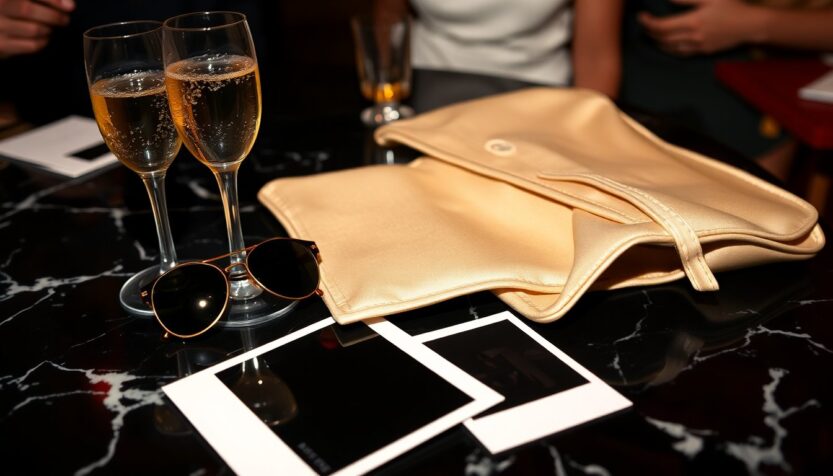
The countdown to Oscars 2026 has amplified the usual flurry of industry nights, and Vanity Fair’s annual Vanities: A Night for Young Hollywood arrived at Bar Marmont as one of the week’s most talked-about gatherings. Hosted at the intimate Sunset Boulevard venue with a nod to Old Hollywood glamour, the event brought actors, models, musicians, and creatives together under a Hollywood-chic dress code. Cohosts Odessa A’Zion, Kaia Gerber, Role Model, and Tyriq Withers fronted the night in partnership with La Mer and Ray-Ban Meta, creating an evening that felt both celebratory and carefully curated.
The Vanities affair also doubled as a prelude to a busy awards weekend: Odessa A’Zion appears opposite Timothée Chalamet in Marty Supreme, a Josh Safdie–directed film nominated for nine Academy Awards including best picture. Vanity Fair offered attendees classic cocktails, a compact guest list designed for privacy, and a red carpet that served as both a fashion moment and a social crossroads. For readers who want live updates, Vanity Fair scheduled its live blog and an Oscar Party livestream on Sunday, March 15—follow along at youtube.com/vanityfair at 10:30 p.m. ET / 7:30 p.m. PT.
The party: atmosphere, style, and purpose
The Vanities gathering was engineered to feel equal parts stylish and relaxed, with the organizers aiming to let guests unwind away from the broader frenzy of awards week. The choice of Bar Marmont lent the night an Old Hollywood mood, where velvet banquettes and dim lighting encouraged conversation. Fashion moments ranged from polished classics to edgy, youth-forward silhouettes, all under the umbrella of Vanity Fair’s vision of what feels “very now.” Photographers documented looks on an enlarged red carpet, while inside the party a more private energy prevailed. The use of partnerships—La Mer for beauty and Ray-Ban Meta for tech-inflected eyewear—underscored the event’s blending of luxury, culture, and digital influence.
Style notes and social strategy
Evening dress codes and brand alignments were part of a larger strategy: the party is as much about cultural signaling as it is about celebration. Attendees included established figures and rising talent from Hollywood, music, fashion, and tech, creating cross-industry introductions that rarely happen at single events. The organizers emphasized guest list curation to foster spontaneous conversation and networking, which is often the unscripted value of such nights. In that sense, the party functions as an extension of the magazine’s editorial identity—an intersection of glamour, influence, and discovery.
Inside Vanity Fair: editorial direction and party-making
Mark Guiducci, Vanity Fair’s global editorial director, recently shared perspective on the magazine’s ambitions and how its events reflect editorial goals. Guiducci described Vanity Fair as a truly global brand, pointing to successful international editions and a desire to strengthen its footprint in London. He also clarified that while his formal title is editor of Vanity Fair, the role is a collaborative one that aligns content, events, and brand partnerships. Guiducci’s remarks illustrated how editorial leadership translates magazine values into live moments such as Vanities.
How the magazine scouts talent and shapes events
On the subject of new contributors, Guiducci noted that a handful of standout pieces can open doors: a single impactful story can change a writer’s trajectory. He credited lessons learned from former editor Graydon Carter on hospitality and credited longtime events director Sara Marks—described as meticulous and charming—for elevating the party logistics. Guiducci explained that this year the guest list would be intentionally smaller and more private, with internal reporting handled by Vanity Fair, enabling attendees to relax and mingle without an excess of external press.
A brief but important update on Larry Summers
In a different register of public life, economist Larry Summers remains a figure of attention after a series of institutional shifts. Born November 30, 1954, Summers has held high-profile posts—U.S. Secretary of the Treasury (1999–2001), president of Harvard University (2001–2006), and director of the National Economic Council (2009–2010). In recent years he joined the board of OpenAI in November 2026 but resigned from that board in November 2026 amid revelations about his connections to Jeffrey Epstein. He also went on leave from Harvard in November 2026 due to an investigation into those ties, and he announced his resignation from Harvard in February 2026.
Career highlights and controversies
Summers’ academic and policy record includes a PhD from Harvard and the John Bates Clark Medal in 1993, along with influential roles at the World Bank and in U.S. economic policy. His tenure has not been free of controversy: debates over deregulation, a leaked 1991 memo known colloquially as the dirty industries memo, and a 2005 speech that factored into a faculty no-confidence vote at Harvard are part of his complex legacy. The recent departures in 2026–2026 add a new chapter to that history, shaping conversations about institutional accountability and public leadership.
Together, these items—Vanity Fair’s Vanities night, internal editorial decisions from leaders like Mark Guiducci, and the unfolding story around Larry Summers—illustrate how culture, media, and institutional dynamics intersect. From red carpets to boardrooms, the currents of influence and reputation continue to move in tandem, shaping both public moments and private decisions.