



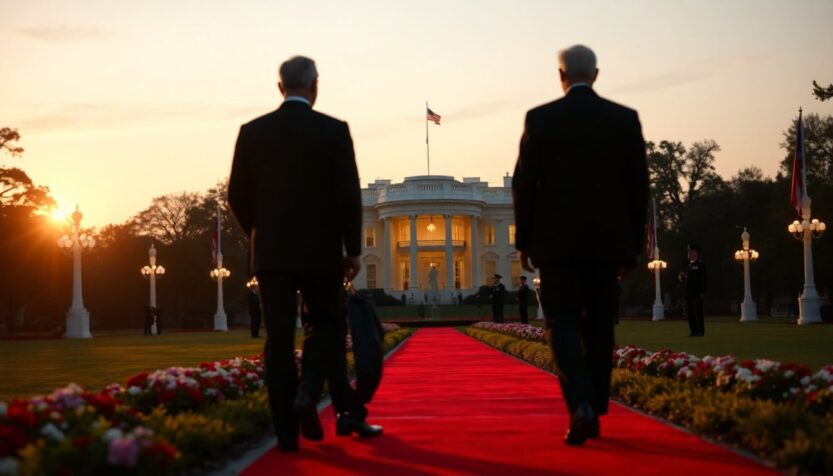
The arrival of King Charles III and Queen Camilla in Washington set a ceremonial tone that carried clear diplomatic intent. The couple’s matching lapel ornaments — an intertwined display of British and American flags — served as a small but potent symbol of purpose on a four-day state visit. From formal greetings on the South Lawn to a glittering evening at the White House, the royals combined ritual and messaging to remind U.S. and U.K. audiences that their bond endures even when political winds shift.
That display of continuity came amid a tricky backdrop. Tensions between leaders in both countries and debates over international support have strained ties, yet the king used an unusually public forum to press for cooperation. His much-noted speech to a joint session of the Congress argued for limits on executive power, defended the value of NATO, and voiced solidarity with Ukraine. The address drew sustained applause from lawmakers of different parties, underscoring how ceremonial statesmanship can translate into political resonance.
A speech aimed at steadying relations
Rather than offering partisan prescriptions, the king’s remarks leaned on shared history and institutional principles. He evoked historical touchstones such as the Magna Carta to frame modern obligations and made the case that alliances must be maintained by deliberate action, not nostalgia. The speech mixed gravitas with lightness — a rhetorical strategy that delivered applause across the chamber and notable bipartisan reaction. Observers described it as a careful performance that sought to reduce friction, stressing mutual interests like security cooperation and democratic norms while avoiding sharply divisive policy calls.
Ceremonial diplomacy: meetings, optics and hospitality
Beyond the podium, the visit included private meetings and symbolic receptions designed to cement ties. The king met tech executives and civic leaders, signaling that the agenda extended into innovation and economic partnerships as well as defense. A state banquet at the White House showcased traditional protocol with modern touches: menus that nodded to the monarchs’ personal interests and desserts invoking beekeeping, an avocation for the royal household. These moments of pageantry were intended to reinforce the message that the bilateral relationship is both practical and cultural.
Protocol and public reaction
Washington’s ritual elements — the military honor guard, an escort of congressional leaders, and the carefully staged walk through the Capitol — amplified the visit’s symbolism. Lawmakers filmed entries and exchanged applause in a display unusual for a chamber often divided by partisan lines. The public reception, including repeated standing ovations, suggested that ceremonial unity can briefly bridge political divides and focus attention on long-term cooperation rather than immediate disputes.
Historic echoes and modern contrasts
The visit traced a line through prior royal engagements while also reflecting contemporary dynamics. Past monarchs have played similar roles in sustaining Anglo-American goodwill, from the wartime prestige of King George VI to Queen Elizabeth II’s address to Congress decades earlier. Yet the political environment now includes sharper public debates over foreign policy, making the king’s balancing act more delicate. By revisiting shared legal and cultural references, the royal message aimed to situate current choices within a longer transatlantic story.
Why the trip matters
At its core, the visit functioned as a reminder that diplomacy often works through relationships and ritual as much as through formal agreements. The king’s words and presence were intended to persuade policymakers and publics alike that cooperation on defense, economic resilience, and democratic values remains essential. While some lawmakers maintain vigorous disagreements about specific policies, the overall scene in Washington underscored how soft power, historical memory, and carefully staged encounters can help steady an alliance during contentious times.