

Melania Trump donates second inaugural gown to Smithsonian’s First Ladies Collection
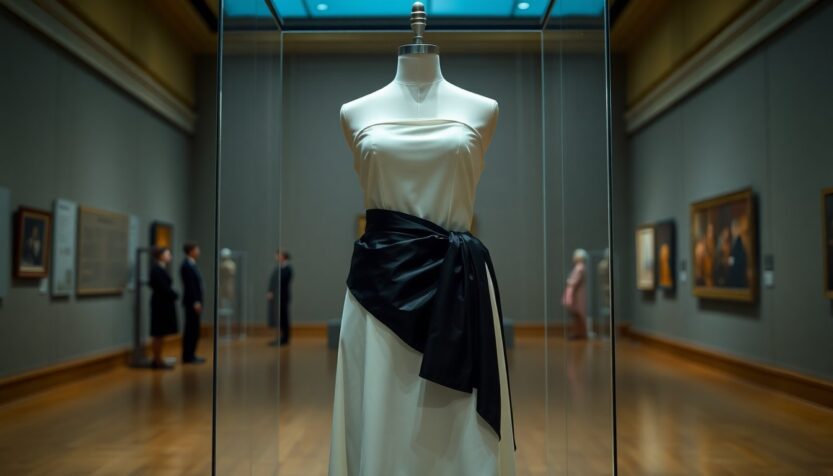
Melania Trump on Feb. 20, formally donated her second inaugural gown to the Smithsonian National Museum of American History, adding the strapless white design—detailed with a dramatic black silk gazar ribbon and created by Hervé Pierre—to the museum’s First Ladies Collection. The dress arrived during a public ceremony in Washington, D.C, where the former first lady framed the gesture as a celebration of American creativity and civic ritual.
A couture piece, a museum object The gown’s clean silhouette is punctuated by a bold ribbon-like fold across the bodice; Hervé Pierre and his atelier translated the concept into couture through traditional tailoring, bespoke detailing and careful handwork. For the ceremony the ensemble was paired with a matching black silk choker and a historic Harry Winston diamond brooch from 1955, lent for display—an intentional pairing meant to bridge contemporary design and archival jewelry.
Museum leaders called the accession notable. “A milestone,” said Anthea Hartig, director of the Smithsonian Institution, a phrase echoed by Secretary Lonnie G. Bunch III, who emphasized that this is the first time in the museum’s more than century-long history that a modern first lady is represented by two inaugural gowns. Curators say the donation strengthens the gallery’s role as a visual timeline of public life and ceremony.
Image and optics The ceremony itself prompted commentary beyond the garment: observers pointed out that Mrs. Trump arrived in high-profile European fashion—pieces by Bottega Veneta and Christian Louboutin among them—creating a contrast with her remarks about American creative spirit. Reporters and social commentators seized on that contrast, using wardrobe choices as shorthand for questions about image, authenticity and the transatlantic nature of contemporary couture.
Why the dress matters to the museum The First Ladies Gallery traces changing tastes and civic rituals through clothing. Since Helen Taft’s first donation in 1909, the collection has grown into a resource for scholars, curators and the public—a place where fabric, cut and provenance help tell political and cultural stories. Curators will document materials and provenance, conserve the piece, and situate it alongside other inaugural and ceremonial garments so visitors can see how silhouette, color and adornment communicate across eras.
Curatorial framing will stress the gown’s craftsmanship and its role as a document of public life. Museum staff describe garments in the collection not simply as fashion but as sources of evidence—objects that record decisions, rituals and networks of makers. The addition of a second gown from a living first lady offers rare opportunities for contemporary interpretation and public programming.
Voices and reactions Reaction to the donation mixed appreciation for the craftsmanship with sharper readings of its symbolic freight. Fashion commentators praised the technical mastery in the construction; political and cultural commentators placed the gown in conversations about branding and national image. Curators, conservators and cultural scholars plan to open those conversations to visitors, using labels, catalog essays and public programs to invite multiple perspectives rather than a single, definitive reading.
What comes next Conservation work and archival cataloguing will begin immediately. Over time the gown will be examined by historians and designers and featured in exhibitions and programming that trace the intersections of style, identity and public ritual. The Smithsonian’s stewardship places the dress in a growing visual archive that researchers will use to study provenance, production networks and changing public tastes.
More reporting to come will review accession records, curatorial notes and a range of expert commentary as the museum integrates the gown into the First Ladies Gallery and the public responds.