

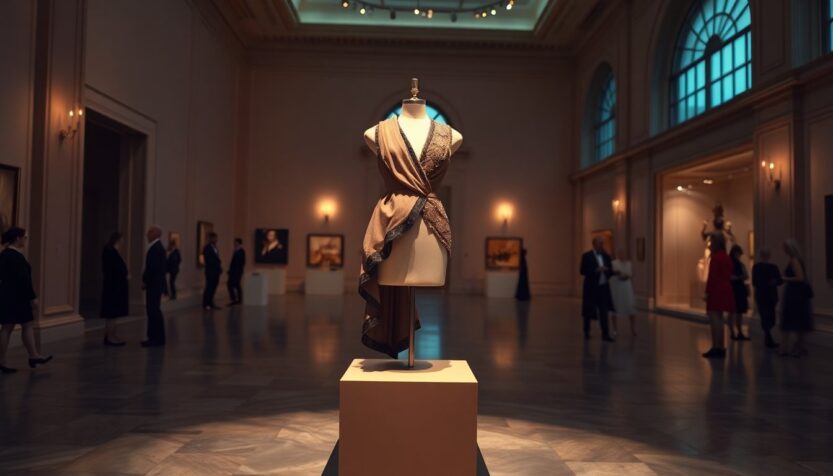
The annual convergence of celebrities, designers, and critics on the steps of The Met returned this year under a deliberately reflective banner. The evening centered on Costume Art, an exhibition and gala theme that asks attendees and viewers alike to consider the dressed body not as mere ornament but as a cultural actor. At a press briefing on May 04, 2026, curators and museum leadership laid out why this particular pairing of show and party was intended to push conversation beyond looks into the realms of display, identity, and historic meaning.
That press event also underscored the human stories behind fashion: co-chair Venus Williams recalled learning to sew a tennis skirt as a teenager, a formative moment that led her to appreciate how garments are constructed and how they perform for the wearer. Meanwhile, the star-studded red carpet—marked by the return of Beyoncé as a co-chair—made visible the many ways guests interpreted the call to treat fashion as art. From playful distortions of silhouette to reverent historical references, the looks illustrated the exhibition’s core question: what does clothing tell us about bodies and the societies that clothe them?
A new home for costume practice and theory
The gala coincided with a major institutional shift: the Costume Institute moved into the expanded Condé M. Nast Galleries, a ground-level space of roughly 12,000 square feet adjacent to the Great Hall. Museum director Max Hollein framed the relocation as emblematic, arguing that centralizing fashion alongside paintings, sculpture, and other holdings signals the museum’s long-standing engagement with dress. He noted that The Met’s approach to fashion has evolved across its 156-year history, increasingly treating garments as objects that both reflect and shape cultural narratives.
Curatorial thesis: the body as subject and medium
Andrew Bolton, curator in charge of the Costume Institute, presented the exhibition’s organizing idea straightforwardly: art history is inseparable from the presence of clothed bodies. The show pairs artworks from the permanent collection with garments and accessories, inviting viewers to trace continuities and ruptures in how humans represent and alter the figure. Bolton’s contention—that clothing mediates identity and is never neutral—functions as the conceptual spine of the exhibition. In practice, this means visitors encounter examples that span draped antiquity, ritualized dress, haute couture, and experimental pieces that intentionally change the body’s outline.
How the exhibition is arranged
The galleries are organized to move the viewer through themes rather than chronology. Visitors encounter moments that range from religious nudity and idealized form to contemporary explorations of bodily difference and stylistic subversion. This sectional layout allows curators to juxtapose, for instance, a painted figure with a sculpted or tailored object, prompting immediate comparisons between image and garment. The effect is to treat clothing as a lens: by juxtaposing media, the show encourages the public to see fashion as both a representational system and a lived practice.
Why the conversation matters
Beyond the spectacle of celebrity dressing, the exhibition uses those public moments to foreground broader social questions: how do clothes signal power, belonging, or resistance? Contributors to the press conference included designers such as Thom Browne, Michael Kors, and Tory Burch, along with Yves Saint Laurent creative voice Anthony Vaccarello, each acknowledging that runway language and museum rhetoric can converge. By staging the show in the new galleries and opening it to the public on May 10, the institute positions these conversations at the center of institutional programming.
Where the red carpet meets museum inquiry
The Met Gala’s dress code—phrased this year as Fashion Is Art—allowed for an array of interpretations, which in turn created a visual index of the exhibition’s themes. Attendees translated curatorial ideas into wearable statements: some referenced historical silhouette, others played with distortion or armor-like protection, and a number of looks explored identity through tailoring or adornment. Photographs and commentary from the evening demonstrate how a single phrase can yield many understandings, reinforcing the show’s argument that garments operate simultaneously as personal statements and as artifacts worth rigorous study.
In sum, this edition of the gala and its companion exhibition asks the public to treat clothing not merely as attire but as testimony. By placing the dressed body at the heart of display and dialogue, the Met encourages visitors to read garments as evidence of aesthetic choices, social systems, and human stories—an invitation to see fashion with the same curiosity and critical attention long afforded to painting and sculpture.