
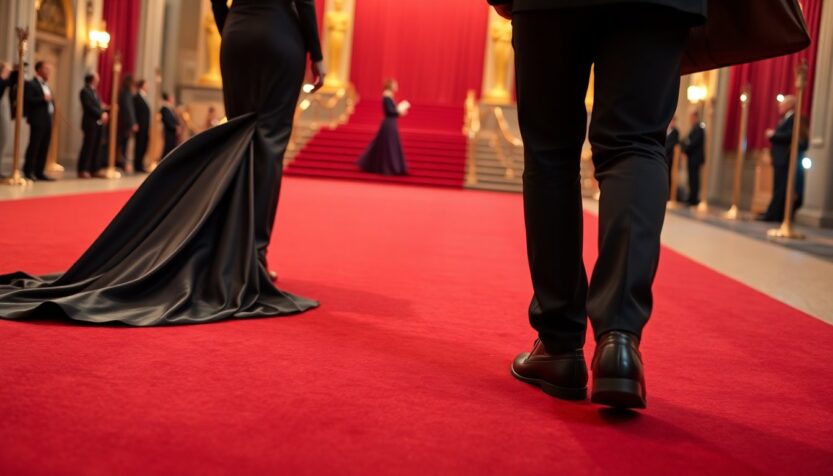
The evening of the Oscars 2026 arrives with palpable energy at the Dolby Theatre, where early arrivals and fashion moments are already shaping the narrative. Reporters and photographers have noted celebrities such as Hudson Williams, Amelia Dimoldenberg, Chase Stokes, Auli’i Cravalho, Alicia Silverstone, and Shaboozey among the first to appear on the carpet for the ceremony taking place on March 15, 2026. Vanity Fair’s coverage tracks everything from pre-ceremony parties to the VF Oscar Party, which has moved its location to the Los Angeles County Museum of Art (LACMA). If you care about predictions, the race for top honors is uncertain, and the live moment promises surprises.
Beyond celebrity arrivals, tonight’s coverage highlights movements and fringe votes that could ripple across ballots. Some guests will wear ICE OUT pins—an emblem for a particular cause—and costume designer Malgosia Turzanska was one of the first visible supporters on the red carpet. Meanwhile, pundits are debating whether One Battle After Another or Sinners will claim best picture, and individual contests such as the best actor race between Michael B. Jordan and Timothée Chalamet feel unsettled after a season of unpredictable precursors and late surges from films like the Brazilian entry The Secret Agent.
What to expect on the red carpet
The carpet tonight is equal parts fashion showcase and political signaling. Vanity Fair’s pre-coverage and the publication’s style correspondents are noting looks from parties earlier in the week—like the Vanities Party at Bar Marmont, hosted by Odessa A’zion and featuring names such as Kaia Gerber—and tracing runway-to-red-carpet migrations from Paris collections. High-profile arrivals have already produced memorable moments: Alicia Silverstone waved in a monochrome gown, Barbie Ferreira teased a siren-inspired look on social media, and Kevin O’Leary turned heads by wearing collectible memorabilia and rare watches tied to his career. The heightened security and a subtler press approach—less shouting, more curated interaction—have changed how talent navigates the line between performance and privacy.
Fashion, activism, and the new carpet etiquette
Expect the red carpet to function as a stage for both designers and causes: the ICE OUT pins, strategic brand pairings with couture houses, and gestures by artists who resist aggressive press behavior underline a shifting culture. The rise of social platforms has reduced the need for combative photo tactics, while stylists and publicists coordinate looks in advance. For viewers, the red carpet is where style trends, political statements, and celebrity persona converge to form instant cultural talking points—often before the first envelope is opened inside the theatre.
Contenders, backstage drama, and the small races that matter
Onstage competition mixes with offstage stories. Sinners arrived with a record 16 nominations and Timothée Chalamet picked up multiple nods for his work on Marty Supreme, where he appears as both actor and producer. But the race is not without controversy: recent reporting alleging a toxic set environment tied to one director has put pressure on that film’s campaign and altered conversations about voting choices. Meanwhile, smaller ballot sections such as the shorts categories are quietly decisive: animated, documentary and live-action shorts regularly spotlight emerging directors who later become household names, and nominees are increasingly accessible on streaming platforms like Netflix, HBO Max, and YouTube—making them an unexpected lever in many Oscar pools.
Parties, presenters, and the Vanity Fair front row
Alongside the ceremony, Vanity Fair’s coverage includes live red-carpet streams hosted by internet personalities such as Quenlin Blackwell, Jake Shane, and Brittany Broski, and the VF afterparty has shifted to a notable cultural venue in LACMA. Pre-ceremony rituals like the Academy’s nominees luncheon provide candid moments—conversations between producers and actors, playful anecdotes, and a rare room where nominees can breathe between the campaign circuit and the broadcast. All of this feeds the evening’s narrative: who arrives, who is celebrated, and who faces last-minute fallout that could influence voting or public perception.
Why Mary Poppins still resonates with the Oscars conversation
Looking back offers context for tonight’s awards: the 1964 film Mary Poppins remains a touchstone in Oscar history and popular memory. Directed by Robert Stevenson and produced by Walt Disney, the film marked Julie Andrews’s feature debut and featured songs by the Sherman Brothers. Released in Los Angeles on August 27, 1964 and in New York City on September 24, 1964, the production combined live action and animation on painted studio backdrops at the Walt Disney Studios in Burbank. It ran 139 minutes, cost between $4.4 and $6 million to make, and grossed roughly $103.1 million in the U.S. and Canada during its theatrical lifetime.
Mary Poppins earned 13 Academy Award nominations and won five Oscars, including Best Actress for Julie Andrews and Best Original Song for “Chim Chim Cher-ee“—achievements that established its cultural footprint. The film’s legacy has been revisited in projects such as the 2013 biographical drama Saving Mr. Banks and the 2018 sequel Mary Poppins Returns, and it was added to the U.S. National Film Registry in 2013 for its cultural significance. As the industry observes tonight’s winners and rituals, that 1964 milestone is a reminder of how films can shape both popular taste and awards history.