
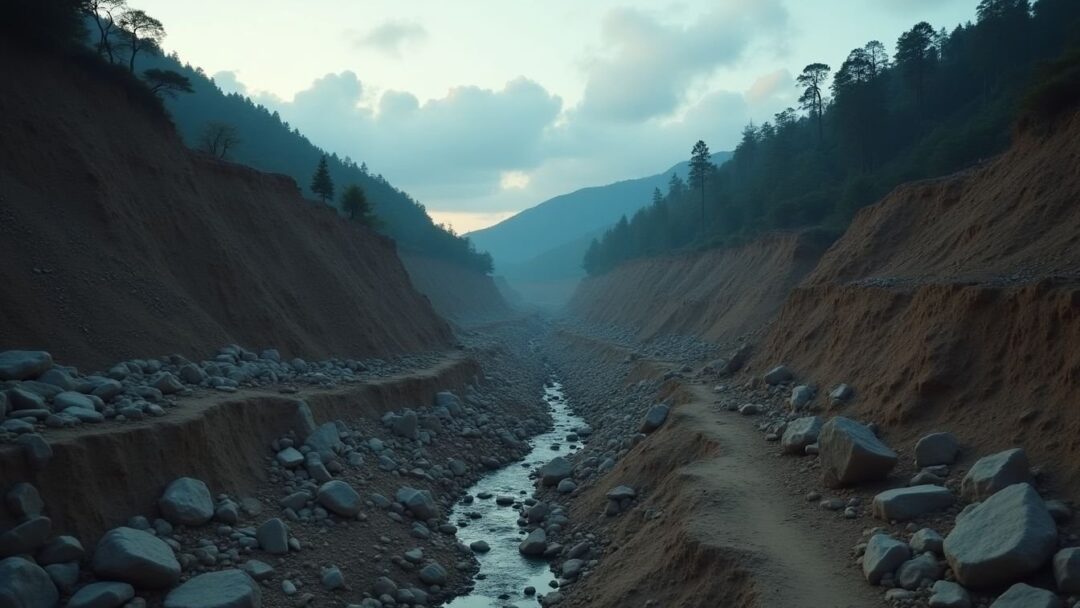
The ground beneath Peru’s Andes region trembled violently on the evening of July 18, 2026, as a 5.5 magnitude earthquake sent shockwaves through the mountainous terrain. The seismic event, which struck at 9:24 p.m. local time, has left a trail of devastation, claiming at least five lives and injuring more than 20 people. The quake’s epicenter was pinpointed approximately 2 kilometers west-southwest of Sicaya in Huancayo province, with a depth of 10 kilometers.
The National Civil Defense Institute of Peru reported that the number of missing individuals remains undetermined, adding to the uncertainty and distress of the affected communities. The tremor’s impact was exacerbated by the region’s construction materials, with traditional adobe structures succumbing to the force of the quake. Among the damaged buildings were a local church and convent, symbols of the community’s cultural heritage.
The human toll and rescue efforts
In the agricultural region of Chongo Bajo, one of the hardest-hit areas, residents huddled under blankets outside their severely damaged homes. The anguish of victims’ relatives was palpable, as captured by local media. Hermenegilda Guamalato, a resident of the neighboring province of Huayucachi, shared her story with a local radio station, expressing her despair as she sought shelter for herself and her three children. “My home has been destroyed,” she lamented, echoing the sentiments of many affected by the disaster.
Rescue efforts are underway, with teams working tirelessly to search for survivors and provide aid to those displaced. The quake has forced approximately 300 residents from their homes, creating an urgent need for temporary shelter and support. The damage extends beyond human casualties, with reports of livestock trapped beneath collapsed debris, further compounding the challenges faced by the affected communities.
The seismic context and historical perspective
Peru’s location within the Pacific Ring of Fire makes it particularly susceptible to seismic activity. This geological region is responsible for approximately 85% of the world’s earthquakes, and Peru has unfortunately experienced its share of devastating tremors. The most recent earthquake serves as a stark reminder of the region’s vulnerability and the importance of preparedness.
Historical data indicates that earthquakes of magnitude 5 or higher strike the Chupaca area roughly every 13 years. Smaller tremors are far more common across the Junín region, underscoring the need for robust infrastructure and emergency response systems. While earthquakes cannot be predicted, seismic models help identify areas most at risk, enabling authorities to better prepare for such events.
The path to recovery and resilience
As the affected communities begin the long process of recovery, the focus shifts to rebuilding and strengthening infrastructure to withstand future seismic events. The use of rustic adobe materials in construction has been identified as a contributing factor to the extensive damage. Addressing this issue will be crucial in mitigating the impact of future earthquakes.
The recent earthquake in Peru’s Andes region serves as a poignant reminder of the power of nature and the importance of community resilience. As rescue efforts continue and the affected regions begin to rebuild, the spirit of the Peruvian people shines through, demonstrating their determination to overcome adversity and forge a path toward a safer, more secure future.


