
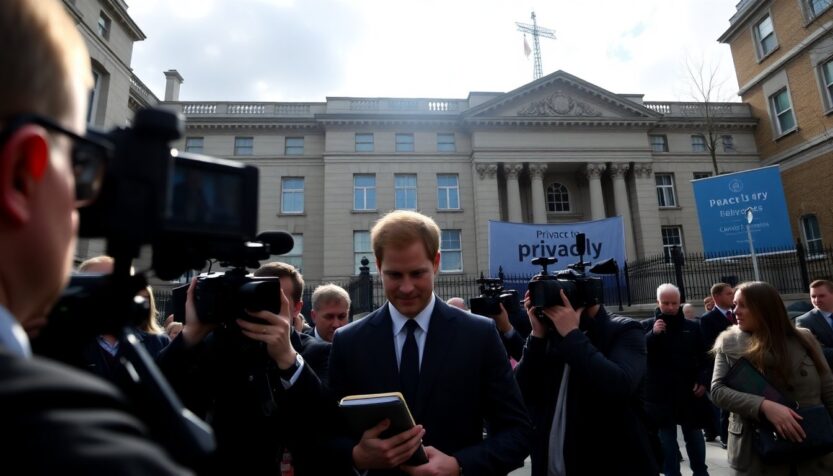
Prince Harry battles British tabloids over privacy invasion
Prince Harry, the Duke of Sussex, is at the heart of a protracted legal conflict with British tabloids, notably Associated Newspapers, which publishes the Daily Mail and the Mail on Sunday. This ongoing dispute has garnered extensive media attention and focuses on serious allegations of privacy invasion and unlawful information gathering.
As he prepares to enter the courtroom once again, Harry’s actions reflect a growing movement advocating for accountability in media practices. This case not only impacts his personal life but also raises critical questions about the ethics of journalism in the digital age.
Context of the legal battle
This legal confrontation extends beyond personal grievances; it is rooted in a longstanding history of alleged misconduct by the press, particularly highlighted during the notorious phone-hacking scandal. Alongside Harry, a diverse group of high-profile claimants—including singer Elton John and actress Elizabeth Hurley—are accusing tabloids of utilizing unethical methods to obtain sensitive information about their lives. These tactics reportedly involved hiring private investigators to conduct illegal surveillance, such as bugging vehicles and accessing personal records.
The culture of privacy invasion
During the ongoing hearings, attorney David Sherborne emphasized a troubling culture at Associated Newspapers that he claims has existed for decades. He described it as a systematic effort to uncover damaging information, stating, “There was a culture at Associated Newspapers that spanned decades to unlawfully dig up dirt that wrecked the lives of so many.” This assertion highlights the seriousness of the allegations, indicating that the media’s actions may have significantly affected the lives of those targeted.
Harry’s personal stakes and motivations
This legal battle is profoundly personal for Prince Harry. He has openly discussed the impact of media intrusion on his family, particularly following the tragic death of his mother, Princess Diana. Diana died in a car accident while being chased by paparazzi, an experience that has profoundly shaped Harry’s perspective. His commitment to reforming the media stems from a belief that such practices not only violate individual privacy but also exacerbate mental health challenges and strain relationships.
The implications of media scrutiny
Harry’s attorney emphasized the severe psychological toll that relentless media scrutiny has imposed on the prince. He described Harry’s feelings of being “paranoid beyond belief” due to the constant monitoring of his life. This intense scrutiny has strained his personal relationships, particularly affecting his marriage to Meghan Markle and his ties to the royal family. The ongoing legal proceedings seek to address these concerns while holding the media accountable for their practices.
Current developments in the courtroom
The trial, projected to last nine weeks, represents a historic moment as Harry returns to the witness stand for the second time. He is notably the first senior royal to testify in over a century. As he navigates this complex legal terrain, Harry’s presence in the courtroom underscores his determination and draws attention to systemic issues within the media industry.
Despite the seriousness of the allegations, the defense team for Associated Newspapers has characterized them as baseless. They assert that the stories in question stemmed from credible sources rather than illegal practices. This ongoing exchange in the courtroom highlights the contentious nature of the proceedings, with both parties bracing for a drawn-out legal confrontation.
The broader implications for media ethics
As this high-profile case progresses, it raises significant questions regarding media ethics and the limits of press freedom. Harry’s legal battle serves as a crucial test of how far the media can pursue sensational narratives at the expense of individual privacy. If successful, this lawsuit could lead to reforms in press practices and enhance accountability for media organizations.
In a society that values a free press as a fundamental element of democracy, the tension between freedom of expression and the right to privacy is increasingly scrutinized. The ongoing case involving Harry has the potential to significantly influence media ethics for years to come. As it unfolds, the implications for journalists and their practices could be profound, prompting a reevaluation of established norms within the industry.