



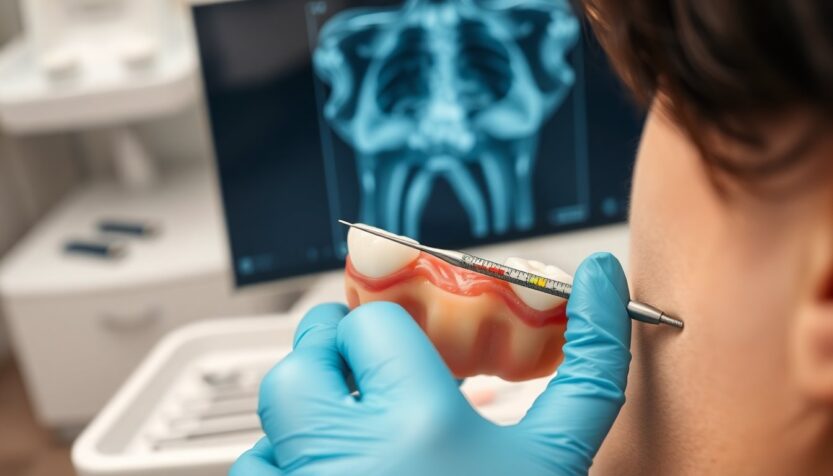
The stability of our teeth depends on a coordinated set of tissues often taken for granted: the periodontium. Many people focus on cavities, but loss of the supportive structures under the gum usually progresses slowly and can go unnoticed until later in life. If your dental hygienist has ever mentioned counts of 3s, 4s and 5s when probing depths are recorded, that number is a shorthand measure of how deeply the gum has separated from the tooth — an important clue about the health of the periodontium and whether further intervention is needed.
At its core, the support system includes three main players: the gingiva (gum tissue), the alveolar bone (the jaw bone sockets), and the periodontal ligament or fibers that tie tooth to bone. The root surface is covered by cementum, which anchors those fibers. Together these tissues absorb chewing forces, provide sensory feedback, and form a biological barrier that helps keep bacteria from reaching the bloodstream. Understanding how each component functions makes it easier to spot early warning signs and act before damage becomes irreversible.
How the tooth support system works
The gingiva serves as the first line of defense: it hugs the tooth and creates a seal that reduces bacterial access to deeper tissues. The alveolar bone holds the tooth root like a socket, and the deeper a root is embedded, the firmer the anchorage — think of a stake driven deeper into soil for greater stability. Connecting root to bone, the periodontal ligament contains tiny collagen fibers that function as shock absorbers and permit minute movement during chewing. These tissues also supply blood, cells, and immune mediators needed for repair. When any part of this system is compromised, tooth mobility and further tissue loss can follow.
The dentoalveolar joint and its role
The specialized connection that secures a tooth in its socket is known as the dentoalveolar joint, a type of gomphosis. The periodontal ligament is central to this joint: it distributes forces, senses pressure — a function called proprioception — and participates in remodeling and healing. The root covering, cementum, provides the attachment site for the ligament fibers. Together, these elements allow chewing without overloading the bone and enable the nervous system to adjust bite force. Damage to any of these structures reduces function and increases the risk of tooth loss.
From gingivitis to periodontitis: how disease progresses
Oral bacteria form a sticky film known as plaque on tooth surfaces; if left in place, it hardens into calculus (tartar), which harbors more bacteria. Early inflammatory changes confined to the gum are called gingivitis — this is a reversible condition marked by redness, swelling, and bleeding on brushing or flossing. When inflammation advances into deeper tissues and bone, it becomes periodontitis, an irreversible process that destroys the periodontal ligament and alveolar bone, creating deeper pockets around teeth and loosening them. Systemic factors like uncontrolled blood sugar in diabetes and tobacco use worsen both local infection and healing, creating a two-way relationship between oral and general health.
Diagnosis and treatment options
Clinicians diagnose periodontal conditions using clinical measures such as probing depths, assessment of bleeding on probing, tooth mobility, and radiographic evaluation of bone levels. Early treatment focuses on removing plaque and calculus through professional cleaning and subgingival therapy such as scaling and root planing. Advanced cases may require surgical approaches to reduce pocket depth or regenerate lost bone and tissue. When a tooth cannot be saved, a dental implant can replace it; implants rely on osseointegration, a different biological connection between implant and bone, rather than a ligamentous joint.
Prevention, daily care and access to services
Preventing periodontal breakdown begins with daily removal of bacterial film at and slightly below the gumline. An electric toothbrush generally removes more plaque at the gumline than a manual brush. To clean under the gum in the pocket space, properly performed flossing is effective, but other tools can help depending on tooth spacing. For wider gaps, interdental cleaners such as proxabrushes, superfloss, dental picks, and stimudents are useful. For very tight contacts, devices that use pulsed water, like a Waterpik or other water flossers, can flush debris and reduce inflammation when used correctly.
Professional care is essential: routine visits allow hygienists to remove early calculus, monitor probing depths, and detect disease when it is still manageable. Recommended cleaning intervals vary — some need visits every three to four months, while others can wait longer — so individualized plans are best. If regular clinics are hard to reach, consider dental hygiene programs at community colleges or mobile dental hygiene services, where supervised students or mobile teams can provide preventive care to those with limited mobility or finances.