

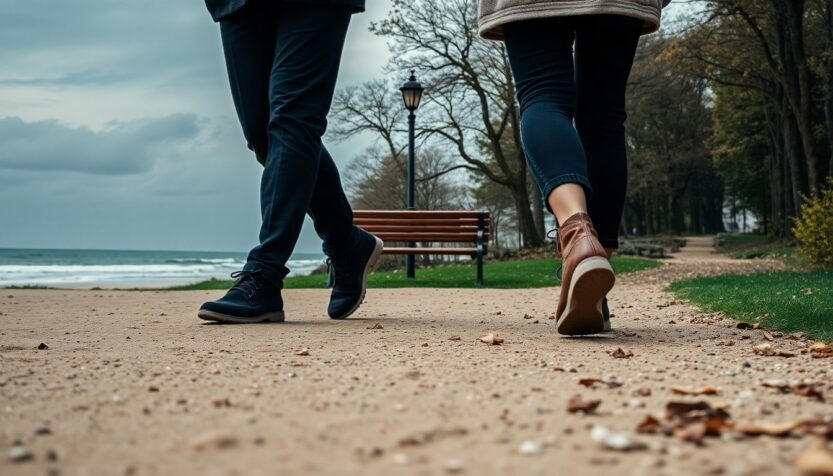
The act of putting one foot in front of the other can feel simple, yet for many it becomes a form of ritual that shapes days and heals hearts. In this collection, people from different places sent photos and short notes about the paths they return to — from open coasts to compact city parks. Each submission reflects how a walking ritual can offer perspective, companionship or quiet, and how familiar routes transform into anchors when life shifts.
Readers described routes that blend landscape with memory: a stretch of shore where salt air sharpens the senses, a tree-lined avenue that marks the passage of seasons, and a local trail that has witnessed breakups, new relationships and grief. These accounts show that a path is rarely just a way to move from A to B; it can be a moving archive of personal change, community connection and small discoveries encountered on repeated steps. Consider this a guided tour of those beloved routes.
Coastlines and wide-open places
Some contributors favor the uninterrupted horizons and dramatic weather of coastal and desert landscapes. One reader near the Danish border in Northern Germany writes about the North Sea coastline, the smell of brine and the wind in the hair as defining elements of each walk. In contrast, a writer who visits Death Valley describes dunes that seem barren but are full of micro-life — from beetle trails to the nocturnal movements of small mammals — reminding us that stillness often hides rich ecosystems. Others mentioned rice paddies with a looming volcano as a striking backdrop, where the landscape itself feels like a living map of place and memory.
Green lungs in the city: parks, zoos and neighborhood corners
Urban paths crop up as front-row stages for family routines and private healing. A parent in New York City remembers learning colors beside the trees of Central Park with a child who once left the NICU, while another credits Prospect Park with a visual parade of seasons that never grows tired. A North Carolina family favors walks through the expansive zoo, where stopping for giraffes and riding a tram at the end of a long route turns exercise into wonder. Elsewhere, a neighborhood café just a few blocks away became an independent destination for children and a small civic hub, demonstrating how walkable communities create neighborly bonds.
Trails that witness life’s changes
Some trails serve as quiet witnesses to personal transformations. In Dallas, a woman recalls logging hundreds of miles with her sheepdog, using the same trail to train for a pilgrimage, identify birds, and process decisions; when her dog Olive died in 2026 she briefly stopped returning, but the path welcomed her back months later and now accompanies a new chapter with her partner. In another story, an 84-year-old man’s daily two-hour power walks beneath great cedar trees offered a calm focus for a visiting daughter, illustrating how generational habits on a route can be a source of solace and continuity.
Paths used for healing and routine
Several responses spoke of walking as a form of recovery or steadying practice. One reader turned to the quiet of Kew Gardens after a close bereavement, alternating audiobooks with attentive observation of shifting seasons; another donned shoes during chemotherapy and called the excursion going to church as a light-hearted way to commit to a necessary walk. Maternity leave walks along a lake helped lull a baby to sleep and maintain mental balance, and when a beloved route was closed for redevelopment the loss underscored how vital urban green space can be to daily life.
These collected routes — from cemeteries that double as traffic-free playgrounds to volcanic-backed rural lanes — reveal walking as a versatile practice: it can be social, meditative, restorative or simply joyful. If you have a favorite path, consider sharing a photo or a short note about why you return to it. The small act of describing a route often teaches us how closely place and memory are intertwined, and why a familiar trail can feel like home.