
The global street artist known as Banksy has long been a figure wrapped in secrecy since emerging in the 1980s. A recent inquiry by Reuters, led by reporters Simon Gardner, James Pearson and Blake Morrison, claims to identify the person behind iconic pieces such as Girl with Balloon and Napalm. The report revives a line of reporting that has circulated for years while adding new investigative details that connect travel records, eyewitness testimony and collaborations to a single name.
According to the findings, Banksy is the individual born in Bristol in 1973 named Robin Gunningham, who later adopted the name David Jones. That identification echoes a 2008 piece by The Mail on Sunday that argued it had come close to exposing Banksy’s identity. The Reuters account overlays that earlier claim with fresh evidence and local testimony to build a more detailed narrative of movements and projects tied to the artist.
The investigation and its key leads
The Reuters team traced several strands of evidence to assemble their case. They examined travel records and spoke with witnesses connected to recent murals, identifying patterns of movement that align with the name Robin Gunningham and the alias David Jones. Investigators focused on specific public works and situational accounts that suggest the speed and methods behind many pieces attributed to Banksy. The report pieces together these fragments to argue that the same hand appears behind numerous famous stencils and installations.
The Horenka mural and eyewitness testimony
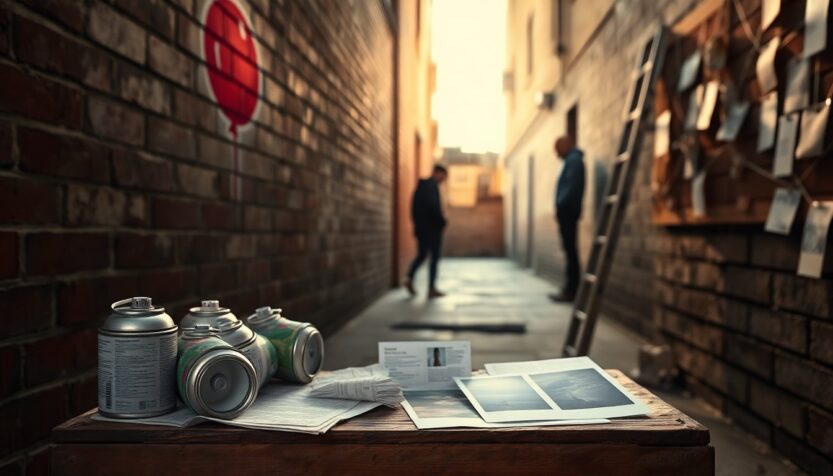
A pivotal element in the investigation was artwork created in the Ukrainian village of Horenka, near Kiev, among structures damaged by shelling. Local witnesses told Reuters that two masked figures, working quickly with spray cans and stencils, produced the pieces within minutes. That description, combined with corroborating records of travel to the area tied to David Jones, is presented as a significant clue linking the artist to that name. The Horenka incident became one of the clearer moments where on-the-ground testimony and documentation intersect.
Collaborations and the role of Robert Del Naja
The Reuters report also explored longstanding rumors about links between Banksy and Robert Del Naja, known as 3D from the band Massive Attack. Rather than naming Del Naja as the artist, the investigation suggests he likely partnered with Banksy on several projects, including work in Ukraine. These collaborations help explain some logistical aspects of large or risky productions, where local knowledge, contacts and teamwork can be crucial to execute public art quickly and discreetly.
Responses, legal concerns and the value of anonymity
In response to Reuters, Banksy’s long-time lawyer Mark Stephens said the artist “does not accept that many of the details contained within your enquiry are correct,” and criticized the value of such probing. Stephens emphasized that anonymity is not merely a personal preference but a protective measure: he argued that working under a pseudonym or remaining anonymous serves public interests by enabling creators to critique power without facing harassment or worse. The statement highlights an important tension between public curiosity and the practical safety of outspoken artists.
Why the name change matters
The investigation notes that adopting the name David Jones appears to have complicated efforts to conclusively confirm the earlier 2008 report. By using a common name, the person Reuters identifies as Robin Gunningham may have made it harder for researchers and journalists to link official records and personal details. That tactic, the report suggests, helps preserve a degree of separation between public legend and private life, even as speculation persists.
Implications for art, privacy and public interest
Whether the Reuters revelations settle the question of authorship or simply add weight to a long-standing theory, the story raises broader questions about the intersection of creativity and privacy. For many artists, remaining unidentified is an artistic choice and a safety strategy; for the public, the mystery around Banksy has become part of the work’s cultural currency. The debate touches on the right to anonymity, the responsibilities of journalists, and how collaboration can blur individual authorship in public art.
Ultimately, the Reuters investigation revisits and amplifies earlier claims while providing new context and sources. It does not resolve every question, but it reframes the discussion around identity, collaboration and the protective role of anonymity in politically charged art. As the conversation continues, the balance between curiosity and the safety of creators will remain central to how society responds to revelations about public figures who choose to remain hidden.