



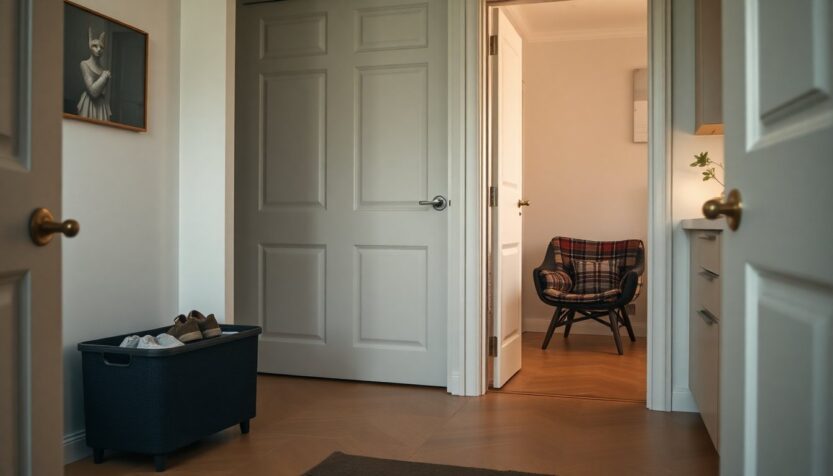
Your home should feel like a refuge, but daily life often turns it into a series of small obstacles: shoes in the hallway, a dim entryway that complicates unlocking the door, or a kitchen counter covered with appliances you rarely use. These little frictions add up and make the place where you are meant to recharge feel stressful instead. By reframing how you set up arrival points, daily-storage habits, and a personal relaxation corner, you can transform a chaotic house into a calm home without dramatic renovations.
Change rarely needs to be dramatic. A handful of deliberate choices—where things live, how spaces are lit, and what you allow into the house—can make routines smoother and reduce wasted time and money on duplicate purchases. This piece lays out practical steps that work for singles, families with young children, and anyone who wants a quieter, more functional home. Each idea focuses on habits you can adopt immediately and sustain over time.
Design clear arrival zones
The moment you step through the door sets the tone for the rest of your time at home. Tackle the most visible disruptions first by creating a simple system for coats, shoes, mail, and bags. Use a hook rail, a narrow bench with cubbies, or a single tray to keep essentials in one place. Reducing visual clutter in entryways not only speeds up leaving and arriving but also reduces the daily feeling of disorder. Treat these areas as active zones where items are meant to be handled immediately, not stored indefinitely.
Build a “share the love” donation habit
It’s common to hang onto items for sentimental reasons, especially when they belong to children. Reframe donation as sharing by creating a labelled bin—call it a share-the-love pile—for gently used clothes and toys. When something is set aside to help another family, it becomes easier to release. This approach reduces accumulation and provides a steady, gentle cadence of outgoing items so storage doesn’t swell silently over time.
Control what enters your home
Incoming items are the silent driver of clutter. Before you accept hand-me-downs, gifts, or impulse purchases, pause and ask whether the object fills a real need or simply substitutes for a feeling of preparedness. This small question limits re-cluttering and keeps your system intact. For parents-to-be, practical steps like clearing freezer space for meals or decluttering kitchen cabinets for baby supplies make the transition smoother than buying endless new gadgets.
Organize the daily flow so things are where you use them
Daily convenience comes from intentional placement. Keep the items you reach for most within easy reach: charging cables, scissors, keys, and a pen should have a consistent home. When those items are returned after use, you save time and stress. Lighting belongs in this category too—adding a lamp near the entry, switching to brighter bulbs where you sort mail, or maximizing natural light in work areas reduces mistakes and helps everyone move through routines with less friction.
Separate active spaces from storage
One of the most useful organizing principles is to clearly define active spaces—places you use daily—and separate them from long-term storage. Keep only everyday essentials in active drawers and shelves so those spots stay functional. Move seasonal items, keepsakes, and rarely used tools to storage spaces. This reduces the time spent rifling through boxes and prevents the illusion that new containers are the solution; often the real fix is having fewer items to manage.
Tame the kitchen and create a personal comfort spot
The kitchen often becomes a catch-all for appliances, utensils, and unopened packages. Track what you actually use over a week or two and then put away the rest. Store rarely used gadgets on higher shelves or in another room, and keep the everyday dishes and tools within easy reach. For caregivers, planning practical needs—like reserving freezer space for prepared meals—saves hours later. A pared-down kitchen is faster to cook in and easier to clean, which directly increases how much you enjoy the space.
Finally, designate a small corner as your personal relaxation spot—an armchair by the window, a cozy nook with a cushion, or a simple chair with a favorite throw. Add one or two comforting elements such as a plant or a reading light. Over time, this becomes your default place to decompress. The combination of improved organization, better lighting, and a dedicated comfort spot turns a functional house into a restorative home.
Start with one change: clear the entryway, designate a drawer for everyday tools, or pick one appliance to store away. Small, sustainable shifts compound quickly and make home life calmer and more efficient. Try one tweak this week and notice how it affects your routines.