

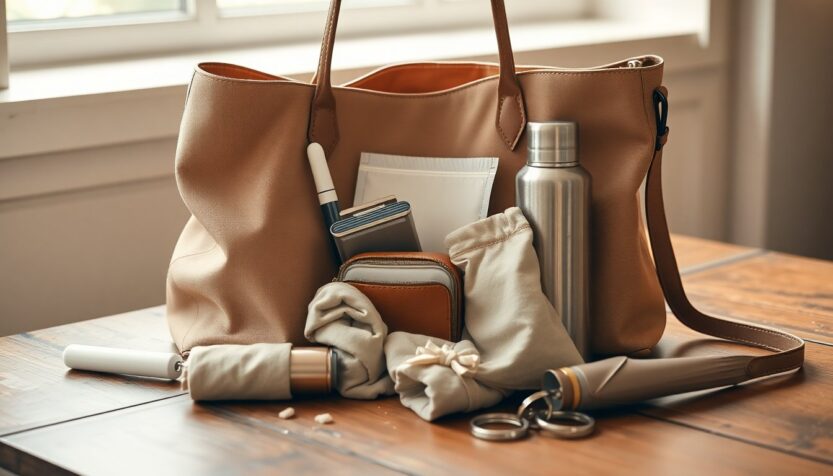
The daily rhythm of parenting often turns a handbag or tote into a portable toolkit. Many caregivers develop their own little systems of must-haves: one friend won’t leave home without a mysterious stain remover, while another stuffs every tote with sanitizing wipes. These compact choices make errands, school pick-ups and quick trips feel smoother and less frantic. Below, a group of parents describe the small items that repeatedly save the day and why each one earns a permanent spot in their bag.
Snacks and tiny treasures for calm moments
Some items are both edible and calming: a parent explains she always carries a few satsuma mandarins because peeling them becomes a focused, quiet activity for a child and buys a parent a few uninterrupted minutes to answer messages or plan the next errand. Along the same lines, other caregivers keep reusable water bottles and a handful of nature finds—acorns, dried posies and pieces of sea glass—which function as small prizes or imaginative props. These tactile objects are inexpensive, light and versatile, perfect for turning a long line or a subway ride into a brief, peaceful interlude.
For very young children, a simple small animal figurine can be a lifesaver during commutes. It’s compact enough to live in a pocket and engaging enough to sustain attention for a full journey. Parents also note that keeping one or two favorite items separate and easily reachable avoids frantic rooting through a bag when a child needs immediate distraction. Together, these edible and tactile choices create a portable, low-tech toolkit that reliably restores order without screens or expensive gadgets.
Playful tools that invite connection and creativity
A few items transform public spaces into impromptu play zones. One parent tucks a double dutch jump rope into her bag so a park stop can become a multi-age game that draws other kids in and sparks spontaneous rhymes and teamwork. Another caregiver, who is a painter, keeps a roll of blue painters tape because it’s perfect for letting toddlers experiment with sticking and peeling without leaving residue on public surfaces. For quiet intellectual engagement, parents recommend carrying a copy of The Week Junior, a lightweight weekly magazine with age-appropriate articles and activities that can occupy elementary-aged kids with topics ranging from math curiosities to nature and sports.
Why portable play matters
These items do more than fend off boredom: they foster social moments and creative problem-solving. A jump rope invites shared play across ages; tape becomes a sensory, motor and imaginative activity; and magazines support reading habit formation and curiosity. Keeping such objects on hand encourages kids to practice cooperation, calm focus and patience—skills that repay the parent long after the quick distraction has ended. In short, the right plaything can convert a waiting room into a micro-lesson in social skills.
Hygiene, first aid and travel-friendly feeding solutions
Health and cleanliness items are nonnegotiable for many parents. One mother relies on hypochlorous acid spray as a multipurpose first-aid spray for scrapes, insect bites, muddied hands and even skin irritations like diaper rash or eczema; she calls it a true hero product. Others stash travel-size sunscreen that’s designed to be mess-free so it won’t spill inside a bag, along with packets of sanitizing wipes for quick cleanups. For high schoolers, an extra deodorant can be a thoughtful emergency item parents keep on standby in case their teenager needs it after gym class or a long day away from home.
Feeding on the move gets easier with a few specific gadgets: a compact formula container with separate 5-ounce compartments makes pre-measuring and mixing bottles simple during international flights or long transit days. Parents who travel with infants found that a small, inexpensive container—often under $10—dramatically reduces stress when bottles need to be made midair. These practical solutions let caregivers respond quickly to messes, hunger and sun exposure without unpacking their whole kit, creating smoother outings and less wasted time.
Small extras and parting notes
Beyond the essentials listed above, several contributors mentioned little personal touches worth considering: a reliable stain remover for on-the-spot laundry triage, a series of inexpensive baby items that last more than a month, and even references to comforting reading such as a few short poems about motherhood. The piece’s top photo and bag are credited to Konges Sløjd, which inspired some of the aesthetic choices parents described. These small additions—practical, sentimental or both—round out a bag that’s ready for whatever the day brings.