
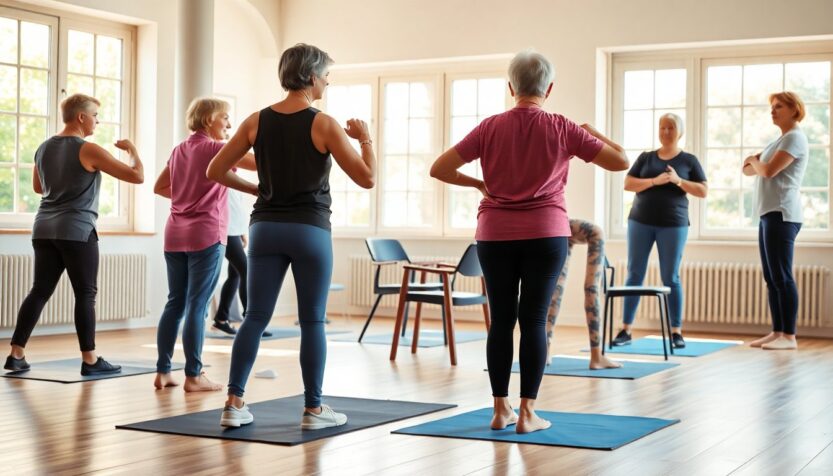
Maintaining balance becomes increasingly crucial as individuals age. Many seek help from physical therapists but often struggle to adhere to prescribed exercises. Katie, a dedicated stretch therapist, frequently encounters clients who neglect their rehabilitation routines. She recently organized a workshop for those aged 55 and above, inviting me to participate as her demonstration subject.
At the workshop’s start, Katie posed an intriguing question: “How’s your balance?” This simple inquiry sparked a discussion on how balance serves as a crucial indicator of overall health. During the session, she utilized my body to demonstrate techniques addressing common age-related concerns, such as stiffness and post-surgery rehabilitation exercises.
The alarming statistics of falls among older adults
Research from the National Institutes of Health reveals a significant rise in hip and knee replacements, with hip replacements increasing by 177% and knee replacements by 156% between 2000 and 2019. These figures reflect a growing need for mobility support among the elderly. Additionally, approximately 35% of older adults will experience a significant fall, escalating to 45% for those over 70. This data underscores the importance of maintaining balance to prevent such incidents.
The impact of balance on longevity
Katie referenced a study indicating that individuals unable to stand on one leg for at least ten seconds are almost twice as likely to face mortality within a decade. This revelation highlights everyday risks, even something as simple as getting out of bed. Katie’s goal during the workshop was to cultivate awareness of how vital balance is to our well-being as we age.
Strategies to enhance balance and mobility
Throughout the workshop, Katie provided practical strategies to improve balance, including strength training and posture-enhancing stretches. She encouraged participants to try standing on one leg, using a chair for support if necessary. While some struggled, Katie reminded us that progress begins from our current level.
Interestingly, she pointed out that many falls occur not from risky activities but from everyday situations—tripping over a pet, slipping in the shower, or catching a toe on a loose rug. This made me reflect on whether I have ever worried about a potential slip in the tub. Katie shared essential techniques for safely exiting the bathtub, a skill I had not previously considered necessary to learn.
Adapting movement as we age
Katie observed that aging often leads to a more linear walking style. Observing older adults alongside energetic children, who leap and spin without a care, starkly contrasts with the cautious strides of seniors. This shift prompts reflection: when did I transition from playful movement to a more cautious, straight-line approach to walking?
This phenomenon can be metaphorically related to our lives; as we age, we may become more risk-averse, hesitant to explore new experiences or revisit past activities. Author Angela Duckworth, in a thought-provoking podcast, emphasized the fixed mindset, which can stifle growth and encourage stagnation, pushing us to remain within our comfort zones.
Embracing a dynamic lifestyle
While it may seem prudent to remain cautious, I recognize that I do not wish to confine myself within my comfort zone. Janet Bray Attwood, in her book The Passion Test, articulates how those who play it safe often lack enthusiasm and passion for life. Remaining on familiar paths might feel secure, but is it truly how we want to experience our lives? I aspire to chase my dreams and maintain a vibrant lifestyle.
The quest for balance is essential. We must learn practical strategies, such as practicing strength exercises, enhancing our posture, and developing safe practices for daily activities, while also striving to lead a life filled with energy and passion. Our balance reflects our overall health, particularly as we age. Monitoring balance is vital for longevity and well-being.