

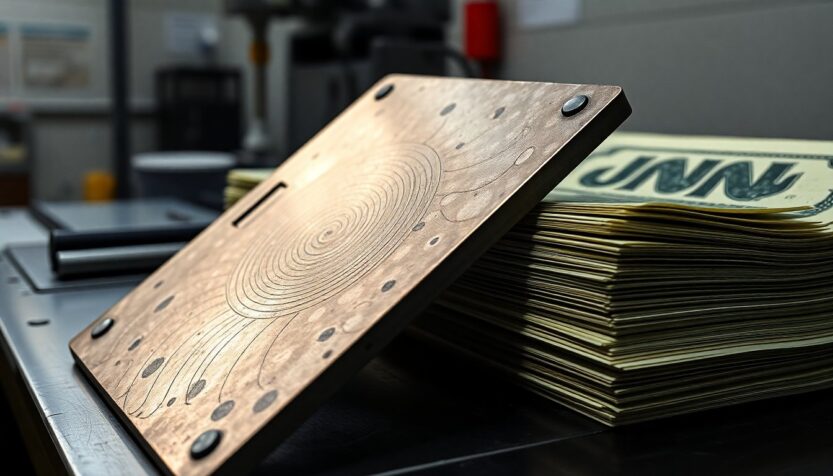
The federal government is preparing an unusual alteration to the look of American money: on March 26, 2026, the Treasury Department announced it will add President Donald Trump‘s signature to newly produced U.S. paper currency. This change breaks with long-standing practice in which bills bear only the signatures of the Treasury Secretary and the Treasurer of the United States. Officials say the transition involves creating new printing plates and that the updated notes are expected to enter circulation in the coming months. The department also indicated the change will remain unless a future administration chooses otherwise.
Observers note that this step follows other moves to place the president’s name or likeness on national institutions and commemorative items. Alongside the currency change, there is a parallel effort to issue a 24-karat gold commemorative coin bearing the president’s image in celebration of the nation’s 250th anniversary. The U.S. Bureau of Engraving and Printing, which produces paper money, and the U.S. Mint, which mints coins, are the agencies managing the technical production for these projects.
What the change entails
Under the announced plan, President Trump’s autograph will replace the signature currently associated with Treasurer Brandon Beach on all denominations of U.S. paper currency, while the signature of Treasury Secretary Scott Bessent will also appear on the notes. Historically, currency signatures have reflected the offices of the treasurer and the treasury secretary, so the addition of a sitting president’s signature represents a procedural departure. Officials have started work on the new production plates and design adjustments necessary to implement the update across denominations.
Production and timeline
The update involves the technical process of redesigning and engraving new printing plates at the U.S. Bureau of Engraving and Printing. Those plates are the basis for mass production of paper currency, and the department says the plates are currently being developed. While exact distribution dates were not specified, the Treasury indicated the redesigned notes will be introduced over the coming months. The U.S. Mint will handle a separate commemorative coin program that has already received approval for a 24-karat gold medal-style issue tied to the 250th anniversary celebration.
Symbolism and accompanying efforts
The currency change comes as part of a broader pattern of branding and commemorative projects linked to the president. A federal arts commission approved the final design for a gold coin featuring the president’s likeness as part of semiquincentennial observances, and other dedications have put his name on cultural venues and assets. Treasury officials, including Secretary Bessent and Treasurer Beach, released statements framing the move as recognition of national achievements, with Beach calling the printing of the president’s signature “appropriate” and well deserved. The Commission of Fine Arts that approved the coin design is composed of appointees named during the president’s administration.
Context within tradition
Putting a sitting president’s signature on circulating paper money departs from customary practice and creates a visible symbol of presidential presence on everyday objects. Supporters say the step honors leadership and economic accomplishments, while critics are likely to view it as personalization of public institutions. The Treasury emphasized that the choice will persist until a successor administration decides to alter the design, underscoring that the modification is administrative rather than legislative and thus reversible by future officials.
Implications and oversight
From a practical standpoint, the agencies responsible for currency and coin production—the U.S. Bureau of Engraving and Printing for bills and the U.S. Mint for coins—will continue routine manufacturing under the new directives. Administrative statements stress the symbolic nature of the additions and connect them to celebratory events like the 250th anniversary. At the same time, the move raises questions about precedent and how future administrations might use or reverse similar design decisions. For now, the next several months will show how quickly the new notes appear in wallets and registers across the country.
Where to watch for updates
Interested observers can track official releases from the Treasury Department, the U.S. Bureau of Engraving and Printing, and the U.S. Mint for specific rollout details, production milestones, and any clarifying guidance. As production proceeds, consumers and collectors alike may notice new notes entering circulation alongside commemorative coin offerings tied to national celebrations.