
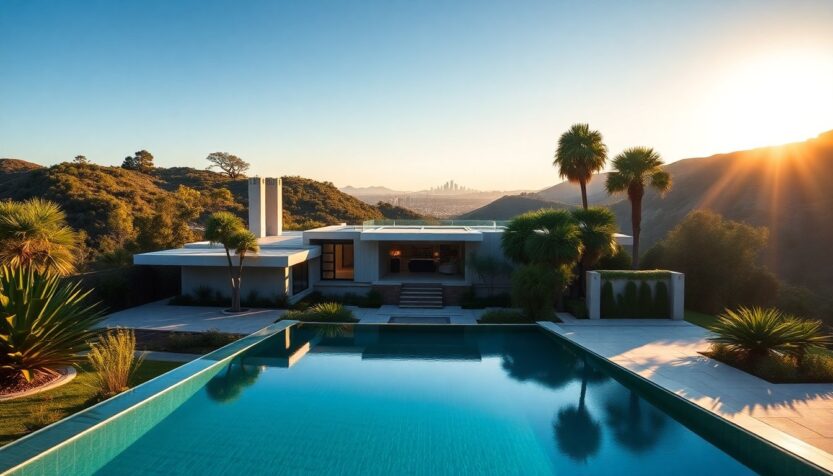
Los Angeles is renowned for its glitz and glamour, reflected in its captivating real estate market. The city showcases stunning designs by prominent architects such as Richard Neutra and John Lautner, alongside extravagant mega-mansions owned by modern celebrities. Each property narrates a unique story, often intertwined with the lives of notable figures in the entertainment industry.
These residences have transcended mere living spaces; they have served as stages for the lives of the rich and famous. The secrets these walls could unveil about their illustrious occupants are intriguing. This article explores some of these landmark properties and their remarkable histories.
Timeless estates and their illustrious pasts
Among the standout properties is Misty Mountain, a splendid Spanish Revival mansion featuring 11 bedrooms and 9 bathrooms. Originally constructed in the early 20th century, it has housed influential figures, including vaudeville actor Fred Niblo and media magnate Rupert Murdoch. Today, it is owned by James Murdoch, showcasing the enduring appeal of this architectural gem.
From luxury to leisure
Another remarkable property is a mega-mansion located in Beverly Park, which boasts amenities such as a skate park, a golf course with a driving range, and a pool complete with waterslides. This home has transitioned through various owners, including celebrities like Mark Wahlberg and socialite Paris Hilton, illustrating the dynamic nature of Hollywood’s real estate.
Additionally, the estate once belonging to actor Robert Armstrong, which hosted Hollywood legend Bette Davis, features six bedrooms and nine bathrooms. Built in 1919, it has changed hands from stars like Carrie Fisher to current owner Billie Lourd, creating an intriguing lineage of celebrity inhabitants.
Architectural innovations and modern grandeur
Architectural innovation took center stage with the construction of the Lovell Health House in 1929 by Richard Neutra. This home marked a pivotal moment in Neutra’s career, embodying the principles of modernist architecture. Originally owned by Philip Lovell, it is now preserved by its current stewards, Iwan and Manuela Wirth.
In the realm of mid-century architecture, the Sheats-Goldstein house, designed by John Lautner, stands out as a quintessential example. Completed in the early 1960s, this residence is renowned for its stunning design and association with notable owners, including businessman James “Jimmy” Goldstein, a fixture in Hollywood culture.
Record-breaking sales and mega-mansions
The real estate market in Beverly Hills reached new heights with the sale of the Jack Warner Estate, which broke records by selling for a staggering $165 million. Once inhabited by Warner Bros. co-founder Jack Warner and later by producer David Geffen, this estate symbolizes the peak of luxury living in Los Angeles and is now home to Amazon founder Jeff Bezos.
No discussion of Hollywood homes is complete without mentioning the infamous Manor, one of the largest residences in the country. Originally owned by television producer Aaron Spelling, it has transitioned to new ownership with Petra Ecclestone and, more recently, Eric Schmidt, former CEO of Google. The sheer size and amenities of this home defy typical definitions of luxury.
Legacy and modernity coexisting
The Hollywood Regency-style home designed by John Elgin Woolf has also left its mark on the landscape. Once featuring an oval-shaped pool in the courtyard, this residence was previously owned by talent agent Sue Mengers and is now held by a prominent lawyer and realtor duo, Allen and Deborah Grubman.
These residences have transcended mere living spaces; they have served as stages for the lives of the rich and famous. The secrets these walls could unveil about their illustrious occupants are intriguing. This article explores some of these landmark properties and their remarkable histories.0
These residences have transcended mere living spaces; they have served as stages for the lives of the rich and famous. The secrets these walls could unveil about their illustrious occupants are intriguing. This article explores some of these landmark properties and their remarkable histories.1