
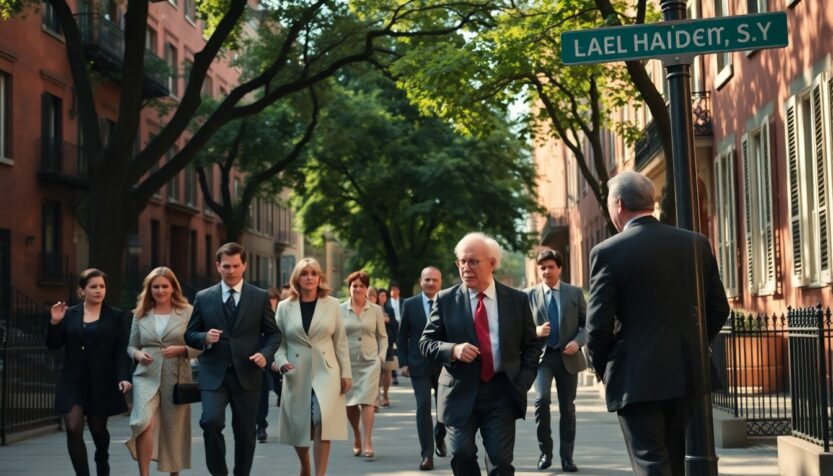
The political landscape of New York City, particularly in the affluent Upper East Side, is experiencing significant tension. The recent election of Zohran Mamdani as mayor has prompted unrest among some of the neighborhood’s wealthiest residents, particularly within the Jewish community. This unease is intensified by the proximity of the new mayor’s office to their homes.
As the city faces numerous challenges, Mamdani’s election has ignited a fierce debate that transcends personal opinions, reflecting deeper ideological divides within this wealthy enclave. The Upper East Side, known for its affluence and traditional values, is at the center of a rhetorical struggle that may shape its future political landscape.
The backdrop of Mamdani’s election
Born and raised in Brooklyn, Eric Adams, who served as mayor prior to Mamdani, left a mixed legacy during his tenure. His administration faced a series of controversies, culminating in federal charges against him related to bribery and fraud. The ensuing legal battles and public scrutiny ultimately led Adams to withdraw from seeking reelection.
Adams’s background as a former police officer influenced his political approach, emphasizing crime reduction and public safety. However, his efforts received mixed reviews, as crime rates increased during his time in office. The arrival of a significant number of immigrants further complicated his governance, straining city resources and heightening community tensions.
Transitioning to Mamdani’s leadership
With Mamdani’s ascension, the political climate has shifted dramatically. His leadership style and policy priorities differ significantly from those of his predecessor. Mamdani has embraced progressive values, aiming to tackle systemic issues such as housing inequality and social justice. However, this approach has not been well-received by all, particularly among those concerned about the implications of his policies on property values and community safety.
The Upper East Side’s reaction has been varied. Some residents express concerns about what they perceive as a radical departure from the status quo, fearing that Mamdani’s progressive agenda may lead to unintended consequences. The neighborhood, often characterized by its conservative leanings, finds itself at odds with a mayor who champions a more liberal vision for New York City.
Community reactions and implications
The discontent among certain segments of the Upper East Side community has manifested in various forms. Town hall meetings and community forums have become venues for residents to voice their concerns, ranging from rising crime rates to potential impacts of Mamdani’s policies on local businesses. The once-cohesive community now grapples with a growing divide as opinions on the new mayor become increasingly polarized.
Some residents have turned to social media to express their dissatisfaction, while others have engaged in grassroots organizing efforts to hold Mamdani accountable. This activism reflects a broader trend of civic engagement, as residents seek to influence local governance in response to their fears and frustrations.
Looking ahead: the future of the Upper East Side
As Mamdani embarks on his term, the future of the Upper East Side remains uncertain. Will the neighborhood adapt to the changes he proposes, or will it resist the progressive policies that Mamdani advocates? This question looms large, with the potential to reshape the community’s identity and political landscape.
The coming years will be critical for both Mamdani and the residents of the Upper East Side. As political tensions continue to rise, the outcome of this struggle may define not only the future of the neighborhood but also the city at large. The relationship between Mamdani’s administration and the community will be pivotal in determining whether collaboration or conflict prevails.