
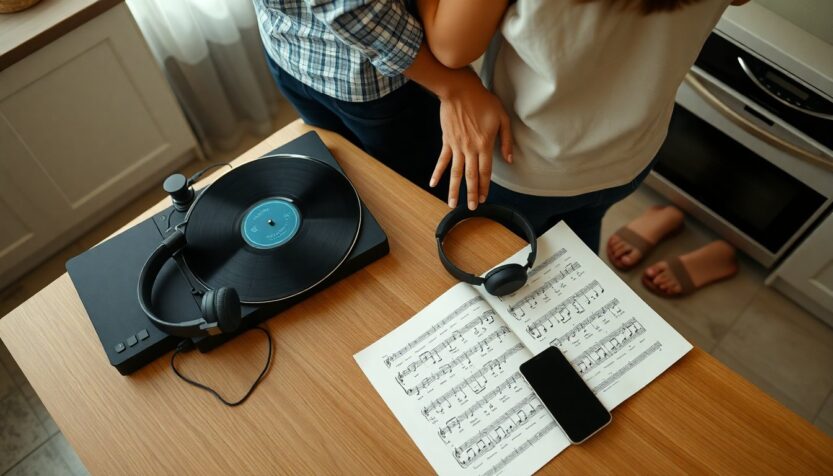
Couples at home increasingly find that music shapes daily married life as much as conversation, routines and shared values. Soundtracks playing in the kitchen or chosen for evenings can nudge emotions, alter perception and influence how partners respond to one another.
This report outlines why music matters for partnerships, how couples can use it intentionally and when musical choices may help versus when deeper relational work is required. It also offers practical tips and simple experiments couples can try at home.
Why music affects the tone between partners
It also offers practical tips and simple experiments couples can try at home. Why music affects the tone between partners
Neuroscience findings and everyday observation converge on clear mechanisms. Music engages brain systems that process memory, rhythm and attention. Familiar melodies reactivate shared memories and associated emotions. Steady rhythms entrain bodily and vocal tempo, aligning breathing and speech patterns. Predictable musical structure reduces cognitive load, allowing partners to respond with less reactivity.
Acoustic features further shape response. Tempo influences arousal: faster beats increase energy, slower beats encourage calm. Mode and harmony affect valence: major keys often correspond with positive moods, minor keys with somber tones. Volume and timbre modulate perceived intimacy and dominance. Together, these elements act as subtle environmental signals that guide interaction without explicit direction.
Social and contextual factors matter as much as acoustic ones. Shared familiarity with a song strengthens its ability to evoke mutual associations. Location and activity moderate effects: background music in the kitchen will influence casual conversation differently than the same track during a seated dinner. Intentional selection—matching music to the desired emotional climate—increases impact.
Key emotional effects
Calming and downregulating arousal. Slow tempo, low volume and gentle timbres reduce physiological arousal. This combination lowers irritability and can make tense exchanges less reactive.
Boosting positive mood. Familiar, upbeat tracks linked to pleasant memories raise shared positivity. Such selections can increase warmth and reciprocity in brief interactions.
Synchronizing social rhythms. Steady beats encourage conversational pacing and coordinated activity. Synchrony enhances feelings of togetherness and can ease cooperative tasks.
Reducing defensiveness. Music that signals safety or comfort can soften guarded responses. Predictable structure and gentle dynamics create a less threatening communicative backdrop.
Shaping expectations. Ambient music cues the formality and tempo of an encounter. A relaxed playlist signals leisure; a lively soundtrack signals activity and movement.
A relaxed playlist signals leisure; a lively soundtrack signals activity and movement.
Couples can use this principle intentionally through mood regulation and emotional priming. Playlists serve as simple, low‑effort tools to change emotional tone before a conversation begins. Selecting a calming song can lower physiological arousal and make constructive dialogue more likely. Choosing an upbeat track can cue shared energy for tasks or social plans.
Practical ways to use music in daily married life
Begin with a short, repeatable ritual tied to arrival or transition. When one partner comes home, play a familiar calming song for two or three minutes. That brief interval often reduces defensive reactions and creates space for listening.
Use tempo and instrumentation deliberately. Slower tempi and softer arrangements tend to promote relaxation. Clear, positive lyrics can encourage more charitable interpretations of ambiguous remarks. Conversely, aggressive or loud music can reinforce tension and should be avoided before sensitive talks.
Agree on a small set of shared tracks for different purposes: decompression after work, energizing for chores, or a neutral list for background during difficult conversations. Preselecting songs removes the momentary pressure of choice and reduces arguments about what to play.
Consider nonmusical audio as cues. Short instrumental pieces or ambient tracks can function as on/off signals for transitions. A consistent cue helps both partners recognize the intent behind the moment—whether it is winding down or preparing to engage.
Mind volume, timing and context. Music played too loudly can feel intrusive. Music during intense arguments may escalate rather than soothe. Use playback as a preventive tool rather than a mid‑escalation intervention.
Test small experiments and keep them practical. Try a three‑song routine for a week and note any changes in tone. Track outcomes objectively: did the partner report feeling calmer, or did conversations stay shorter and more constructive? Simple measurement clarifies what works for that relationship.
When chosen and used deliberately, music becomes a shared resource that shapes interpersonal signals. Couples who adopt brief, consistent musical practices can reduce conflict triggers and increase opportunities for connection.
Couples who adopt brief, consistent musical practices can reduce conflict triggers and increase opportunities for connection. Implementing shared playlists requires simple ground rules and clear intent. Establish who curates each list and when it will play. Keep segments brief to avoid fatigue.
Timing and selection
Timing matters. Use upbeat, familiar songs to mark small achievements or to raise energy during morning routines. Choose mellow, melodic tracks to lower tension at dinner or during stressful moments. Match volume to context: background levels support conversation, loud volumes dominate interaction.
Selection also matters. Prioritize tracks both partners recognize and tolerate. Rotate curators to balance preferences and to prevent the playlist from becoming a unilateral choice. Avoid using music to mask unresolved issues. When conflicts recur or dissatisfaction runs deep, playlists offer only temporary relief and should not replace professional support.
When music helps and when it won’t
Music can reshape a household’s emotional texture. It frames activities, signals transitions and creates shared micro-rituals. In stable relationships, scheduled music episodes can reinforce cooperation and reduce petty disputes.
However, music has limits. It cannot substitute for honest communication or effective conflict resolution. If underlying problems persist, reliance on playlists risks delaying necessary conversations. Professional help remains the appropriate recourse for chronic or escalating relationship issues.
Simple experiments to try tonight
Professional help remains the appropriate recourse for chronic or escalating relationship issues. For couples seeking low-risk ways to increase moments of warmth, controlled musical practices can be tested at home.
Begin with a brief ritual at a natural transition, such as the end of the workday. Select one or two calming tracks and play them while you change out of work clothes or prepare dinner. The short pause signals a shift in attention without demanding a conversation.
Designate a three-song sequence to open difficult conversations. Agree beforehand that the sequence marks a pause for active listening, not debate. The shared cue can reduce reactivity and prompt quieter, more measured exchanges.
Create a gratitude soundtrack. Each partner contributes one song that triggers a positive memory about the other. Play the list once a week and name one specific thing each song recalls. The exercise targets small, concrete affirmations rather than broad praise.
Use music to scaffold joint tasks. Choose upbeat selections for shared chores or errands to increase cooperation and reduce friction. Short, predictable playlists prevent distraction and keep the focus on a shared goal.
Reserve a brief calming set for escalation prevention. If a discussion intensifies, pause it and play the set for five minutes. If emotions remain elevated after the set, postpone the conversation and seek external support.
Music can increase the frequency of positive interactions, but it is a supplement, not a substitute, for communication or professional intervention. Track how these small experiments change daily exchanges and consider professional guidance for persistent problems.
Start by greeting a returning partner with a familiar tune rather than an immediate question about their day. Observe whether their tone softens and whether ensuing conversation follows a calmer trajectory. Next, select a neutral, pleasant playlist for routine joint tasks such as cooking or tidying, and note whether chores become more cooperative and less complaint-prone. Keep playlists short and varied to preserve their impact and prevent them from fading into background noise.
Use these low-risk experiments to track changes in daily exchanges and consider professional guidance for persistent or escalating problems. Thoughtful use of music will not resolve serious relationship issues, but when applied consistently it can reduce minor conflicts, encourage positive interactions, and potentially increase shared moments of enjoyment.