

Summer often brings the easiest opportunity to use a backyard or community pool as part of a regular fitness plan. The water’s natural support reduces impact on joints while still offering resistance that challenges muscles and elevates the heart rate. For people over 50 looking to maintain mobility and prevent aches, a consistent set of water workouts can be a gentle yet powerful complement to land-based exercise. In this article you will find practical prep tips, a balanced session outline and a selection of moves that together make the pool a true workout space.
Before stepping in, it helps to understand a couple of aquatic concepts. Buoyancy refers to the water’s lifting effect that lessens joint stress, while drag or resistance is the force you push against when moving through water. Both work in your favor: buoyancy protects vulnerable areas and resistance turns each limb movement into strength work. Keep these ideas in mind as you choose gear and assemble routines so your pool time is efficient, safe and enjoyable.
Preparing to exercise in the pool
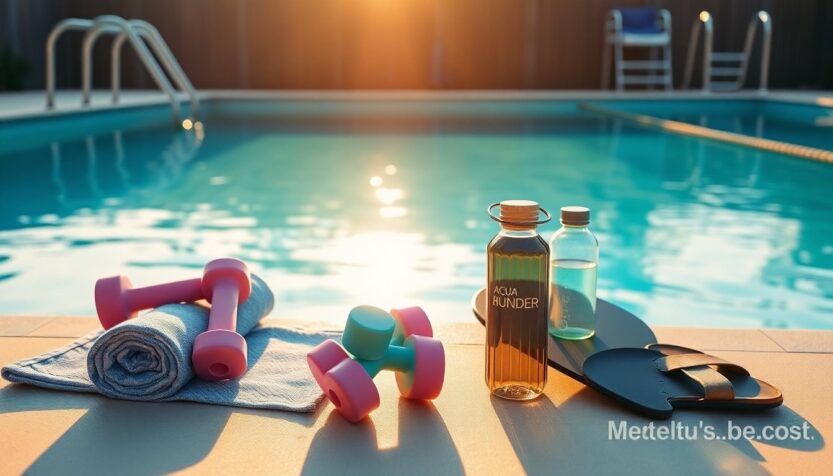
Gathering the right items will make sessions more productive and comfortable. Essentials include a supportive swimsuit, goggles and a swim cap if you prefer, plus practical tools like water shoes for traction, water gloves to amplify upper-body resistance and foam or Styrofoam weights for extra load. A kickboard or noodle can assist balance and posture during certain drills. Some items are inexpensive; others are an investment if you plan to train regularly. By assembling a small kit you create consistency and reduce barriers to sticking with your aquatic program.
How to structure a balanced pool session
Start every session with a brief warm-up to prepare muscles and the cardiovascular system. Spend five minutes walking briskly on land or performing light dynamic moves in the shallow end—jumping jacks or arm circles are fine in chest-deep water. After warming up, alternate segments of cardio (continuous walking or kicking) with blocks of strength-focused work using gloves, weights or bodyweight patterns. Finish with a cool-down: slower movements, gentle rotations and light stretches performed while supported by the water. This plan protects you from overdoing it while maximizing gains.
Warm-up and safety tips
Safety in the pool means pacing yourself and staying hydrated. Because buoyancy masks fatigue and soreness, it’s easy to overexert; pay attention to breathing, perceived exertion and any joint discomfort. Use a noodle or flotation aid if you move into deeper water, and consider a buddy or lifeguard when trying new drills. If you have chronic joint problems, note that studies report benefits from aquatic devices such as an underwater treadmill, including a cited 19% decrease in pain compared with traditional treadmill walking; this underscores how aquatic environments can ease movement for those with arthritis or similar conditions.
Pool moves that build strength and cardio
Strength-focused moves
Water offers progressive resistance for many muscle groups. Try a variation of the K-shaped tread: float upright, cup your hands and cycle each leg out straight while treading with your arms—alternate legs every five seconds for 30 seconds. This pattern targets the back, chest, arms, glutes, core and hamstrings through continuous tension. For targeted arm work, stand in chest-deep water and perform controlled arm lifts with palms turned to increase drag, or curl foam weights underwater to isolate biceps. Aim for steady, controlled repetitions rather than speed to make the most of the resistance.
Cardio, core and leg drills
Deep-water walking with water gloves or a flotation belt is a superb low-impact cardio option that also engages core stabilizers—tighten abs and keep the spine long as you stride. For legs, perform quick forward-and-side leg swings while standing in waist-deep water: 10–15 reps per leg creates a strong burn. Butterfly-style kicks using the pool wall for support elevate heart rate quickly; try 10 seconds on, 10 seconds rest. Finish sets with knee lifts—bring each knee to 90 degrees repeatedly for two minutes—to exploit the increased drag of vertical movements and strengthen hip flexors and quads.
Round out a short circuit with a few plyometric-style moves: perform ten shallow jumps straight up and sink into a soft squat on landing to work quads and glutes without heavy impact. A core finisher like knee tucks—resting arms on a noodle and pulling knees to chest for 30 seconds—tightens the midline; repeat three to five rounds for a compact, effective end to the session. Afterward, towel off, shower and rest, savoring the combination of movement and recovery.
Have you tried regular pool workouts? Share which moves you like, what goals you’re chasing this season and how you manage weight or joint health as you age. Pool communities often offer new ideas and friendly accountability, so consider joining a class or commenting to compare tips and adaptations.