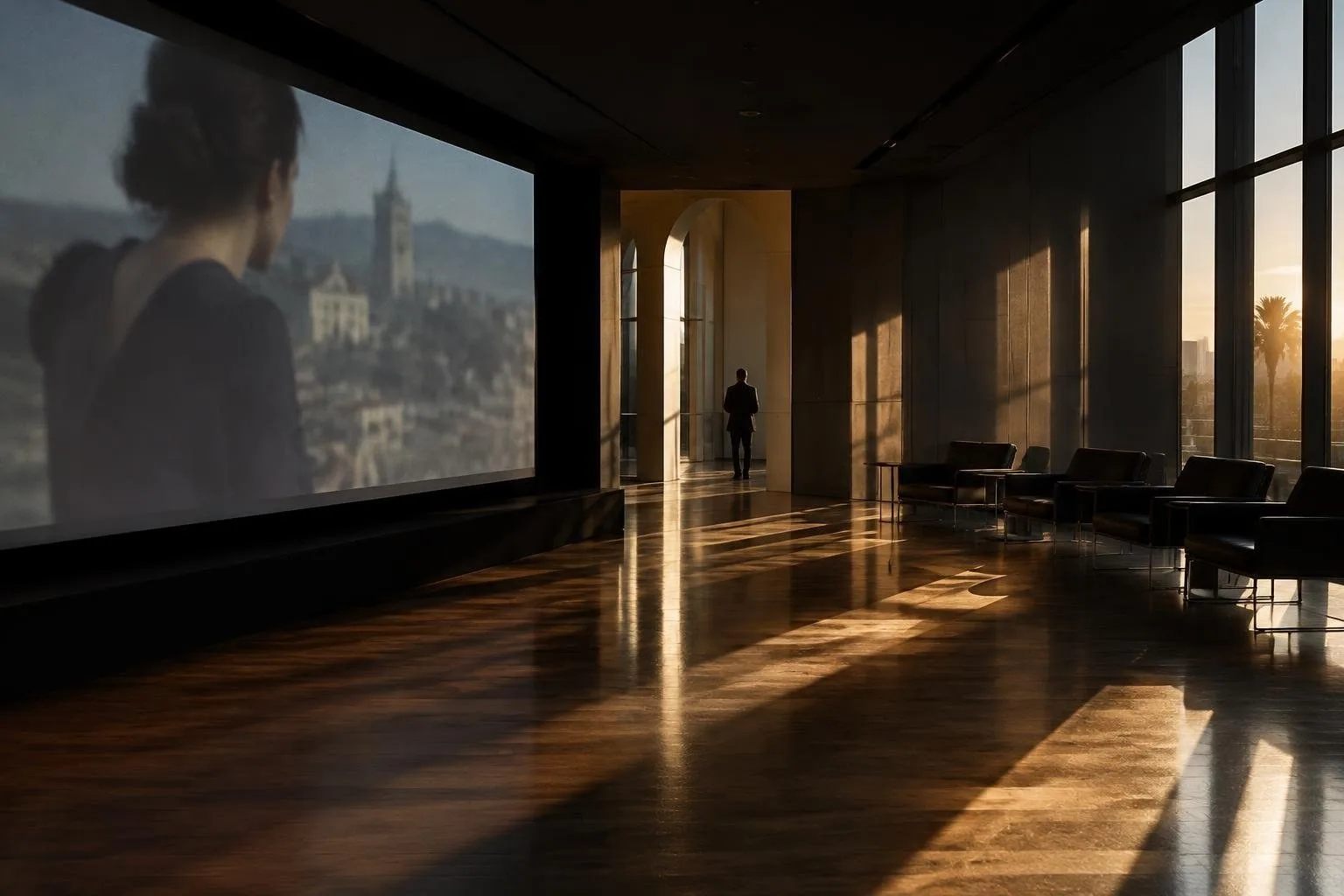
The Spanish drama La Bola Negra has become the talk of the town after sweeping awards at Cannes and Toronto. The film, directed by the duo Javier Ambrossi and Javier Calvo, earned the Best Director prize at the 2026 Cannes Film Festival and captured the Audience Award at the Toronto International Film Festival. Its box-office momentum has already placed it on track to become the second highest-grossing movie in the history of Spain.
Vanity Fair Screening Room panel at LACMA
On November 13, 2026, the inaugural Vanity Fair Screening Room at Los Angeles County Museum of Art (LACMA) hosted an exclusive after-show discussion. The session, moderated by pop star Ricky Martin, brought together directors Ambrossi and Calvo, lead actors Miguel Bernardeau, singer-actor Guitarricadelafuente, and actress Penélope Cruz. Calvo opened with the line, “You can’t plan the miracle,” emphasizing the unpredictable nature of artistic breakthroughs. He recalled how each of their past projects felt successful, yet none had anticipated the universal resonance that La Bola Negra achieved.
During the conversation, Calvo highlighted the emotional aftermath of the screenings: “The most beautiful part is seeing people hug, hand each other tissues, and comfort one another after the film.” He added that the audience’s response, people claiming the movie helped them understand parts of themselves, was a testament to the power of art. Cruz, asked about her longstanding support for LGBTQ+ rights, answered that respect and inclusion are ingrained in her upbringing and professional collaborations, particularly with mentor Pedro Almodóvar. She described her role as Nené Romero as a reminder that everyone deserves the right to be respected and authentic.
Ricky Martin, usually the one answering questions, confessed his nervousness about turning the tables and posing inquiries. He said, “I usually answer the questions, I never ask the questions, but I needed to be here.” His admiration for the film was evident as he praised its script and performances, noting that viewers were moved to tears.
Film’s accolades and upcoming U.S. engagements
Beyond the LACMA event, La Bola Negra continues its festival circuit and awards run. The movie was an Official Selection at Cannes, where Ambrossi and Calvo walked away with the Best Director award. It also claimed the Audience Award at the Toronto International Film Festival, reinforcing its cross-cultural appeal. The Spanish selection committee has named the drama as Spain’s official submission for the Best International Feature Film category at the 2027 Academy Awards.
Following the Los Angeles showcase, the Vanity Fair Screening Room will travel east. From December 4 to 6, the program will be hosted at New York’s historic Cherry Lane Theatre, inviting a mix of film, fashion, culture, and tech personalities to experience the film and its accompanying panel discussions.
Local screenings and community response
Meanwhile, the film’s reach extends to more intimate venues. From November 12 to 15, 2026, the Queer Thursdays series at Cinestudio in Los Angeles presented multiple showings of La Bola Negra. Additional screenings were scheduled for November 13 at 3 p.m., November 14 at 7 p.m., and November 15 at 4:30 p.m., offering audiences repeated chances to engage with the narrative. The film’s storyline weaves three generations of gay men (set against the backdrop of 1932, 1937, and 2017 Spain) exploring love, secrecy, and the lingering impact of the Spanish Civil War. Its cast includes Miguel Bernardeau, Guitarricadelafuente (in his first major acting role), Carlos González, Milo Quifes, and the legendary Penélope Cruz.
Critics have noted that the drama draws inspiration from Federico García Lorca’s unfinished work of the same name, as well as Alberto Conejero’s play La piedra oscura. By interlacing personal stories with pivotal moments in Spanish history, the film offers a contemporary exploration of queer identity while honoring literary heritage.
Each screening has sparked community conversations, with many attendees reporting that the film prompted reflections on personal heritage and the persistence of love across tumultuous eras. The emotional response, ranging from tears to heartfelt embraces, underscores the film’s capacity to foster a sense of collective memory and solidarity.
As the movie continues its journey across the United States, the directors remain humbled. Calvo summed up the experience: “Creating this sense of community and hearing people say, ‘This movie changed me,’ feels like living in a dream.” The sentiment resonates with audiences who have embraced the film not merely as entertainment, but as an invitation to re-examine history, identity, and the enduring power of storytelling.