

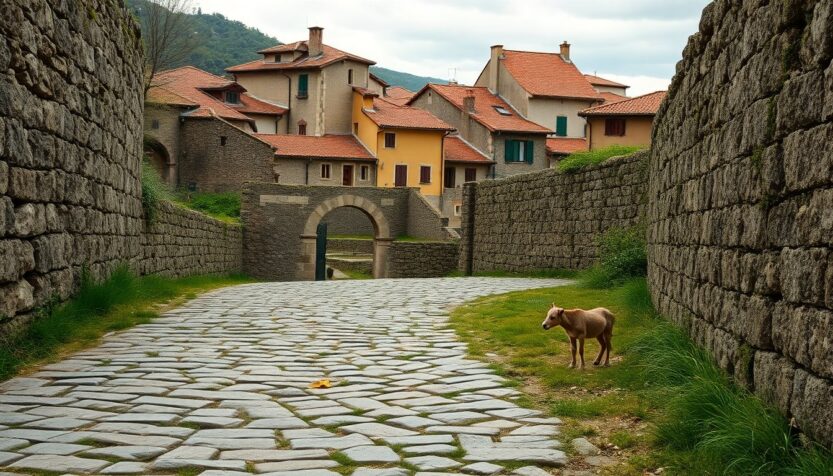
Walking Italy is like reading a layered map with your feet. Move slowly through a landscape and towns reveal their histories in sequence: defensive walls, cloisters, mule tracks, market squares—each element falling into place as you go. On foot, the past isn’t a list of dates; it’s a collection of lived choices, small details guidebooks often overlook.
Why walking matters
Geography and human life are inseparable here. The Dolomites and the long arc of the Alps didn’t just create dramatic scenery; they channelled armies, trade and migration, isolating communities and shaping local cultures. The spine of the Apennines cuts Italy into microclimates and distinct traditions — different crops, dialects and seasonal patterns. From the paths between villages you can see how terraces, steep passes and coastal approaches dictated what people grew, how they traded, and where they settled. Road views flatten these relationships; footpaths reveal them.
Old corridors, living stories
Historic routes still speak if you follow them. The Via Francigena once threaded Rome to northern Europe, carrying both pilgrims and merchants. The Vie del Sale — the salt roads that climbed from Liguria into Piedmont — remind you that small-scale exchange, shepherding and seasonal migration were the engines of rural life long before modern infrastructure. Walking these trails makes it easy to imagine pack animals groaning under sacks of salt and linen, and seasonal gatherings that bound dispersed communities together.
Architecture as function
Seen from a bus the towers and ramparts look picturesque; walked up close they read like practical solutions. Hilltop towns guarded by walls are responses to conflict and competition as much as they are postcards. San Gimignano’s skyline of towers, for instance, hints at civic rivalry and the need for defence as much as at status. Abbeys, bridges and ruins such as Rocca Calascio reveal successive uses and reuses of space. Even mundane features — communal ovens, village washhouses, old mills — are clues to daily rhythms, resilience and how communities managed scarcity.
Micro-histories that surprise
Some of the most compelling stories are tiny and local. In Val Maira’s alpine village of Elva, the Museo dei Cavié (Hair Museum) documents a 19th-century trade in hair for wigmaking — a reminder that resourcefulness and peripheral trades tied remote places into wider networks. These eccentric details often tell you more about people’s lives than grand narratives do.
Taste, tongue and territory
Food and language make geography legible. Northern diets lean toward dairy, polenta and rice; central Italy favors wheat and olive oil; the south and islands showcase durum wheat and seafood. Sicily’s layers of history—Arab, Norman, Spanish—linger in couscous, citrus and agrodolce sauces. Dialects, bilingual signs on borderlands and communal ovens are the cultural fossils of past movements, conquests and contacts; walking between towns exposes these layers in a way driving never will.
Practical takeaways for the travelling historian
– Choose routes that force you off the main road: ancient pilgrim paths, mule tracks or historical trade routes reveal continuity in use. – Pause to read the landscape: terraces, dry stone walls, spring sites and bridges are as informative as museums. – Talk to locals in small towns; they often hold oral histories and explanations that don’t appear in guidebooks. – Look for everyday infrastructure — ovens, mills, washhouses — to understand how people organized communal life. – Carry a simple map and allow extra time: discovery happens in the detours.
Walk Italy and the country stops being a set of monuments. It becomes a living archive, where routes, ridgelines and village squares tell you who lived here, how they adapted and why their choices still shape life today.