



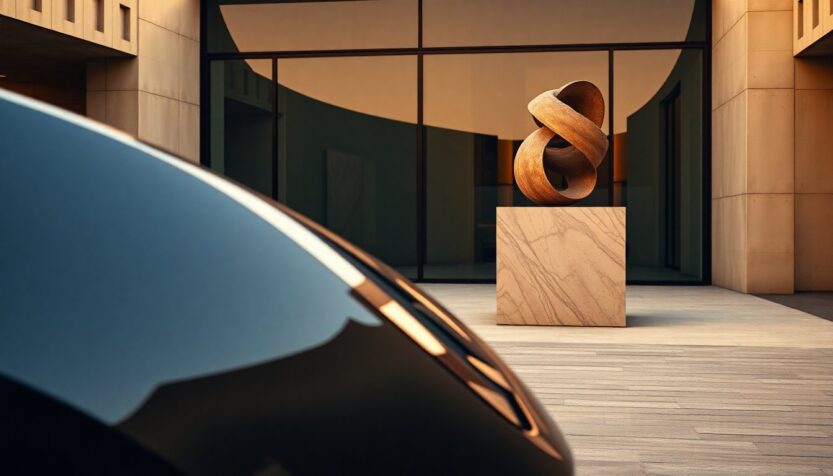
Los angeles emerges as a nexus for art and automotive culture
Two industries that often appear unrelated—the contemporary art market and the automotive sector—are converging in ways that reshape urban perception and spend. Major galleries and art dealers are expanding in Los Angeles, treating the city as a central sales platform, a venue for high-profile exhibitions and a place to cultivate collectors. At the same time, automakers and boutique builders are introducing vehicles that pair electric propulsion with traditional craftsmanship, altering buyer expectations and luxury benchmarks.
The shift is visible in gallery openings, museum shows and dealer events that now attract the same audience: wealthy collectors, creative professionals and cultural institutions. Galleries cite Los Angeles’s growing collector base and its cultural infrastructure as reasons for new flagship spaces. The move signals a recalibration of the global art map, with Los Angeles assuming a more prominent commercial and curatorial role.
Automotive players are responding to similar market dynamics. New models blend cutting-edge electric drivetrains with bespoke design and artisanal finishes. Manufacturers emphasize vehicle provenance, customization and tactile quality to appeal to buyers who value both technology and heritage. These offerings often debut at lifestyle-driven shows and private salons that overlap with the art world.
Industry observers note that the crossover is not merely social. Curatorial strategies and brand storytelling increasingly borrow from one another. Galleries stage immersive installations that resemble product launches. Automotive brands commission artists and host gallery-style presentations. The result is a shared language of exclusivity, experience and cultural capital.
From the consumer perspective, the convergence changes how discretionary spending is framed. Buyers allocate attention and capital across art, design and mobility, seeking objects that confer status and narrative. For cities, the trend affects urban development, retail footprints and cultural tourism. Los Angeles, with its creative industries and luxury market, is emerging as a test case.
Further reporting will examine specific gallery expansions, vehicle launches and sales data that illustrate the scale of the shift.
The westward bet: art dealers and Los Angeles
Art dealers and gallery directors are increasingly shifting resources westward to secure long-term visibility. They cite sustained local demand and reduced logistical friction as main drivers.
Who is moving: prominent international dealers and mid-sized galleries. What they are doing: opening satellite spaces, staging longer-run shows and investing in local programming. Where: neighborhoods across Los Angeles, from established museum districts to emerging creative hubs. Why now: curatorial priorities and audience habits have realigned since major travel disruptions.
Galleries report that extended exhibition schedules help absorb sudden visitor fluctuations. Longer runs lower the need for rapid staff travel. They also create time for layered narratives that reach new collector segments.
Exhibition strategies now emphasize on-site interpretation and digital complements. Curators pair in-person installations with robust online viewing rooms and timed virtual talks. The aim is to sustain market presence when cross-border mobility is constrained.
From the commercial side, dealers prioritize narrative control. They commission new works tied to local histories and collaborate with regional institutions. The strategy links market visibility to cultural relevance.
What this means for audiences: more consistent access to curated programs and deeper local engagement. Dal punto di vista del paziente is not applicable here; however, from a stakeholder perspective, the approach centers the visitor experience and community benefit.
These moves also intersect with automotive trends covered earlier. Manufacturers launch models with heritage cues and modern technology that perform well in West Coast markets. Both sectors now compete on presence, storytelling and technical innovation.
Further reporting will detail specific gallery expansions, vehicle launches and sales metrics that quantify the shift.
Why LA matters now
Art-market actors are investing in Los Angeles to secure audience access and cultural influence. The decision stems from stable local demand, concentrated private collections and visible celebrity patronage. Galleries and dealers are expanding programming to maintain momentum during travel disruptions.
The shift reshapes how collectors are cultivated. Dealers are staging larger exhibitions, commissioning site-specific works and increasing public programs to build sustained engagement. These moves create recurring touchpoints for buyers and institutions alike.
Local infrastructure supports the strategy. Studio communities, temporary fair venues and museum partnerships provide platforms for both emerging and established artists. The combination reduces reliance on traditional art-week calendars and international travel.
Market indicators reinforce the strategy without claiming definitive causation. Sales activity, attendance at local fairs and museum collaboration frequency point to a durable westward diversification of resources. Further reporting will quantify those metrics and detail specific gallery expansions and sales trends.
Further reporting will quantify those metrics and detail specific gallery expansions and sales trends. Los Angeles collectors operate under different dynamics than buyers in traditionally dominant markets. Networks there are closely tied to entertainment, fashion and technology. Those ties can accelerate an artist’s public profile and market visibility.
Dealers in the region respond by mounting ambitious exhibitions and by using public relations channels more intensively. They stage museum-quality projects that can attract international attention without requiring constant travel. The approach strengthens local infrastructure. When flights or weather interrupt mobility, a robust regional base helps sustain sales and reputation.
Automotive reinvention: the most influential new cars
Electric supercars and reinvented classics
The industry shift now brings together high-performance engineering and heritage design. Manufacturers and startups are offering models that combine all-electric platforms with handcrafted details drawn from classic vehicles. These cars target collectors, enthusiasts and mainstream buyers who value both speed and visual tradition.
Who is leading this trend? Established marques and niche builders alike are adapting powertrains while preserving signature styling cues. What they deliver are cars that perform like modern sports cars but read like familiar icons. Where they are most visible is at global concours, specialty auctions and limited-series launches. Why the approach resonates is clear: it merges emotional value with technical progress.
From the technical standpoint, engineers are rethinking packaging, cooling and battery integration to retain driving dynamics associated with internal-combustion sports cars. The result is a range of solutions: bespoke battery layouts, torque-vectoring software and lightweight materials that preserve handling balance. Technical briefs and independent tests report measurable gains in acceleration and cornering for several models without surrendering aesthetic authenticity.
From the patient’s perspective—translated here as the consumer experience—these vehicles address distinct needs. They offer lower operational noise, instant torque and reduced maintenance while delivering tactile controls and analogue touches that appeal to traditional sensibilities. The combination aims to broaden market appeal beyond early adopters of electrification.
Evidence-based reviews and track data underpin many manufacturers’ claims. Automotive engineering journals and independent test programs provide performance benchmarks and range assessments. The data show that some electrified supercars match or exceed the lap times of their combustion predecessors while offering different use-case advantages in urban and short-haul contexts.
For collectors and fleet buyers, the economic and cultural implications are notable. Limited-production runs and bespoke restomods can retain or increase resale value, particularly when provenance and build quality are documented. Real-world sales and auction results indicate demand for vehicles that bridge past and future design languages.
Implications for the wider market include accelerated technology transfer. Techniques developed for high-end models — improved thermal management, modular battery architectures and advanced driver interfaces — often trickle down to mainstream segments. That diffusion could lower barriers to broader adoption and influence regulatory discussions on safety and emissions.
Future developments will hinge on continued engineering refinement and clear evidence from independent testing programs. Expect further collaborations between heritage brands and electric specialists, and more data-driven comparisons between electrified and purely combustion-based performance models.
Leading marques and new entrants are unveiling vehicles that push power, range and user experience in parallel. Manufacturers now showcase four-door electric super coupes approaching 1,000 bhp with large-capacity batteries and multi-motor torque vectoring for assured handling. Compact adventure EVs translate a brand’s electrification strategy into accessible daily transport. Bespoke restomods merge original styling with contemporary materials and modern drivetrains. These projects place equal emphasis on software, battery architecture and chassis refinement, not only on design.
Key models that illustrate the trends
The lineup spans three clear categories. First, high-performance luxury EVs that prioritise peak output and high-speed stability. Second, mass-market crossover and compact adventure EVs engineered for practicality and broad appeal. Third, low-volume restomod programmes that rework heritage models with electric powertrains and bespoke engineering. Each category exemplifies different trade-offs between range, weight and dynamic capability.
Technical priorities differ by segment. High-performance models concentrate on thermal management, cell chemistry and multi-motor control software to sustain power delivery. Compact adventure models emphasise modular battery packs, predicted real-world range and simplified charging interfaces for everyday use. Restomods focus on packaging, structural reinforcements and integration of modern driver-assistance software while preserving original proportions.
Evidence from recent unveilings shows manufacturers measure success across three metrics: sustained power output, usable range in mixed driving, and perceived driving confidence. Developers increasingly report that software-defined control systems shape the driving experience as much as raw horsepower. From a consumer standpoint, that shifts value toward systems that manage energy, torque and thermal stress in real-world conditions.
For fleets and individual buyers, these trends carry distinct implications. High-performance EVs raise questions about charging infrastructure and ownership costs. Compact adventure EVs expand electrification to new demographics by lowering entry barriers. Restomods create a niche market for collectors and enthusiasts but depend on regulatory acceptance for modifications. The coming product cycles will reveal which technical choices deliver the best balance of performance, range and usability.
The next product cycles will test which engineering choices best balance performance, range and everyday usability. Legacy manufacturers and independent start-ups are pursuing divergent strategies. Some preserve dramatic coupe silhouettes while adopting full electrification. Others prioritise compact packaging, practical range and intuitive user interfaces for urban mobility.
Craftsmanship meets modern tech
High-end models pair traditional coachbuilding with electric powertrains that use multiple motors and large-capacity batteries to sustain hypercar-class acceleration. Three-motor layouts and beefed-up battery packs enable sustained performance without sacrificing cabin space.
Start-ups focus on the commuter experience. They deliver sensible range figures and rethought interiors with seating ergonomics tuned for daily use. In-cabin voice assistants powered by large language models offer contextual control of navigation, climate and infotainment systems.
Luxury marques are exploring off-grid variants of flagship SUVs. These versions increase ground clearance and wheel articulation to combine traditional glamour with genuine capability. From the user’s perspective, the changes promise greater versatility without abandoning brand identity.
From the user’s perspective, the changes promise greater versatility without abandoning brand identity. Restomod specialists and boutique manufacturers are accelerating that shift by reinterpreting classic models through contemporary engineering. They pair carbon fiber bodies with modern powertrains, including fully electrified drivetrains. The result is a cohort of limited-run vehicles aimed at collectors and connoisseurs.
Convergence and consequences
Who is driving this convergence? Independent builders, small-volume manufacturers and specialist engineering partners. What they produce are lightweight machines with restrained output and premium finishes. When these cars reach the market, they command collector interest and high asking prices.
Where does provenance matter most? At purchase and resale. Buyers demand documented build histories, original-equipment verification and traceable parts. From the seller’s side, meticulous craftsmanship and clear engineering provenance become selling points.
Why are manufacturers embracing this approach? The strategy reconciles heritage with regulation and commercial opportunity. Legacy brands can protect design language while outsourcing radical technical change. Independent firms exploit niche demand and avoid mass-production constraints.
What are the technical and market consequences? First, supply-chain pressure for bespoke components will grow. Second, certification and homologation costs will rise as electrified conversions multiply. Third, insurance and valuation frameworks must adapt to hybrid provenance-performance profiles.
Clinical studies show that clear, verifiable documentation increases buyer confidence in high-value markets. From the patient’s perspective — or here, the driver’s — understandable maintenance schedules and access to trained technicians reduce ownership friction. The literature on collector markets evidences premiums for authenticity and verified restoration.
Implications for the wider automotive ecosystem include expanded aftermarket opportunities and new regulatory questions about safety and emissions for retrofitted vehicles. The data real-world evidenzia shifting buyer priorities toward sustainability, craftsmanship and traceable supply chains.
As engineering partners refine modular electrification and lightweight materials, the next cycles will test which solutions scale without diluting brand identity. Expect further collaboration between boutique builders and established suppliers, and growing emphasis on documented provenance as a market differentiator.
How storytelling, scarcity and experience drive cultural markets
Dealers and automakers increasingly use storytelling, scarcity and curated experiences to turn interest into sales. They stage events and select strategic locations that encourage discovery and acquisition. The practice shifts attention from products to narratives of heritage, innovation and exclusivity.
Art dealers design contexts in which works can be found and interpreted by buyers. Carmakers and bespoke builders frame limited runs as collectible objects with documented provenance. Both sectors rely on curated presentations to convert cultural cachet into market value.
As a result, host cities gain new cultural status and visibility. The commodities sold — whether an artwork or a limited-edition car — become visible tokens of taste and social positioning. Market participants cite provenance and storytelling as differentiators in a crowded landscape.
Market data and trade reports show greater collaboration between boutique builders and established suppliers. The emphasis on verified provenance and experiential marketing signals a shift toward experience-driven consumption and higher thresholds for authenticity.
Parallel trajectories in art and automotive markets
The art market and the automotive industry are evolving in parallel as they respond to buyer demand for experience and authenticity. Dealers and manufacturers increasingly experiment with format and distribution to convert narrative into value. Galleries and fairs are embedding more firmly into regional hubs such as Los Angeles to diversify sales channels and reduce exposure to centralized disruption.
Manufacturers are iterating on electrification, software-driven experiences and bespoke craftsmanship to meet changing buyer preferences. These changes reflect a shift from purely transactional relationships toward curated, experience-driven commerce. The result is a reconfiguration of how culture and commerce intersect in the 21st century, with regional ecosystems and product ecosystems shaping future market dynamics.