



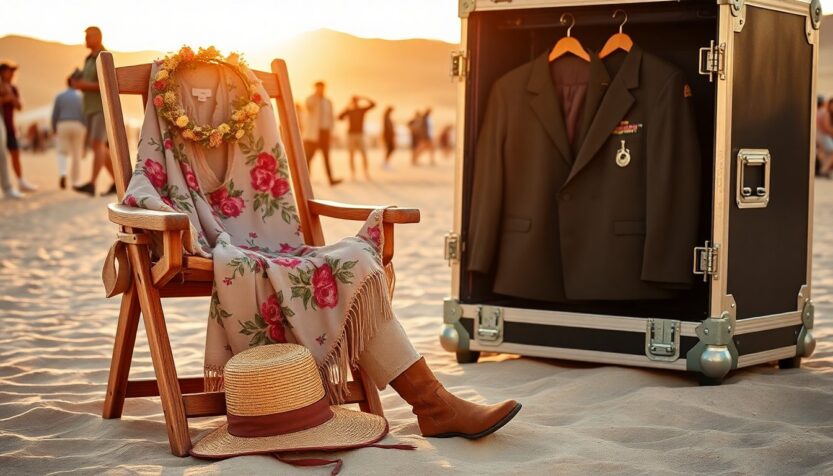
The Coachella of the 2000s was shorthand for sunlit, bohemian dressing: floral crowns, loose layers, and a certain breezy nonchalance. That image began to change notably after Beychella—Beyoncé’s 2018 headline set that combined spectacle, cultural tribute, and meticulous costume design. That moment reframed the festival as a place where performance and fashion are tightly linked to cultural messaging and commercial value. Increasingly, what happens on the main stage resembles a touring production or a luxury runway show more than a spontaneous desert party.
From boho to branded spectacle
Several forces accelerated this change: bigger budgets, celebrity branding, and a heightened appetite for shareable moments. Major houses now craft bespoke wardrobe packages for headliners, treating a festival set as a marketing event as much as an artistic one. For example, a contemporary headliner may appear in multiple made-to-measure looks by a single fashion house, illustrating how brand partnerships have become baked into festival programming. Labels chase the cultural cachet of a viral set; artists leverage designer clout to amplify their image. Together, these dynamics have turned backstage alliances into public spectacle and commerce into part of the creative vocabulary.
What partnerships look like
In practical terms, this means a mix of luxury and accessibility onstage and off. High fashion collaborations can boost a label’s visibility and signal cultural relevance, while mainstream brands use pop moments to drive volume. At the same time, some artists choose to showcase their own labels or capsule collections during shows, using merch and limited releases to convert fans into customers. These arrangements are now expected rather than exceptional, creating a marketplace where style, music, and commerce intersect in front of millions of viewers.
Attendee fashion and the merch economy
Festival-goers have also changed how they dress; the dreamy Pinterest era of flower crowns has given way to more relaxed, streetwear-inflected looks. Athleisure, logo hoodies, and resale-friendly pieces dominate the desert now, and influencers curate outfits with monetization in mind. Parallel to this trend, brands stage pop-ups and activations to sell directly to attendees. This two-way relationship—artists wearing high-fashion looks while fans buy branded hoodies and exclusive drops—illustrates how Coachella fashion functions as both self-expression and a commercial pipeline.
Merch vs. editorial moments
Not every garment shown on stage is aimed at immediate retail. Luxury houses often seek cultural signals—engagement, views, and prestige—rather than same-day sales. Meanwhile, smaller labels may depend on a celebrity sighting to create demand. A high-profile performance can make an independent piece sell out overnight, but that visibility hinges on accurate crediting and press pickup. In other words, the difference between a brand gaining fame and fading unnoticed can come down to whether journalists, stylists, and social platforms identify the designer quickly and widely.
Credit, visibility, and the indie advantage
Visibility mechanics matter. When a household name wears an indie designer’s sample in front of a global audience, a chain reaction can follow: stylist posts, media coverage, social reposts, and a spike in web traffic that often translates to rapid sellouts. Conversely, if credits are omitted or delayed, recognition — and sales — may never materialize. This dynamic places power in the hands of those who control narratives: stylists, PR teams, and digital platforms. It also highlights how small labels navigate the same ecosystem as luxury brands but with starkly different goals and outcomes.
Why the shift matters beyond fashion
The transformation of Coachella’s sartorial landscape speaks to larger cultural shifts about attention, authenticity, and commodification. Festivals once celebrated collective discovery and subcultural style; now they are curated moments where influence and investment meet. Understanding which elements are organic and which are engineered helps audiences read these moments more critically. Ultimately, festival fashion is no longer just about what looks good in a photo; it’s a strategic intersection of storytelling, commerce, and cultural signaling that shapes both how we watch music and how brands position themselves in a noisy digital age.