

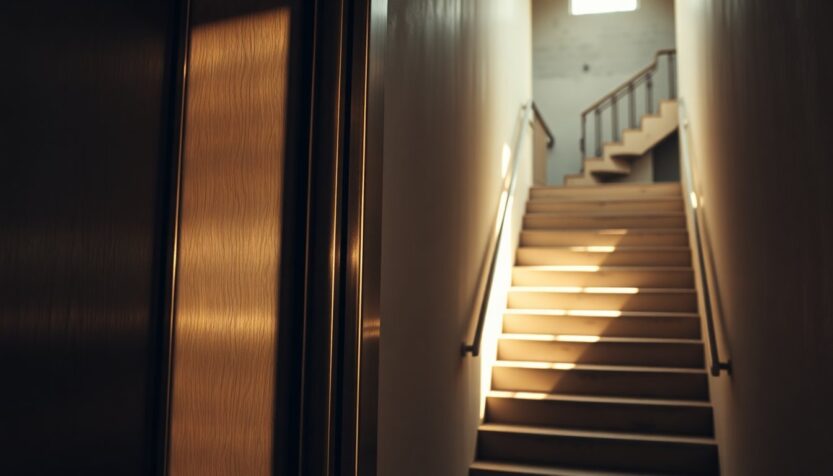
I’m asking a simple question today: what makes you irrationally uneasy? In my case, it’s elevators. I first wrote about this quirk almost two decades ago, and the feeling hasn’t softened. Since then I have used an elevator exactly 16 times — only when stairwells were unavailable. Otherwise, give me the steps every time, no matter the floor. That preference isn’t a casual habit; it’s a deliberate choice rooted in a very specific kind of unease that I can’t fully explain but that consistently steers my decisions.
To give a flavor of how far I’ll go, I once climbed 33 flights of stairs to see a therapist. I arrived breathless and joked, “See how much I need you???” as if panting proved the point. That incident is emblematic: I’ll accept major inconvenience to avoid a short ride in an enclosed box. The decision often surprises people, and sometimes it sounds dramatic, but for me the cost-benefit always tips toward moving my legs rather than pressing a button.
Why elevators unsettle me
The disquiet around elevators can be framed in different ways. Some call it irrational fear, others recognize elements of claustrophobia or social anxiety about being trapped with strangers. For me it’s less about statistics and more about sensation: tight corners, limited exits, and the hum of machinery create a cocktail of discomfort. The label doesn’t matter as much as the reaction—my body and instincts push toward the stairs. Highlighting the phrase elevator phobia helps me communicate the depth of the feeling without turning it into something clinical; it’s simply a persistent personal quirk that shapes how I move through the world.
How travel moments illustrate the habit
Travel anecdotes tend to highlight the oddity. In Paris, for example, I encountered some genuinely tiny lift cars that looked like they belonged in a museum rather than in a modern building. I remember my mom standing by one of those micro-cabins while I hovered near the doorway; we didn’t step in, and I filmed a short clip of another minuscule elevator just to show friends later. A close friend, Kelsey, rode one such compact lift on her honeymoon, bravely posting photos of the squeeze. Those moments crystallize the difference between polite curiosity and the visceral no-go feeling that stops me cold.
Coping strategies and small confessions
Over time I developed routines that make outings smoother. Choosing buildings with visible stairwells, arriving early to avoid crowded lobbies, and asking for alternate routes all help. I’ve also learned to laugh about it, which diffuses awkwardness when people offer puzzled looks. Naming the sensation — saying, “I have an irrational fear of elevators” — often wins a combination of sympathy and practical help. It’s less about overcoming the fear in a single heroic push and more about constructing a day-to-day approach that respects my comfort while allowing me to keep living an active life.
Name tricks, party exits, and other small rituals
I’ve got some tiny rituals that aren’t about lifts but about social life: a handy mnemonic for remembering names and a particular habit when I’m ready to leave a gathering. The name trick is simple — repeat the person’s name in a sentence soon after you hear it, then mentally link it to a vivid image — and it usually works. As for parties, yes, I sometimes ghost early, slipping out in a way that feels polite and unobtrusive. Neither of these practices is glamorous, but they both help me navigate social situations without creating unnecessary stress, much like preferring the stairs helps me navigate buildings without boarding an elevator.
So tell me: what’s your odd, inconvenient fear or tiny quirk? Are there other elevator-haters out there, or do I stand alone in this particular corner of anxiety? I’m curious to hear your stories — the more specific, the better. Sharing these small confessions turns a private discomfort into a shared human moment, and sometimes that’s the best way to make a quirk feel normal.