

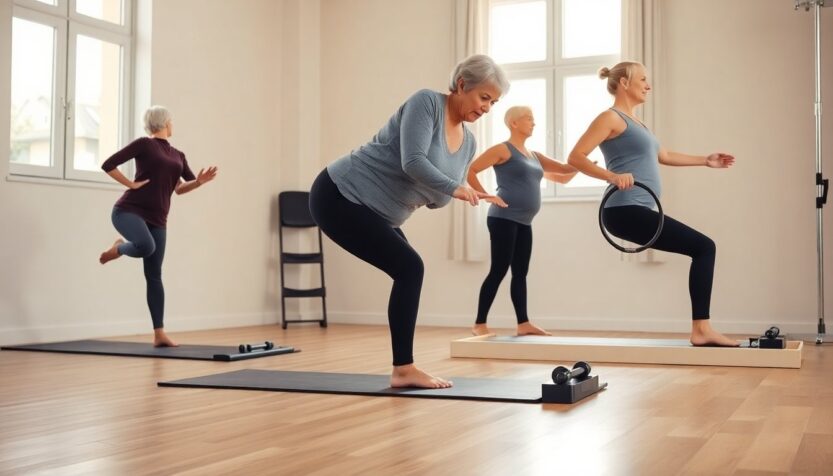
Women in midlife are changing the way they exercise. Across gyms, studios and community classes, many are moving away from “more is better” workouts and toward gentler, injury-conscious training that protects joints and preserves mobility. After years of being encouraged to chase maximum output, women in their 50s, 60s and beyond are prioritising movement quality, alignment and controlled strength so they can stay active for the long haul.
Why the shift?
High-intensity programs reward short-term gains—heavy loads, fast reps and ever-higher numbers. Those tactics can be hard on the shoulders, hips and knees, and they often reinforce compensatory movement patterns when the body is tired or out of alignment. Pilates and similar low‑impact systems offer an alternative: slow, deliberate work that retrains coordination, activates deep stabilisers and reduces unnecessary joint stress. The result is exercise that feels safer and more sustainable.
What Pilates brings to the table
Pilates focuses on breath, alignment and precise repetition. Instead of relying on momentum and brute force, it asks the body to move with control and intention. That emphasis:
- – Rebuilds support around the spine and pelvis
- Engages core and postural muscles that protect joints
- Improves balance and timing between muscle groups
- Reduces pain during everyday tasks like rising from a chair, climbing stairs or carrying groceries
Because exercises can be scaled to current ability, Pilates suits people returning from injury and those who never felt at home in conventional gyms. Many women report that workouts stop feeling punitive and start feeling doable—practical movement that translates into daily life.
How training and coaching are changing
This isn’t just a class-level tweak. Trainers and physiotherapists are rewriting programming priorities: less maximal loading, more motor-control drills, small, progressive increases in complexity. Studios are adding mobility, stability and low‑impact strength classes. Some providers now offer certifications specifically focused on midlife and longevity, so instructors can better meet the needs of older clients. These shifts change equipment choices, class formats and the cues coaches use in-session.
What the evidence and industry say
Industry sources and physiotherapy professionals point to steady demand for classes that protect joints and build durable movement. Clinics and studios report higher retention among midlife clients when programs focus on motor control rather than intensity. Practical routines—short, regular sessions rather than sporadic, heavy workouts—tend to produce more reliable, long-term gains in balance, posture and muscle support for bone health.
Practical takeaways for beginners and returners
If you’re new to structured movement or returning after pain or injury, look for instruction that prioritises alignment and progression. Good teachers offer variations so you can work within your comfort zone and increase load, range or complexity slowly. Expect exercises to mix mat work with light equipment, and to emphasise quality over quantity.
Tips:
– Start with teacher-led classes so the instructor can correct form. – Aim for consistency—twice-weekly practice maintained over months delivers real benefits. – Choose programs that emphasize breath, slow control and logical progression. – Ask whether instructors hold certifications for working with midlife or longevity clients.
Long-term benefits
When movement becomes repeatable and manageable, it builds confidence and independence. Better movement economy reduces joint stress and lowers the risk of common issues such as rounded shoulders, unstable knees or anterior pelvic tilt. Over time, consistent practice supports balance, functional strength and self-efficacy—so people are more likely to keep going.
What to expect going forward
The growing interest in joint-friendly training has prompted more targeted education for instructors and new class offerings aimed at longevity. As certification expands and studios adapt, access to safe, tailored programming should increase—making it easier for midlife women to find classes designed around sustained, practical progress rather than short-lived intensity fads. Pilates and related low‑impact systems don’t promise instant fixes, but they do offer a methodical, scalable way to rebuild support, reduce pain and keep moving well for decades to come.