

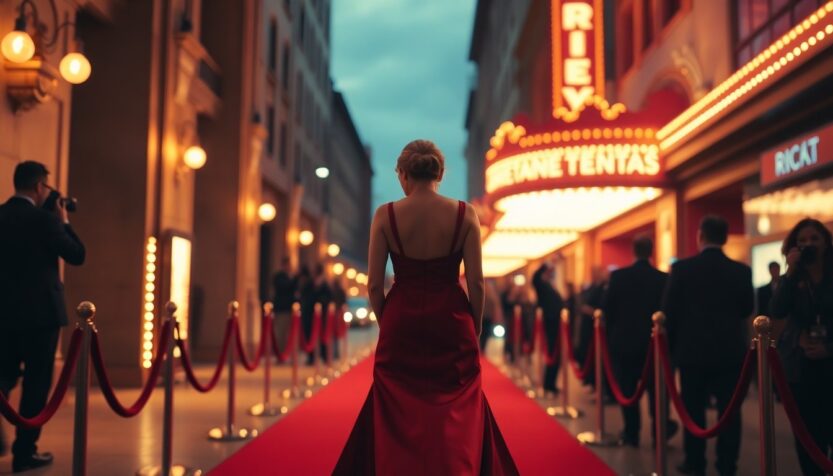
The entertainment landscape now regularly revolves around Zendaya—an actor whose name appears across television, independent cinema, and blockbuster franchises. What started as a recognizable presence on family-oriented programming evolved into an unmistakable artistic voice that can anchor both intimate dramas and expansive science-fiction epics. Observers describe her as a rare box office asset and a cultural touchstone for a generation that values authenticity and range. Beyond on-screen choices, her public persona and promotional strategy have amplified each release, turning premieres and red carpets into narrative extensions of the work she presents.
That growing prominence is visible in a busy schedule: the acclaimed A24 film The Drama (2026) has already registered commercial success with a reported $96 million worldwide, while high-profile franchises and auteur projects keep her calendar full. This article maps the trajectory that led to this moment—tracing early training, signature performances, and the methods behind her visibility. It also examines the role of collaborators and the ways Zendaya navigates publicity and private life with deliberate care.
From Disney Channel to serious dramatic parts
Zendaya’s career arc has a familiar starting point—youth programming and mainstream exposure—but the transition to adult-focused material was neither accidental nor abrupt. She used television projects like Euphoria to showcase emotional complexity and to redefine public expectations. That series allowed her to inhabit a character over multiple seasons, honing craft in ways that short-form appearances do not permit. The shift toward more mature narratives continued with films such as Challengers and the unsettling dynamics she explores in The Drama, demonstrating an appetite for roles that complicate audience sympathy and invite sustained discussion.
Television as a proving ground
For many actors, long-form television functions as a laboratory; in Zendaya’s case it became a proving ground that legitimized her move into prestige cinema. Playing characters with psychological depth gave her material that demands subtlety, and reviewers responded to that subtlety by acknowledging a performer capable of carrying both intimate scenes and large-scale spectacles. In industry terms, this period established her as a bankable and critically interesting lead, a combination that studios and auteurs both covet. The result is a slate that mixes independent risk-taking and franchise reliability.
Franchises, auteur projects, and a crowded 2026–2027 slate
Zendaya’s current film lineup illustrates deliberate variety. In 2026 she appears in Christopher Nolan’s The Odyssey, the Marvel tentpole Spider-Man: Brand New Day, and Denis Villeneuve’s Dune: Part Three, while animated work such as Shrek 5 is expected in 2027. That spread—epic adaptation, superhero blockbuster, science-fiction saga, and family animation—shows how she balances commercial reach with artistically ambitious collaborations. Such range reinforces her status as a box office draw because different audience segments will seek her work for different reasons, increasing overall marketability.
Indie credibility and mainstream clout
Alongside franchise returns, independent films like The Drama underline Zendaya’s credibility with critics and cinephiles. A24’s investment in the film and its subsequent earnings underline a fact: she can deliver performances that sustain difficult or provocative material and still attract audiences. That rare alignment—arthouse respect plus commercial performance—makes her a unique commodity. It also means directors and studios are more willing to imagine her in roles ranging from mythic figures to contemporary archetypes, secure in the knowledge she will bring layered work to the part.
Public image, promotion, and guarded personal life
Zendaya’s influence extends beyond acting into carefully curated public moments. Her long-term collaboration with stylist Law Roach elevated red-carpet appearances into a coherent storytelling device known broadly as Method dressing, described here as an approach that aligns costume choices with a film’s themes. The strategy turns premieres into extensions of the projects themselves and increases media attention in ways that traditional promotion cannot. Industry colleagues note her promotional instincts—interviews, appearances, and fashion choices—are a significant part of why studios view her as a champion for their releases.
Finally, Zendaya’s private life, including her relationship with Tom Holland, is managed with intentional ambiguity. She protects personal milestones while still engaging media curiosity enough that narratives about her off-screen life never eclipse her creative work. Whether discussing whether they are married or not, she keeps control of the story and reframes publicity around craft and the projects that matter to her. That balance—visibility without overexposure—complements the calculated risks she takes on screen and underscores why she is considered a modern example of an A-list movie star.