



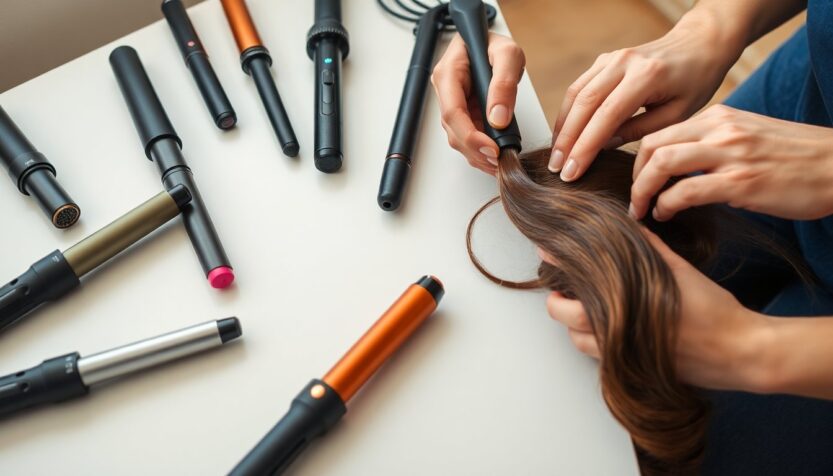
The market for hair tools has shifted: instead of wrestling with a traditional wand or iron, many people opt for a rotating curling iron that does much of the work. These devices vary in size, heat control, and safety features, but they share the same goal—making uniform, long-lasting curls easier to achieve. In this guide you’ll find a clear breakdown of popular models, the core features to look for, and simple techniques to use them without dents, snags, or uneven results.
Throughout the article you’ll see product highlights, practical pros and cons, and concise instructions recommended by professional stylists. Expect notes on barrel size, temperature settings, and safety functions like automatic shutoff and anti-tangle features. Whether you want tight ringlets or loose waves, the right rotating tool plus a few habits will cut styling time and improve consistency.
How rotating curling irons work and why they’re different
Most rotating curlers use a motorized barrel that turns hair around the cylinder so you don’t have to manually wrap each section. The advantage of this design is fewer creases from clamps and steadier tension across the strand, producing uniform results. Look for tools with clear direction controls so you can curl away from your face on each side, and consider a model with varied heat levels to match your hair type. A rotating device that relies on airflow instead of direct plates can also reduce extreme heat exposure while still building volume.
Standout models and what they offer
Beachwaver — the viral original
The Beachwaver popularized the category and remains known for its short clamp that avoids long dents along the curl. With multiple barrel sizes and colorways, it lets you pick how defined your curls are. Typical features include a few temperature settings and a reachable cool tip for safer handling. Be mindful when loading hair into the clamp: if you place too much fiber or rush the motion the tool can tug, so sectioning carefully helps prevent pulling.
Dyson Airwrap — airflow styling with low direct heat
The Dyson Airwrap uses controlled airflow rather than hot plates to shape hair, offering attachments in different diameters so you can alternate between volume and tighter curls. It typically includes several heat options and a cool shot to set the shape. Because the barrels can rotate or be used in both directions, you can style around the head without constantly swapping parts, and the reduced direct heat helps protect fragile strands.
T3 CurlWrap and mid- to budget-level rotating irons
The T3 CurlWrap stands out for customization—multiple heat settings, rotation speeds, and timer choices let you fine-tune each curl. Professional stylists often praise consistent results across the session. On the other end, there are affordable self-rotating irons (one popular option retails around $50) that include helpful features like anti-tangle safety cutoffs and audible beeps when a curl is ready. These more economical units can still deliver shiny, bouncy results if used with the right technique and heat settings.
Protected-barrel and L’ange options
Certain rotating models encase the heated barrel so you don’t risk burning fingers, and they often allow you to select curl tightness—defined, wavy, or loose—by changing how long the tool holds the hair. The rotating iron from L’ange features a long titanium barrel, several heat levels, directional arrows, and a home-return button for quick alignment; it also offers an automatic 60-minute shutoff for safety. These choices prioritize user comfort and long-term wear of a finished style.
How to use rotating curling irons effectively
Preparation and technique
Start with dry, detangled hair and always apply a heat protectant. Divide hair into small sections—roughly four to five inches wide—and brush each section smooth before you load it into the tool. Insert a section into the clamp or barrel opening, then press the directional control to start rotation. A useful rule is to curl away from the face on both sides for a cohesive look. After curling, allow each section to cool for about fifteen minutes before running fingers or a brush through it to help the shape set.
Settings and troubleshooting
Match temperature settings to your hair’s porosity and thickness—lower heat for fine or damaged hair, higher for very coarse strands. If your tool has rotation speeds or timers, experiment on a small piece to learn how long yields the desired tightness. If you feel pulling or hear the motor strain, reduce the amount of hair in the section or try an anti-tangle mode if available; that will prevent snags and protect strands from damage.
Are rotating curling irons worth it?
For many people, yes. Rotating curling irons save time and remove much of the manual wrapping technique, which helps beginners and anyone who wants repeatable results. Stylists note that these tools usually avoid the dents that clamps leave and can produce consistent waves across the head. If you struggle to get uniform curls with a wand or traditional iron, a rotating tool is often a smart investment—just choose one with the features you need and follow safe heating practices.
Experts and trust
Celebrity hairstylist Priscilla Valles shares tips on sectioning and letting curls cool, while beauty editors who test tools regularly emphasize match-making features to hair type. Writers and editors with long experience in beauty testing advise trying a model with variable heat settings and reliable safety functions so you get both performance and peace of mind.