
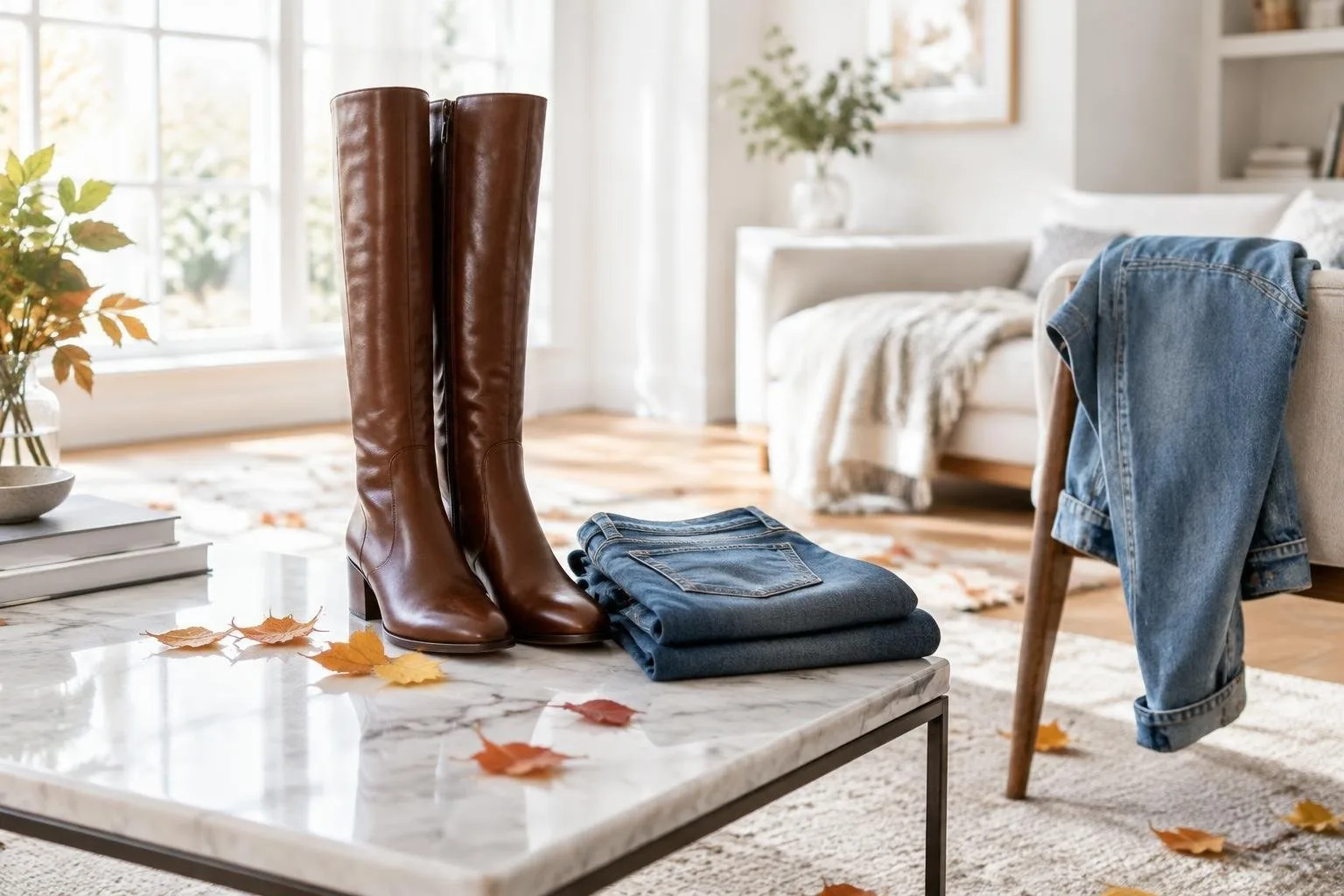
Every autumn the question resurfaces: should the pant leg be tucked into the boot, or should it drape over the top? The decision feels simple, yet the outcome can swing a look from polished equestrian to chaotic. The answer depends on the boot’s height, the pant’s cut, and the vibe you aim to create. Understanding the interaction helps you avoid the frustration of a jean that refuses to slide into a knee-high, while also ensuring that loose fabrics don’t drown a sleek boot silhouette.
Tuck refers to the act of inserting the pant leg inside the opening of a boot, creating a seamless line from waist to toe. When executed with the right combination, the result is a streamlined appearance that highlights both the footwear and the lower garment. The opposite, leaving the pant untucked, can celebrate volume and texture, letting the boot act as an accent rather than the centerpiece.
Tucking works best with tall boots and skinny silhouettes
High-leg boots (whether leather knee-highs, riding styles, or sleek combat varieties) pair naturally with skinny jeans. The narrow cut slides easily into the boot shaft, preserving the clean vertical line that tall boots are designed to emphasize. Baggy or boyfriend cuts tend to bunch up, creating an unflattering silhouette. For colder months, a well-fitted skinny jean becomes a reliable companion, allowing you to showcase the boot without excess fabric competing for attention.
Even when the weather calls for extra warmth, the principle remains the same: a narrow pant leg offers the least resistance. If you own a pair of skinny denim from any recent collection, consider it your go-to for any boot that reaches above the ankle. The result is a sleek, elongated look that works from day to night.
Leave straight-leg and flare pants untucked with pointed-toe boots
When the boot features a pointed toe, especially in ankle-height or calf-length versions, a straight-leg jean creates a sophisticated, slightly relaxed vibe when left untucked. The straight silhouette frames the boot without competing for space, allowing the footwear’s shape to remain visible. This combination works well for both casual outings and evening events, offering a balanced transition between comfort and style.
Flare pants share a similar logic. Their widening hem already draws the eye outward, and tucking them into a pointed-toe boot would truncate the dramatic effect. Instead, let the boot peek just enough to anchor the outfit while the flare does the heavy lifting. This rule also applies to cowboy boots: a subtle exposure of the boot heel adds character without sacrificing the flare’s silhouette.
Loose trousers need a slouchy boot to stay tucked
Baggy sweatpants or relaxed cotton trousers can be tucked successfully when paired with a slouchy boot, a style that rose to popularity around 2016. The boot’s relaxed profile accommodates extra fabric, creating a laid-back, party-ready vibe. The key is ensuring the pant leg is roomy enough to slide inside without creating bulk at the ankle.
For this look, choose a boot with a slightly oversized toe box and a soft leather finish. The combination exudes a retro 2016 energy while keeping the outfit cohesive. If you plan to wear a slouchy boot in the coming weeks, test the fit with a loose pant before heading out; a proper tuck will give the ensemble a confident, effortless edge.
The style editor overseeing this guide, Aiyana Ishmael, emphasizes that the decision to tuck or not hinges on the relationship between pant width and boot shape. Her experience as a fashion journalist and award-winning writer informs the practical recommendations presented here.