
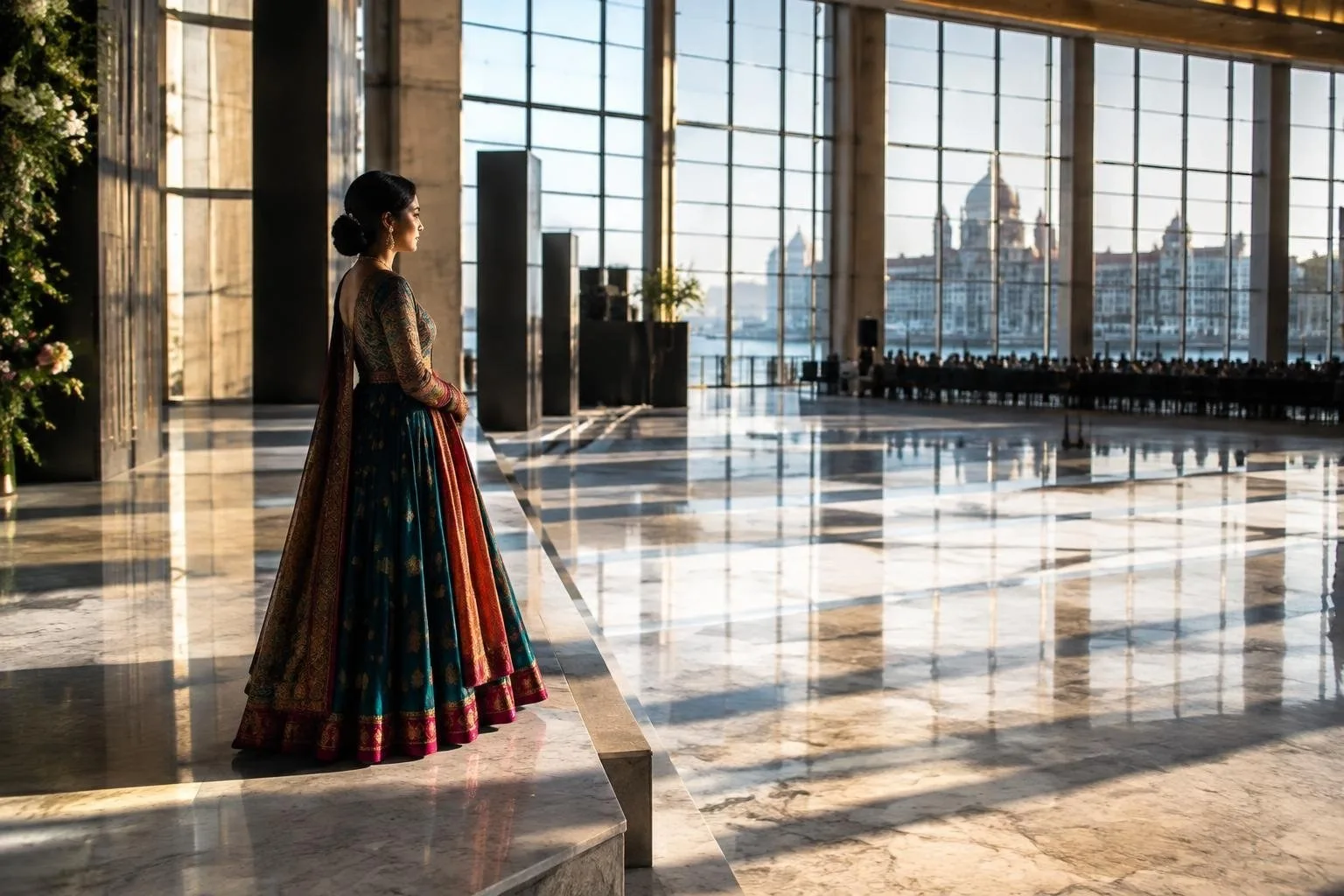
The sixth edition of the Earthshot Awards unfolded at Mumbai’s Jio World Convention Centre, gathering innovators, philanthropists and a handful of global celebrities. Five prize-winning projects each received a £1 million grant aimed at tackling the planet’s most urgent climate challenges. India, which has produced more finalists than any other nation since the prize’s launch in 2020, hosted the ceremony in recognition of its rapid renewable-energy expansion.
Among the most watched arrivals were the Prince and Princess of Wales. Their presence marked the first joint appearance at the awards in four years, and the couple stepped onto the “green carpet” alongside actors Simone Ashley, Rami Malek, Alia Bhatt and Bollywood icon Sonam Kapoor. The event’s high-profile presenters also included members of the British pop group Take That, underscoring the ceremony’s blend of environmental advocacy and pop-culture glamour.
Kate Middleton’s Indian-inspired ensemble
Kate arrived in a striking Mahima Mahajan anarkali crafted from hand-woven silk georgette. The garment’s rich vermilion hue, achieved with vegetable-based dyes, is accented by traditional Banarasi gold motifs, delicate hand embroidery and glass-bead appliqués. An anarkali is a flowing Indian gown that drapes gracefully from the bodice to the floor, and this particular piece celebrated centuries-old Indian textile techniques while adhering to modern sustainability standards.
Complementing the dress, the Princess wore the late Queen Elizabeth II’s Emerald Tassel Suite: a set of diamond and emerald jewellery that first appeared at a 1989 royal dinner. A matching burgundy velvet Prada minaudière completed the look, tying together heritage and contemporary design. The ensemble symbolised a conscious choice of materials, with the hand-woven fabric and natural dyes highlighting the event’s longstanding “reuse or re-wear” dress code.
Prince William’s nod to Bollywood couture
Prince William paired the occasion with a bespoke black bandhgala from Manish Malhotra, a designer celebrated for Bollywood costume design and now a leading figure in Indian couture. The jacket featured hand-embroidered buttons and a silhouette reminiscent of Indian aristocratic attire, reinforcing the couple’s celebration of local craftsmanship.
Other notable red-carpet participants reflected a similar theme. Simone Ashley dazzled in a gold Swadesh × Manish Malhotra lehenga, while Sonam Kapoor chose a green Anamika Khanna ensemble with matching emerald jewellery. Their collective sartorial choices highlighted the event’s emphasis on regional fashion excellence and sustainable production.
Royal sustainability in practice
Kate’s commitment to environmentally-friendly fashion extends beyond a single night. Earlier in the Mumbai visit she travelled on the city’s metro system and joined a friendly game of cricket, adhering to royal protocol that discourts autograph-signing. The Princess also revisited a royal-blue Roksanda dress first displayed at Wimbledon, pairing it with a custom DeMellier bag woven from rice-straw fibre, and later wore a linen Gabriela Hearst suit, previously shown at Wimbledon, alongside a Dior bag crafted by Indian artisans.
These choices echo her prior Earthshot appearances: in 2021 she rewore an Alexander McQueen gown, and in 2022 she rented an off-the-shoulder Solace London dress via the HURR rental platform. The recurring “re-wear” directive at the awards encourages guests to consider the environmental impact of their wardrobe decisions, a principle the Waleses have consistently demonstrated.
India’s climate leadership and William’s message
During the award’s Impact Assembly, Prince William highlighted India’s progress toward clean energy. He noted that the nation achieved its target of 50 % non-fossil-fuel electricity generation five years ahead of schedule, and that its solar capacity has expanded more than fifty-fold in just over a decade. “Emerging economies often face a false dichotomy between growth and the environment,” he said. “India shows a different picture – one of colour, complexity and possibility.”
The Earthshot ceremony therefore served a dual purpose: rewarding groundbreaking environmental solutions and showcasing the cultural and technological synergy between the United Kingdom and India. By foregrounding Indian designers, sustainable textiles and local craftsmanship, the event underscored the message that climate action can be stylish, inclusive and globally resonant.