



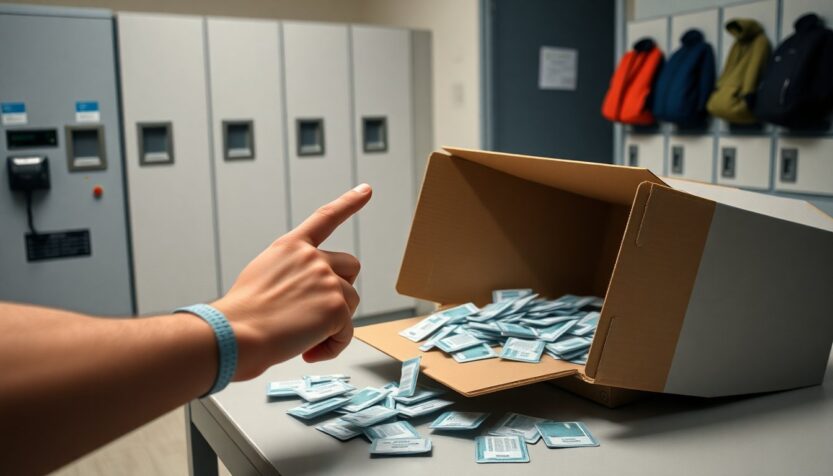
Condom supply at Milan‑Cortina athlete village runs short after initial distribution
The athlete residential complex for the 2026 Winter Olympics in Milan‑Cortina experienced an unexpected shortage of free contraceptives after organisers distributed about 10,000 condoms, sources said. The supply reportedly ran out in roughly three days.
Who: athletes and team delegations staying in the Olympic village were the intended recipients. An anonymous competitor told reporters the condoms were “snatched up” almost immediately.
What: the condoms are part of a long‑standing Olympic provision aimed at promoting sexual health and safer encounters within athlete villages. Organisers confirmed a gap in supply and said they would send replenishments. The timing of those deliveries was not specified.
Where and when: the shortage occurred at the athlete residential complex serving the Milan‑Cortina Winter Games. Organisers disclosed the issue after the initial distribution was exhausted.
Why it matters: free contraceptives in Olympic villages are intended to reduce the risk of sexually transmitted infections and unintended pregnancies among participants. A shortfall could interrupt those public health protections and prompt urgent logistical responses from organisers.
Organisers did not provide a schedule for restocking. The athlete village medical and welfare teams declined to comment beyond acknowledging that resupply measures were under way.
What happened in the athletes’ village
The athlete village medical and welfare teams declined to comment beyond acknowledging that resupply measures were under way. Organisers subsequently confirmed additional deliveries to on-site medical stations and welfare centres. Staff said distribution would prioritise common-access locations rather than room-by-room replacement.
Allocation at Milan-Cortina was markedly smaller than distributions at the previous Summer Games in Paris. For context, organisers at those Games supplied hundreds of thousands of condoms to athletes and delegation staff. The lower volume in the Winter village reflected both the smaller athlete population and a different distribution strategy.
Local health officials told organisers the shortfall had not produced any immediate public-health incidents reported to village medical teams. Officials said routine sexual health advice and testing services remained available to residents through the village clinic and partner organisations.
Organisers said they were reviewing inventory procedures to prevent future shortages and that final tallies of distributed items would be published when available. The matter has prompted discussion among athlete representatives about standardising minimum supplies across future Games.
Supply decisions and comparisons
Organisers moved quickly after the initial allocation was depleted within days. Medical and welfare teams said logistics now focus on steady resupply and equitable distribution across accommodation zones.
Officials are considering several procurement options, including bulk purchases from domestic suppliers and emergency transfers from nearby municipalities. Delegation liaisons have been asked to confirm on-site storage capacities and safe handling procedures.
Comparisons with previous editions of the Games show variation in how contraceptives were supplied and distributed. Some past host cities included boxes in clinic inventories only, while others placed dispensers in communal medical areas to improve access.
Advocates for athlete welfare told organisers that standardized minimum supplies and clearer distribution protocols would reduce shortages and stigma. Athlete representatives said harmonised guidelines would also simplify planning for future events.
Medical teams expect additional packs to arrive within days and have established a monitoring system to track consumption and redistribute stock as needed for the remainder of the Games.
Why condoms are provided at the Olympics
The shortage stems from a planning decision by the Games organisers that allocated fewer items than at larger multi-sport events.
Organisers in Milan-Cortina issued a smaller initial stock than Paris did for its Summer Games. Paris supplied a much larger quantity to serve more than 10,000 competitors and the higher spectator numbers that accompany a Summer Games.
By contrast, Milan-Cortina’s organisers estimated a lower requirement for a Winter Games and distributed far fewer items. That gap between estimated and actual demand is the central cause of the current shortfall.
Medical and welfare teams have focused on steady resupply and equitable distribution since the initial allocation ran low. They report shipments are due to arrive within days and have established monitoring to track consumption and redirect stock where needed for the remainder of the Games.
Providing condoms at major sporting events is a routine public-health measure. Organisers cite harm-reduction, protection against sexually transmitted infections and promotion of safe sexual practices as the rationale for on-site distribution.
Logistics and athlete experience
Organisers typically place free condoms at discreet, easily accessible locations inside athlete accommodation and medical centres. The aim is to combine convenience with privacy and dignity.
Distribution points are selected to limit visibility while ensuring quick access for those who need protection. Staff trained in medical confidentiality manage supplies and can direct athletes to additional support.
Providing condoms is coupled with information on sexual health. Leaflets and signage explain correct use and outline where to seek medical advice or testing if required. This approach emphasises harm reduction and informed consent.
Event medical teams also factor cultural sensitivities and consent practices into distribution. Materials are usually available in multiple languages and presented neutrally to respect diverse backgrounds.
Supply planning balances estimated demand with storage and waste considerations. Organisers traditionally monitor uptake and adjust deliveries during a Games to address shortages or surpluses.
For athletes, the policy signals a focus on wellbeing beyond competition. Easy access to protection and clear information aims to reduce health risks and support responsible decision-making during the event.
Implications and takeaways
Who: event organisers, host teams and athletes were involved in the distribution process at Milan-Cortina.
What: distribution timing and quantities complicated logistics. Athletes reported supplies would be replenished, but precise timing remained unclear.
Where: the issue arose inside athlete accommodation and communal spaces. Social media posts and informal videos from competitors identified specific locations where packs were available.
Why it matters: increased visibility and the communal living environment can accelerate uptake. That trend makes demand harder to forecast and inventory harder to manage.
Operational consequences are practical. Supply runs may need greater frequency. Staff must monitor on-the-ground consumption, not rely solely on pre-planned allocations.
Public-health consequences are also immediate. Easy access to protection supports safer behaviour. However, unpredictable distribution can create shortfalls in high-demand areas.
Teams should combine discreet, fixed dispensers with rapid-response restocking. Monitoring should use anonymised consumption data to avoid intruding on privacy while improving accuracy.
Finally, organisers must balance transparency and discretion. Visible distribution reduces stigma but increases demand unpredictability. Expect adjustments to distribution plans as organisers respond to real-time uptake.
Expect adjustments to distribution plans as organisers respond to real-time uptake. Practically, the episode highlights the need for conservative buffers for items tied to health and welfare, including reproductive and sexual-health supplies. Event planners should build larger on-site inventories and clearer contingency protocols to prevent shortfalls that affect daily life in the village.
Symbolically, the episode underscores that athlete villages function as communities with needs beyond competition. Residents require spaces for rest, confidential health services and reliable access to personal-care products. The contrast with prior Games also prompts questions about how hosts prioritise resource allocation against expectations shaped by previous events, and how those choices affect both operations and resident well-being.
Logistical lessons for future multisport events
Organisers said they will deliver additional supplies to cover the remainder of the Winter Games, scheduled from 6 February to 22 . Until those shipments arrive, teams and athletes will rely on interim measures and pledged replenishment.
The incident underscores the need for conservative buffer planning for items linked to health and welfare. Even small consumables can become critical when demand outpaces estimates. Event planners must therefore prioritise robust inventory forecasting and rapid-response distribution channels to reduce operational disruption and protect resident well-being.
Event authorities have signalled a review of procurement and monitoring procedures. The findings are likely to shape stockpile policies and on-site logistics at future multisport events, with an emphasis on resilient supply chains and clearer contingency triggers.