
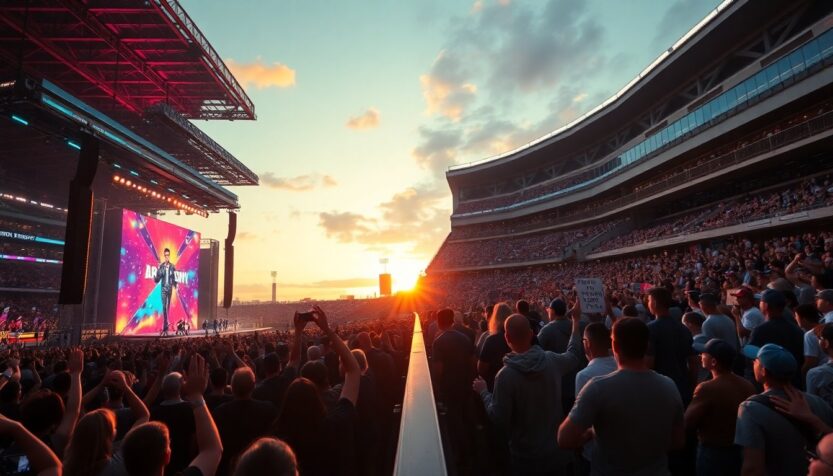
The Super Bowl halftime show is renowned for showcasing some of the most iconic performances in music, often reflecting the cultural zeitgeist. This year, the spotlight was on Bad Bunny, a globally recognized artist, whose performance aimed to celebrate and elevate Latino culture. However, not all stakeholders welcomed this choice, leading to a counter-event organized by Turning Point USA, which sought to present an alternative perspective. This article examines the cultural significance of both events and their respective reactions.
As Bad Bunny prepared to take the stage, excitement mixed with trepidation permeated various audiences. His inclusion in the Super Bowl reflects the evolving landscape of American entertainment, where diverse voices are increasingly gaining prominence. Yet, this shift sparked backlash among some groups who felt alienated by the embrace of a Spanish-speaking artist. Thus, the stage was set for a cultural showdown.
Bad Bunny’s cultural impact
Bad Bunny, whose real name is Benito Antonio Martínez Ocasio, has emerged as a symbol of the modern Latin music explosion. His performance at the Super Bowl was not merely about music; it represented a broader recognition of Latino contributions to American culture. His recent Grammy wins for the album Debí Tirar Más Fotos underscored his artistry and deep connection to Puerto Rican heritage.
Music and messaging
During his Super Bowl appearance, Bad Bunny was expected to deliver a show that was both entertaining and deeply rooted in cultural pride. With songs that blend traditional Puerto Rican rhythms with contemporary styles, he aimed to create a vibrant celebration of identity. His music often includes messages of love and unity, challenging the divisive sentiments that have been prevalent in recent political discourse.
For instance, at the Grammy Awards, Bad Bunny boldly spoke out against oppressive systems, declaring, “ICE out,” to emphasize the humanity of all people, including immigrants. Such statements reflect his commitment to using his platform for activism, a move that some audiences found inspiring while others viewed it as controversial.
Turning Point USA’s alternative show
In response to Bad Bunny’s anticipated performance, Turning Point USA organized an alternative halftime show. This decision stemmed from a desire to provide a counter-narrative resonating with those who felt marginalized by the mainstream celebration of diversity. Headlined by the controversial figure Kid Rock, the event sought to reclaim the narrative of American identity through a distinctly conservative lens.
Rallying around traditional values
Kid Rock, known for his outspoken views, expressed disdain for what he termed “woke” culture exemplified by Bad Bunny. In his statements about the halftime show, he emphasized a return to traditional American values. His performance featured familiar country and rock anthems aimed at evoking nostalgia among his audience, portraying a vision of America that resonates with a more conservative demographic.
The lineup for the Turning Point show included artists like Lee Brice and Brantley Gilbert, who are known for their appeal to country music fans and conservative audiences. This choice reflected a conscious effort to create an event celebrating a specific cultural identity, sharply contrasting with Bad Bunny’s global and inclusive approach.
The cultural divide
As both events unfolded, they sparked widespread discussion about the nature of American identity in a multicultural society. Bad Bunny’s vibrant and inclusive performance can be seen as a celebration of diversity, while the alternative show aimed to reaffirm the values of a segment of the population that feels overlooked in the current cultural landscape.
This cultural divide underscores a broader conversation about representation in the arts and the complexities of American identity. The reactions to both performances illustrate the tension between different worldviews, making the Super Bowl halftime show a microcosm of larger societal debates.
As Bad Bunny prepared to take the stage, excitement mixed with trepidation permeated various audiences. His inclusion in the Super Bowl reflects the evolving landscape of American entertainment, where diverse voices are increasingly gaining prominence. Yet, this shift sparked backlash among some groups who felt alienated by the embrace of a Spanish-speaking artist. Thus, the stage was set for a cultural showdown.0